


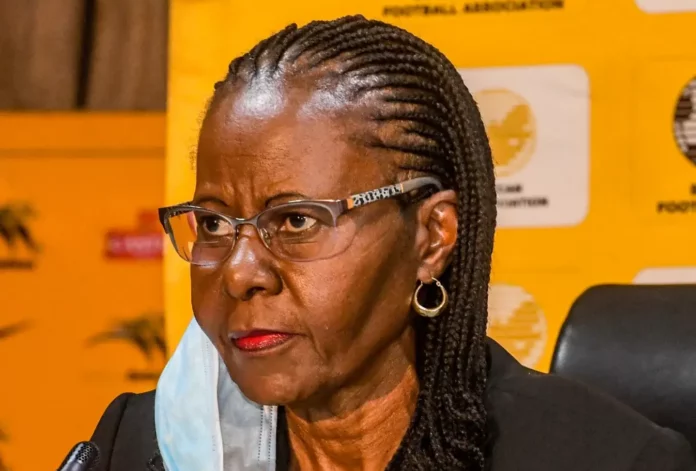
Former presidents Jacob Zuma and Thabo Mbeki have each submitted documents to support their requests for Justice Sisi Khampepe to step down from her role as the head of the Judicial Commission of Inquiry into Allegations of Interference in the Investigation and Prosecution of Truth and Reconciliation Commission (TRC) cases.
Both leaders argue that Khampepe’s prior roles in the TRC and the National Prosecuting Authority (NPA), coupled with her handling of procedural objections, give rise to a reasonable apprehension of bias.
The legal standard for recusal requires demonstrating that a reasonable, objective, and informed observer would apprehend a lack of impartiality on the part of the decision-maker.
Both Zuma and Mbeki contend that Justice Khampepe’s historical involvement in the TRC and NPA, as well as her conduct during the Commission’s proceedings, meets this threshold.
In his affidavit, Zuma emphasised his personal experience with Justice Khampepe, particularly her role in ordering his detention without trial during his presidency.
“Millions of South Africans, including me, honestly share the view that the order for my imprisonment was malicious, vindictive, and vengeful,” Zuma stated.
He further alleged that Justice Khampepe’s prior association with the TRC and NPA creates a conflict of interest, as she may be required to scrutinise decisions she was involved in during her tenure.
“The egregious misconduct of the chairperson unravels everything in this application,” Zuma argued.
Procedural handling of objections
Mbeki, in his affidavit, echoed similar concerns, stating: “The chairperson’s prior institutional proximity, when assessed together with her subsequent conduct in the commission, gives rise to a reasonable apprehension that the commission may not be approached with the degree of detachment, neutrality, and institutional independence required by law.”
Mbeki also criticised the procedural handling of objections raised during the commission’s proceedings, particularly regarding the role of Adv. Ishmael Semenya SC, the chief evidence leader.
“The chairperson’s endorsement of a procedurally irregular arrangement between Semenya and Advocate Howard Varney for the Calata Group permitting Adv. Varney to lead the Calata Group’s witnesses is deeply concerning,” Mbeki stated.
Both former presidents also questioned the appropriateness of Semenya deposing the answering affidavit on behalf of Khampepe.
“I strongly dispute the right, the title, and/or the authority of Adv Semenya to depose to the answering affidavit on behalf of the cited respondent,” Zuma asserted.
Mbeki added: “The allegations against the chairperson have not been properly disputed because the answering affidavit was deposed to by the wrong deponent. The allegations must therefore be treated as common cause.”
Alleged delay in filing recusal applications
The affidavits also addressed the issue of alleged delay in filing the recusal applications.
Zuma argued: “It is trite that delay cannot trump illegality. The very idea that an illegal and biased commission may be allowed to continue to operate and waste taxpayers’ money needs only to be stated to be rejected.”
Mbeki similarly stated: “The cumulative effect of the chairperson’s historical institutional proximity, when viewed alongside her subsequent conduct, crystalized the need for a recusal application.”
Both Zuma and Mbeki are seeking Khampepe’s recusal from the commission, citing concerns over her impartiality and procedural conduct.
The commission’s decision on the matter will have major consequences regarding the credibility and integrity of its proceedings.
As Zuma stated: “Justice must not only be done; it must be seen to be done.”
- Former presidents Jacob Zuma and Thabo Mbeki have each submitted documents to support their requests for Justice Sisi Khampepe to step down from her role as the head of the Judicial Commission of Inquiry into Allegations of Interference in the Investigation and Prosecution of Truth and Reconciliation Commission (TRC) cases.
- Both leaders argue that Khampepe’s prior roles in the TRC and the National Prosecuting Authority (NPA), coupled with her handling of procedural objections, give rise to a reasonable apprehension of bias.
- The legal standard for recusal requires demonstrating that a reasonable, objective, and informed observer would apprehend a lack of impartiality on the part of the decision-maker.
- Both Zuma and Mbeki contend that Justice Khampepe’s historical involvement in the TRC and NPA, as well as her conduct during the Commission’s proceedings, meets this threshold.
- In his affidavit, Zuma emphasised his personal experience with Justice Khampepe, particularly her role in ordering his detention without trial during his presidency.


