


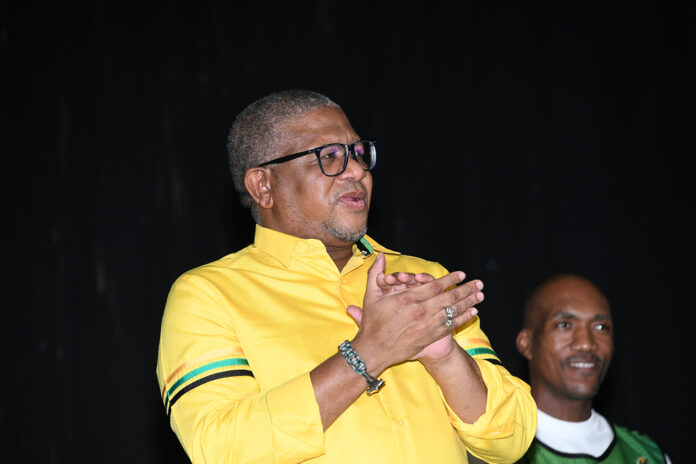
In a year-end declaration signalling political momentum, ANC Secretary General Fikile Mbalula has pointed to a dramatic financial turnaround at South Africa’s key state-owned enterprises (SOEs) as direct evidence of the party’s “renewal in action”.
The assertion, made in a social media post, highlighted 2025 financial results showing a collective profit of R58-billion for major SOEs, a stark reversal from the previous year.
Mbalula credited this to “ANC President Cyril Ramaphosa and the collective” leadership. The figures arrive as the governing party seeks to demonstrate tangible progress in revitalising entities critical to the nation’s economic infrastructure.
The posted data claims a particularly striking recovery for the power utility Eskom, stating it posted “a profit of R16-billion in 2025 compared to a R55-billion loss in 2024.” This remarkable swing follows stringent conditions attached to its R254-billion debt relief plan, which mandated operational reforms and strict financial controls.
Similarly, the freight rail and ports giant Transnet was noted for cutting its losses “from R7.3-billion in 2024 to less than R2-billion in 2025”, an improvement linked to its ongoing recovery plan focused on port and rail efficiency. Telkom’s profits were said to have “surged to R7.5-billion”, contributing significantly to the sector’s positive aggregate.
Mbalula’s framing ties these financial results directly to the ANC’s internal project of renewal and broader governance reforms. This echoes President Ramaphosa’s consistent messaging on the need to “rebuild and reform state-owned enterprises (SOEs) to be effective developmental instruments,” explicitly linking their performance to national economic competitiveness and investor confidence.
The narrative positions the financial recovery as a direct outcome of political stewardship and a reformed approach to state asset management.
The presentation of these figures as a single-year snapshot offers a powerful positive narrative for the governing party. The ANC has concurrently emphasised that “merit-based appointments will be non-negotiable” in the public sector, suggesting the party views professional, apolitical governance as foundational to maintaining and building upon this progress.
- In a year-end declaration signalling political momentum, ANC Secretary General Fikile Mbalula has pointed to a dramatic financial turnaround at South Africa’s key state-owned enterprises (SOEs) as direct evidence of the party’s “renewal in action”.
- The assertion, made in a social media post, highlighted 2025 financial results showing a collective profit of R58-billion for major SOEs, a stark reversal from the previous year.
- Mbalula credited this to “ANC President Cyril Ramaphosa and the collective” leadership.
- The figures arrive as the governing party seeks to demonstrate tangible progress in revitalising entities critical to the nation’s economic infrastructure.
- The posted data claims a particularly striking recovery for the power utility Eskom, stating it posted “a profit of R16-billion in 2025 compared to a R55-billion loss in 2024.” This remarkable swing follows stringent conditions attached to its R254-billion debt relief plan, which mandated operational reforms and strict financial controls.


