


The Department of Public Service and Administration (DPSA) has confirmed that less than 1% of foreigners are employed in the public service.
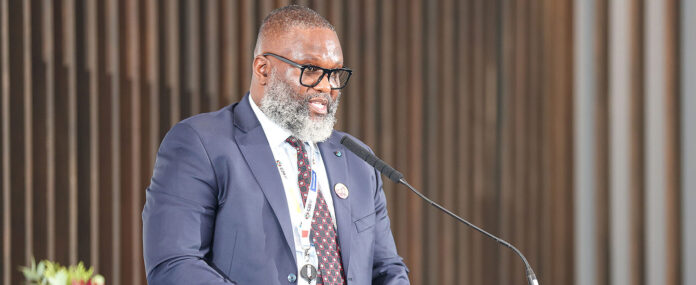
This information was revealed during a briefing to outline reforms. And these reforms are designed to improve transparency, responsibility, and ethical conduct throughout the public service led by minister Inkosi Buthelezi.
The department’s Deputy Director-General for Human Resource Management and Development, Anusha Naidoo, said foreign nationals made up 0.44% of the employment stats in public service.
Fully compliant with regulations
She said all employees are also fully compliant with the Public Service Regulations, Immigration Act, and Public Service Act.
Naidoo emphaised that the recruitment processes followed prioritised South African citizens.
“That is something we want to emphasise as the government, as the state, and as our ministry. To say that recruitment processes will always prioritise South Africans. This with … foreign nationals appointed strictly in instances where expertise is required to either strengthen the institution, or where we have verified skills shortages,” said Naidoo.
She said the departments of Home Affairs and Employment and Labour data and statistics guide in identifying and verifying the shortage of skills.
“As the Department of Public Service, we are not an island. We also have relationships in every country across the world. One such signal is the way we managed the G20 Summit. And that indicates that we cannot exclude due to the various treaties and the sovereignty of our country when it comes to the employment of foreign nationals.
“But we do give you assurance that our country will always prioritise local talent,” said Naidoo.
Need for reforms remain
On the reforms, Buthelezi emphasised the need for a cleaner and accountable state. He said it was important to have disciplined leadership and ethical behaviour as the baseline, not exception, in leadership.
“These reforms include a streamlined, technologically driven procurement systems. Ones that enhance transparency and eliminate opportunities for manipulation,” said Buthelezi.
This includes lifestyle audits, which he said are separated into three parts. These include the disclosure part, where officials disclose the assets they have. And aslso verification and confirmation.
The department also established a central register for individuals found guilty of corruption.
“This central register will function as a national integrity barometer. A mechanism that repeat offenders do not re-enter positions of influence within government and/ or in the supply chain,” said Buthelezi.
- The Department of Public Service and Administration (DPSA) has confirmed that less than 1% of foreigners are employed in the public service.
- This information was revealed during a briefing to outline reforms.
- And these reforms are designed to improve transparency, responsibility, and ethical conduct throughout the public service led by minister Inkosi Buthelezi.
- The department’s Deputy Director-General for Human Resource Management and Development, Anusha Naidoo, said foreign nationals made up 0.44% of the employment stats in public service.
- Fully compliant with regulations She said all employees are also fully compliant with the Public Service Regulations, Immigration Act, and Public Service Act.


