


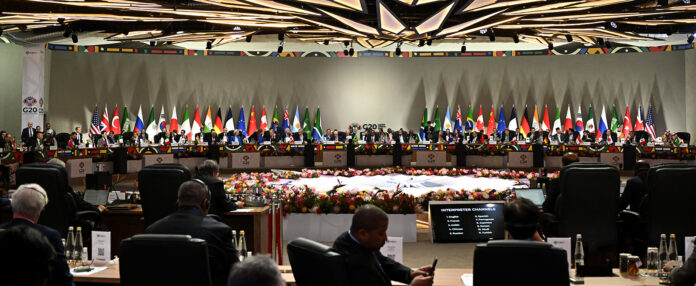
The big G20 meeting this weekend on South African soil is mainly a discussion about managing the world’s economy.
The summit brings around the table the 19 biggest and most important single countries – like the USA, China, Germany, India and Brazil – plus the European Union.
Together, these members represent about 80% of the world’s economy, 75% of all trade, and about 60% of the world’s population. So, when they talk, everyone listens.
But what’s the point of the meeting? Imagine the world’s economy is a giant, complicated machine. The G20 is the group of head mechanics and supervisors who get together to make sure the machine doesn’t break down.
Their main job is to cooperate and prevent another global economic crisis. They learnt from the 2008 financial meltdown that if the big economies don’t talk, everything can fall apart.
The summit participants will interrogate global problems. These are the big issues that affect everyone’s wallet and job, like inflation (the price of groceries and gas going up), jobs (how to create more of them), trade (making sure goods can flow between countries without too many problems), taxes (trying to make sure giant companies pay their fair share so the little guy doesn’t have to shoulder it all), and other similar big issues.
Over time, they’ve also started talking about other stuff that affects the economy, like climate change, wars and global health (like the Covid-19 pandemic).
The decisions, or lack of decisions, at the G20 can trickle down and directly impact your life and job.
If the G20 leaders agree on policies that boost global trade, the company you work for might get more orders from other countries. That could mean more overtime, job security or even hiring new people.
Their talks about inflation and energy prices can influence how much you pay for gas, food, and utilities.
Agreements on things like climate change can lead to new investments. This might mean new factories being built in your area (eg for solar panels or electric cars), creating new skilled labour jobs.
The big picture is about stability. When the world’s biggest economies are talking, there’s less chance of a massive recession that could put millions out of work.
The bottom line is that the G20 is not a place where they make laws you have to follow. It’s a summit for discussion and coordination.
Think of it like this: if the world’s economy were a worksite, the G20 would be the foremen and project managers meeting in the trailer to make sure everyone is on the same page, the supplies are ordered, and the whole project doesn’t collapse.
They don’t swing the hammers, but their planning and coordination determine whether the project is a success and whether all the workers have a job to come back to tomorrow.
- The big G20 meeting this weekend on South African soil is mainly a discussion about managing the world’s economy.
- The summit brings around the table the 19 biggest and most important single countries – like the USA, China, Germany, India and Brazil – plus the European Union.
- Together, these members represent about 80% of the world’s economy, 75% of all trade, and about 60% of the world’s population.
- So, when they talk, everyone listens.
- But what’s the point of the meeting.


