


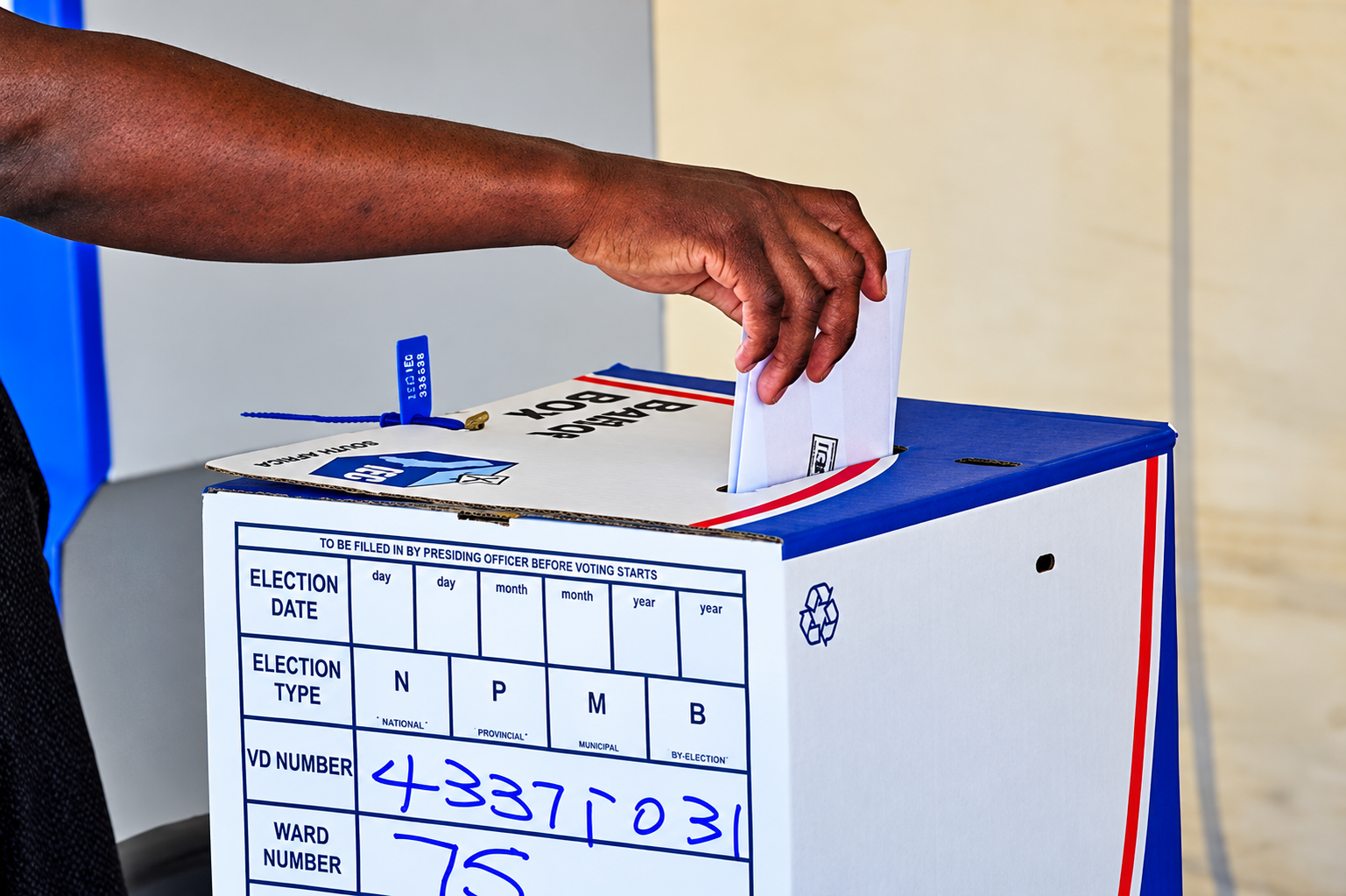
The Electoral Commission of South Africa (IEC) is preparing to begin counting ballots across the country as voting in the 2026 Local Government Elections enters its final hours.
Preliminary figures showed that 12-million voters had cast their ballots by 5pm on Wednesday with Gauteng leading the pack with 3-million votes at the time.
Sy Mamabolo, IEC chief electoral officer, said counting would begin at voting stations shortly after closing time at 9pm, with party agents, independent candidate representatives and accredited observers present to monitor the process.
Transparent count and verification process
The counting process will involve opening sealed ballot boxes, checking ballot papers for security stamps and sorting them according to the different electoral contests before votes are counted and reconciled against the ballot papers received and issued at each station.
“Following the count, the results for each contest are reconciled against the ballot papers received, issued, unused, spoilt and counted at the voting station. Results slips are captured in duplicate, signed by the presiding officer, and countersigned by party agents before being displayed at the voting station as soon as counting and tallying of results is completed.
“The photographs of slips of each voting station will be Party agents are allowed to take pictures of the signed result slips. The results are subsequently scanned and captured at the local Electoral Commission office and subjected to verification and independent external auditing,” said Mamabolo.
Results centres open to parties and observers
Mamabolo said the Results Operations Centres would allow political parties, independent candidates, observers and the media to monitor the capturing and verification of results, reinforcing transparency throughout the process.
In the preliminary figures, KwaZulu-Natal followed Gauteng with 2.5-million votes, while Western Cape recorded 1.5-million and Eastern Cape 1.4-million votes by 5pm.
Mamabolo urged eligible voters who had not yet voted to visit their registered voting stations. He assured voters that anyone in a queue by 9pm would be allowed to cast their ballot, even if voting continued beyond the official closing time.
- By 5pm on Wednesday, 12 million voters had cast their ballots in the 2026 South African Local Government Elections, with Gauteng having 3 million votes.
- The Independent Electoral Commission (IEC) will start counting ballots at polling stations shortly after voting ends at 9pm, with party agents, independent candidates, and observers present.
- The counting process involves opening sealed ballot boxes, verifying security stamps on ballot papers, sorting by electoral contests, and reconciling votes with issued and unused ballots.
- Results slips will be signed by presiding officers and party agents, displayed at voting stations, photographed, scanned, and audited independently for transparency.
- Results Operations Centres will be open to political parties, independent candidates, observers, and media to monitor the verification and capturing of election results.
The Electoral Commission of South Africa (IEC) is preparing to begin counting ballots across the country as voting in the 2026 Local Government Elections enters its final hours.
Preliminary figures showed that 12-million voters had cast their ballots by 5pm on Wednesday with Gauteng leading the pack with 3-million votes at the time.
Sy Mamabolo, IEC chief electoral officer, said counting would begin at voting stations shortly after closing time at 9pm, with party agents, independent candidate representatives and accredited observers present to monitor the process.
The counting process will involve opening sealed ballot boxes, checking ballot papers for security stamps and sorting them according to the different electoral contests before votes are counted and reconciled against the ballot papers received and issued at each station.
"Following the count, the results for each contest are reconciled against the ballot papers received, issued, unused, spoilt and counted at the voting station. Results slips are captured in duplicate, signed by the presiding officer, and countersigned by party agents before being displayed at the voting station as soon as counting and tallying of results is completed.
"The photographs of slips of each voting station will be Party agents are allowed to take pictures of the signed result slips. The results are subsequently scanned and captured at the local Electoral Commission office and subjected to verification and independent external auditing," said Mamabolo.
Mamabolo said the Results Operations Centres would allow political parties, independent candidates, observers and the media to monitor the capturing and verification of results, reinforcing transparency throughout the process.
In the preliminary figures, KwaZulu-Natal followed Gauteng with 2.5-million votes, while Western Cape recorded 1.5-million and Eastern Cape 1.4-million votes by 5pm.
Mamabolo urged eligible voters who had not yet voted to visit their registered voting stations. He assured voters that anyone in a queue by 9pm would be allowed to cast their ballot, even if voting continued beyond the official closing time.


