
Let us dispense with the polite fiction. The carefully stage-managed spectacle of a judicial commission of inquiry, with its black-robed presiding officer and its sanctimonious invocation of legal procedure, is nothing more than a court of public opinion with a gavel and a taxpayer-funded budget.
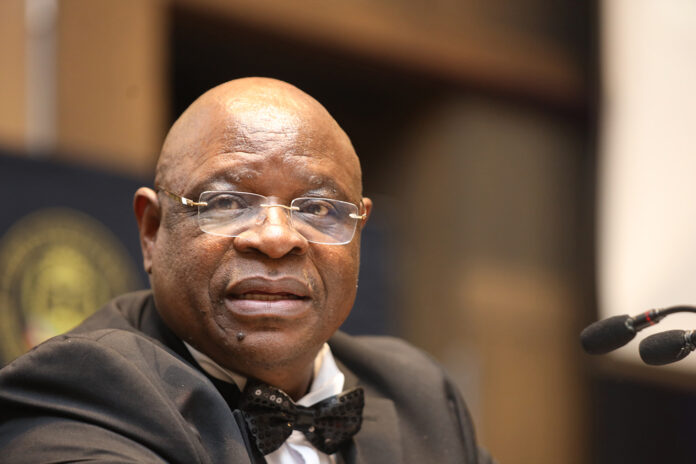
The series of spectacles of retired Chief Justice Raymond Zondo seemingly running for cover when his State Capture commission’s findings are legally challenged, merely confirms what the astute observer has long suspected: these commissions are often elaborate, state-sanctioned political hatchet jobs.
Rigid legal framework
The foundational distinction, we are told, lies in due process. A court of law operates within a rigid framework designed to protect the accused. Hearsay is largely inadmissible. Evidence is tested by vigorous cross-examination. The burden of proof is on the accuser, and the standard is beyond a reasonable doubt. The accused has a right to silence, to legal representation, and to a presumption of innocence.
The court of public opinion, by contrast, is a lawless frontier. Where gossip is gospel, Twitter (X) threads are testimony, and the mob’s thirst for blood substitutes for reasoned judgment.
Enter the judicial commission. It parodies the form of a court while systematically neutering its most vital protections. Commissions are, by their very nature, inquisitorial, not adversarial. Their rules on evidence are notoriously lax. Thus allowing for a torrent of hearsay, speculation, and politically motivated allegations to be entered into the public record under the guise of “information”.
While cross-examination is sometimes permitted, it is often limited, delayed, or rendered futile by the sheer volume of untested testimony. The commission’s primary output is not a legally binding verdict. It is but a report — a narrative. And in our modern age, the narrative is the sentence.
Character assassination
The sentence is carried out immediately in the public square. The individual named, shamed, and implicated in the daily media reports from the commission is tried and convicted long before the presiding judge puts pen to paper for the final report. Their business is shunned, their character assassinated, and their family subjected to ridicule. This is not collateral damage; it is the entire point.
The Zondo Commission into State Capture stands as the most expensive and sprawling exemplar of this phenomenon. For years, it provided a daily theatre of corruption allegations, painting a picture of a state thoroughly looted. Yet, when its findings and recommendations face legal challenges, what is the response from its architect? A retreat into legal technicalities.
This is a breath-taking abdication of moral and intellectual responsibility. Having unleashed a tsunami of public condemnation against individuals, having named them as central players in the “corruption of the state”, the commission now hides behind the very legalism it rendered optional during its own proceedings.
Institutional cowardice
This two-step — wield the authority of the judiciary to destroy reputations, then retreat into the caveat that it was only ever a recommendation — is the apex of institutional cowardice and confirms the commission’s primary function as a political weapon.
History provides incisive examples. Look no further than the Seriti Commission into the Arms Deal. Presided over by Judge Willie Seriti, it was widely condemned as a whitewash. A commission designed not to find the truth but to bury it.
Here, the commission was used not to condemn but to absolve. To provide an official, state-sanctioned narrative to protect the political elite from accountability. It was a court of public opinion designed to deliver a verdict of innocence, irrespective of the facts.
Internationally, the same patterns emerge. The British Leveson Inquiry into press ethics, while different in subject, became a media circus. Individuals were tried in the press based on testimony given under an inquisitorial process with limited recourse.
The late Lord Judge, a former Lord Chief Justice of England and Wales, voiced profound concerns about such enquiries. He warned that they can “usurp the function of the courts” and create a “parallel system of justice” without its protections.
Political weaponry
He noted that the “pressure of public opinion” on a judge-led inquiry can be immense. It can thus potentially distort its course. This is a polite judicial way of saying that these processes are vulnerable to being hijacked by political and popular agendas.
Closer to home, the Mogoba Commission in the former Vaal in the 1980s was used by the apartheid government to give a judicial gloss to its predetermined narrative of Black-on-Black violence. Thus ignoring state-sponsored provocation. The pattern is consistent: the commission is a chameleon. It adapts its colours to serve the political needs of the dominant faction of the day.
For the current ANC elite, the Zondo Commission served a dual purpose. It provided a cathartic public spectacle to channel rage over state capture away from the systemic failures of the party itself. And it was a potent weapon to be deployed in internal factional battles. Certain individuals were thrown to the wolves. Others, equally implicated in the testimony, were curiously left unscathed or lightly touched.
Innocence irrelevant
The victims of this process are not just the high-profile politicians and businessmen. They are the countless junior officials and private citizens caught in the slipstream, whose names are tarnished by association or by unsubstantiated allegation given the weight of official testimony.
They are the ones who lack the resources to mount a years-long legal defence against a state-funded leviathan. For them, the commission’s report is the final word. Their innocence is irrelevant. The court of public opinion, gavelled into session by the state, has already rendered its verdict.
We must see these commissions for what they are: not pillars of justice, but instruments of political theatre. They are the modern, bureaucratic equivalent of the stocks in the public square. This is where the accused is pelted with the rotten fruit of allegation and insinuation. All under the solemn supervision of a judge who provides the illusion of legality.
- Let us dispense with the polite fiction.
- The carefully stage-managed spectacle of a judicial commission of inquiry, with its black-robed presiding officer and its sanctimonious invocation of legal procedure, is nothing more than a court of public opinion with a gavel and a taxpayer-funded budget.
- The series of spectacles of retired Chief Justice Raymond Zondo seemingly running for cover when his State Capture commission’s findings are legally challenged, merely confirms what the astute observer has long suspected: these commissions are often elaborate, state-sanctioned political hatchet jobs.
- Rigid legal framework The foundational distinction, we are told, lies in due process.
- A court of law operates within a rigid framework designed to protect the accused.