


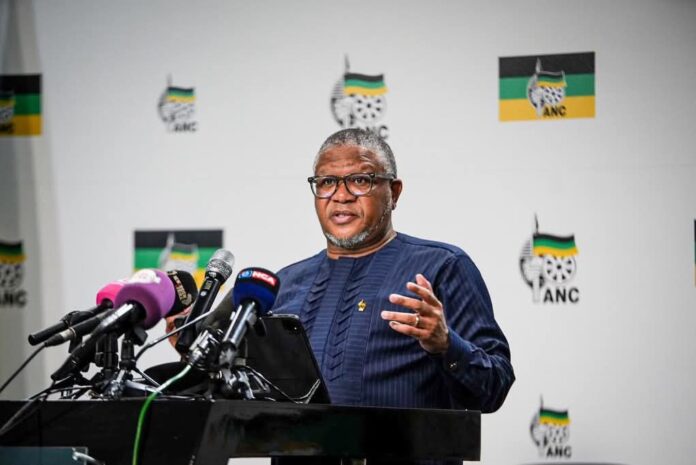
As the ANC’s highest decision-making body between conferences prepares to meet for the first time tomorrow following the “catastrophic” election outcomes, it finds itself between a rock and a hard place on whether to stay the course with old allies or shift left.
This is expected to dominate discussions at the special and extended NEC meeting at the Birchwood Hotel in Boksburg, Gauteng, where leaders will seek to formulate coalition guidelines following hung results, particularly in seven of the country’s eight strategic metropolitan municipalities.
The only major city not facing a hung council following the November 4 municipal elections is Cape Town, where the DA retained an outright majority.
The public debate since the declaration of the final results has centred on whether the ANC should maintain the template of the Government of National Unity (GNU), where it and the DA hold the balance of power, or seek new arrangements with so-called leftist formations such as the MKP and the EFF.
ActionSA emerges as a key power broker
While the ANC faces difficult strategic choices, ActionSA has emerged as the real kingmaker in Gauteng’s three metros. The party is facing pressure from various interest groups to align either with the ANC or the DA.
As the largest party nationally, the ANC bears the responsibility of making decisions that improve service delivery at local government level, where governance has the most direct impact on citizens.
However, ideological debates are expected to dominate the NEC meeting, much as they did after the ANC lost its outright majority in the 2024 national and provincial elections.
Lessons from the 2024 GNU decision
In 2024, before the formation of the ANC-DA anchored GNU, the ANC NEC grappled with a similar question: whether to partner with the DA or pursue an alliance with the MKP and EFF.
The ANC ultimately opted for the DA, viewing the alternative as a costly arrangement likely to result in instability.
The DA, at the time, successfully framed the alternative coalition option as a “doomsday coalition”, helping shape public and internal perceptions around the debate.
ANC secretary-general Fikile Mbalula has so far avoided publicly backing any coalition option, insisting that the decision lies with the roughly 100 ANC leaders tasked with making strategic decisions between national conferences.
Growing resistance to the DA within ANC structures
The 2024 decision to enter the GNU with the DA was contested by those who argued that “black parties” should unite. Since then, the DA’s conduct within the GNU has further hardened attitudes among some ANC NEC members.
Its opposition to key ANC-backed transformation policies, including the National Health Insurance (NHI), the Bela Act and the Expropriation Act, has led some former GNU supporters to argue that the DA should not be accommodated in hung municipalities.
The ANC Youth League has been among the most vocal critics of any renewed cooperation with the DA.
“The ANCYL maintains that the Democratic Alliance represents a political and ideological programme fundamentally different from the historic mission of the liberation movement. Its positions on Black Economic Empowerment, affirmative action and economic redress raise serious questions about its political programme against the objectives of the National Democratic Revolution,” Youth League president Collen Malatji said on Tuesday.
“We cannot allow electoral loss to become an excuse for abandoning the principles upon which our democracy was founded. The DA and other right-wing parties must be a no-go area for coalition arrangements involving the ANC.”
Malatji, an ex-officio member of the NEC, is expected to present those views during Thursday’s deliberations.
Mbalula’s frustration with GNU partner
Mbalula himself recently called for a review of the DA’s participation in the GNU after the party joined an IEC court challenge relating to the exclusion of 181 ANC councillor candidates.
The ANC ultimately prevailed in the Constitutional Court on the eve of the elections, a result that appeared to vindicate Mbalula’s criticism of the DA’s stance.
As the NEC convenes, both camps will be expected to present the political advantages and disadvantages of their preferred coalition options, as well as the broader implications for the ANC’s long-term survival.
A third option: opposition benches
An emerging third school of thought argues that the ANC need not choose between coalition partners at all and should instead sit in opposition where it cannot lead governments.
However, that proposal is complicated by the party’s poor record in opposition. The ANC has struggled to maintain influence in the Western Cape provincial legislature and in the City of Cape Town, where its presence has steadily diminished over time.
Some within the party also fear that relinquishing control of major municipalities could weaken the ANC’s financial and organisational capacity ahead of the pivotal 2029 national and provincial elections.
- As the ANC’s highest decision-making body between conferences prepares to meet for the first time tomorrow following the “catastrophic” election outcomes, it finds itself between a rock and a hard place on whether to stay the course with old allies or shift left.
- This is expected to dominate discussions at the special and extended NEC meeting at the Birchwood Hotel in Boksburg, Gauteng, where leaders will seek to formulate coalition guidelines following hung results, particularly in seven of the country’s eight strategic metropolitan municipalities.
- The only major city not facing a hung council following the November 4 municipal elections is Cape Town, where the DA retained an outright majority.
- The public debate since the declaration of the final results has centred on whether the ANC should maintain the template of the Government of National Unity (GNU), where it and the DA hold the balance of power, or seek new arrangements with so-called leftist formations such as the MKP and the EFF.
- ActionSA emerges as a key power broker While the ANC faces difficult strategic choices, ActionSA has emerged as the real kingmaker in Gauteng’s three metros.


