Public servants who cross the line under the state’s new anti-corruption regime now face a blunt reality: jail time, dismissal and financial clawbacks – all backed by legislation.
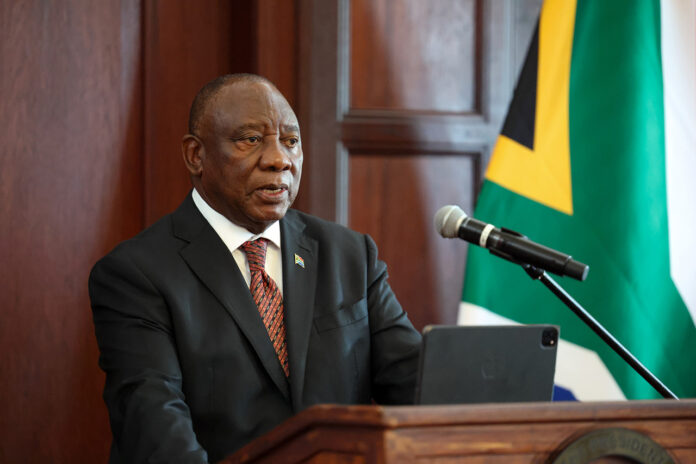
The newly gazetted Public Service Amendment Act, 2025, signed by President Cyril Ramaphosa, hardwires punitive consequences into the administrative system, while complementary provisions under the Public Administration Management Amendment Act criminalise some of the most common forms of abuse in government.
The crackdown is a two-pronged penalty system introducing criminal prosecution on the one hand and fast-tracking administrative punishment on the other.
Alongside these penalties, the law anchors “integrity, ethics, conduct and anti-corruption” directly into statute and expands financial disclosure requirements across the public service.
On the administrative side, the law gives heads of departments sweeping authority to act against wrongdoing.
In a key provision, it states that “a head of department may appoint any person in his or her department”, drawing a hard line between politics and administration, quietly tightening the rules on who gets to hire in government – and in the process, clipping the wings of politicians long accused of meddling in appointments.
This provides that heads of department must “manage the department’s administration efficiently and effectively” and oversee “the recruitment, appointment, performance management, transfer, dismissal, remuneration and other career incidents of employees”.
Somadoda Fikeni, commissioner of the Public Service Commission (PSC), said the PSC continues to receive reports of irregular appointments and intervene where processes are breached. “We have reports on irregular appointments, and those brought to us are investigated, and where these are irregular, we inform the minister and department or MEC and department and indicate measures to be taken.
“The matter of cadre deployment sent to us was referred to the Public Protector, as it involved role players who were not public servants, even though it impacted public service,” he said.
“With current reforms of the professionalisation of the public service framework and recently passed legislation delineating roles of politics and administration, as well as PSC guidelines on unlawful instructions, there is greater clarity that makes political interference less prominent,”
The act introduces “a mechanism to deal with the recovery of overpayments of remuneration and benefits”. Authorities are empowered to pursue cases arising from employment “whilst he or she was so employed”.
The law provides that “no such act shall be to the detriment of the person formerly employed” and generally limits action within three years after departure.
The act also provides that if a head of department “refuses or fails to fulfil a power or duty”, higher authority may intervene, including escalating the matter to the president or premier.
Under the broader legislative framework, public servants who do business with the state commit a criminal offence, with penalties including imprisonment of up to five years, fines and a criminal record. Further provisions provide for criminal sanctions related to the suppression of evidence linked to corruption.
The law requires officials to declare their financial interests. Officials must declare shares, directorships, property, vehicles, gifts, liabilities and the financial interests of spouses and life partners.
These disclosures feed into the government’s lifestyle audit system, which identifies discrepancies between income and assets.
More than 100 officials were flagged for lifestyle discrepancies in early 2026, according to reports.
- The Public Service Amendment Act, 2025, signed by President Ramaphosa, imposes jail time, dismissal, and financial clawbacks for public servants involved in corruption and abuse.
- The legislation enforces a dual penalty system with criminal prosecution and expedited administrative punishment, while embedding integrity, ethics, and anti-corruption in statute.
- Heads of departments gain strong authority over hiring and administrative decisions, reducing political interference in public service appointments.
- The act criminalizes public servants doing business with the state, mandates detailed financial disclosures, and supports lifestyle audits to detect asset-income discrepancies.
- Overpayments recovery mechanisms are introduced, with limits on actions within three years post-employment; failure by departmental heads to act can lead to escalation to higher authorities.