


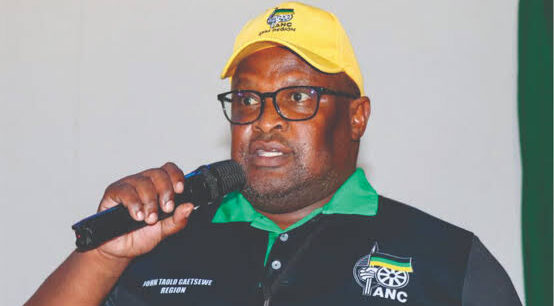
ANC Northern Cape provincial secretary Deshi Ngxanga has received two salary payments under an arrangement dating back to 2017 — one from Luthuli House and another from public funds allocated to the ANC’s legislative caucus.
Ngxanga confirms that provincial ANC officials introduced the second payment to bring his earnings into line with an MEC’s salary.
A September payslip records his legislature-funded payment at R72,332.35 before deductions. That amounts to almost R868,000 annually at that rate, alongside his Luthuli House salary.
Phosa’s criticism
Former ANC treasurer-general Mathews Phosa sharply criticised the use of legislative funds to pay employees doing organisational party work outside of the oversight scope, saying: “If there is any legislature paying salaries of employees of political parties who are not civil servants, that is illegal, fraudulent and a theft deserving criminal prosecution.”
The Northern Cape policy allows parties to employ legislative support staff. It ties their funding to legislative and constituency work.
Ngxanga’s explanation
On Ngxanga’s own explanation, the caucus payment closes the gap between his ANC salary and an MEC’s remuneration. He identifies no legislative support work in return. Public caucus funding therefore subsidises the remuneration of the ANC’s organisational leader, although the funding policy earmarks that money for legislative work.
“In 2017, the ANC Northern Cape provincial officials took a decision that the salary of the provincial secretary should be equal to that of an MEC,” Ngxanga said.
He says provincial officials decided to make up the difference. His September payslip under the legislature payroll records deductions of R19,722.82, leaving R52,609.53 in take-home pay. The October legislature salary schedule records the same amount against his position as ANC provincial secretary.
The payslip also records normal working hours. Ngxanga’s response describes a salary equalisation arrangement rather than a separate legislative support job.
The legislature’s financial assistance to political parties policy provides funding to enable parties to “participate effectively in the legislature”.
Those allocations remain public money subject to spending conditions, accounting requirements and recovery where parties breach the policy.
The policy also requires parties to refund expenditure that breaches its provisions. It also allows the legislature secretary, after giving notice, to recover the money through deductions from subsequent allocations. Parties therefore remain accountable for how they spend public caucus funds.
An opposition caucus member in Gauteng drew a clear distinction between legislative support employees and staff working in party organisational offices.
“The employees that sit at the provincial office or regional offices must be paid by the party, strictly by the party,” the member said.
The source described caucus employees as party-appointed staff supporting legislative operations, with separate arrangements governing organisational employees.
The Northern Cape legislature invoked its policy when Sunday World asked about Ngxanga’s payment.
“The legislature allocates funds to all political parties represented in the legislature to support their caucus and constituency activities,” it said.
The ANC therefore appoints its caucus support employees, but the legislature administers their salaries from public funds allocated to the party.
The legislature’s response listed the staff categories that parties may appoint. The party secretaries in the list belong to the administrative support category alongside researchers, clerks and other caucus employees.
They should not be confused with full-time elected organisational officials such as Ngxanga.
The legislature’s policy requires the legislature secretary to agree to and sign off on individual appointments before payments begin. The legislature nevertheless referred questions about Ngxanga’s employment and remuneration arrangements to the ANC.
Ngxanga referred Sunday World to ANC provincial treasurer Fufe Makatong, who, in turn, directed questions to ANC chief whip Norman Shushu, who had yet to respond to questions sent on Thursday.
Ngxanga rejected any suggestion that he knowingly participated in wrongdoing.
“I have absolutely nothing to hide. I would never knowingly participate in any arrangement that is irregular or unlawful.”
- ANC Northern Cape provincial secretary Deshi Ngxanga has received two salary payments under an arrangement dating back to 2017 — one from Luthuli House and another from public funds allocated to the ANC’s legislative caucus.
- Ngxanga confirms that provincial ANC officials introduced the second payment to bring his earnings into line with an MEC’s salary.
- A September payslip records his legislature-funded payment at R72,332.35 before deductions.
- That amounts to almost R868,000 annually at that rate, alongside his Luthuli House salary.
- Phosa’s criticism Former ANC treasurer-general Mathews Phosa sharply criticised the use of legislative funds to pay employees doing organisational party work outside of the oversight scope, saying: “If there is any legislature paying salaries of employees of political parties who are not civil servants, that is illegal, fraudulent and a theft deserving criminal prosecution.” The Northern Cape policy allows parties to employ legislative support staff.


