


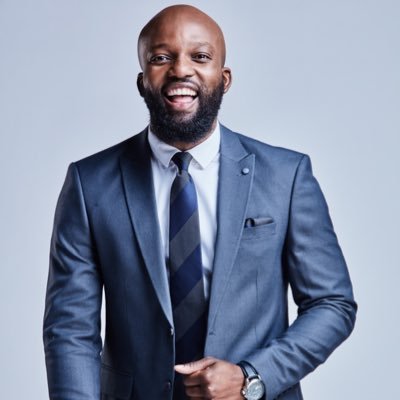
The SABC is facing intensifying political scrutiny after confirming it will not renew the contract of its flagship current affairs programme Face the Nation, with Communications Minister Solly Malatsi now demanding a full report into the decision.
The public broadcaster announced that the programme, hosted by Clement Manyathela, will come to an end on March 31, 2026, citing poor performance, cost pressures and a broader programming strategy review.
But the decision has sparked a political backlash, with opposition parties and civil society groups alleging that the move may have been influenced by pressure from within government following a February interview between Manyathela and presidential spokesperson Vincent Magwenya.
The SABC has firmly rejected these claims, stating that the decision was “free from any political interference” and based on internal editorial and performance considerations.
In a statement released on Tuesday, the broadcaster said the cancellation formed part of a “strategic realignment” of its news portfolio, informed by audience data, programme relevance and financial sustainability.
According to the SABC, Face the Nation averaged about 121 000 viewers between April 2025 and March 2026—less than half the channel’s primetime benchmark of roughly 259 000.
The programme also recorded an average audience rating of about 0.1%, far below the 1% target, and ranked 42nd overall.
Sustained underperformance
“The programme’s average audience rating reflects a material and sustained underperformance against the channel’s primetime target,” the SABC said.
It added that audience trends are shifting toward live, rolling and event-driven news formats, putting pressure on traditional current affairs shows.
However, the broadcaster’s explanation has done little to settle the controversy, with the issue quickly escalating into a broader political debate about media freedom and state influence.
On Tuesday, Malatsi publicly acknowledged the seriousness of the allegations, warning that they threaten the SABC’s credibility and reform trajectory.
“The allegations are worrying given the risk of purported political pressure on the editorial independence of the SABC, which is sacrosanct,” Malatsi said.
He placed the current controversy within a longer institutional history, noting that the SABC had only recently begun recovering from a period marked by political interference and weakened editorial safeguards.
“The SABC, under the current board and executive leadership, has made significant strides in restoring the editorial independence of the public broadcaster, following years of pandering to political pressure,” he said.
Malatsi warned that unresolved claims of interference could undo those gains. “The allegations of political pressure risk reversing all the progress that has been made to date, if not thoroughly dispelled with facts,” he said.
The minister confirmed that he has formally written to the SABC board chairperson demanding a detailed explanation.
“I have written to the chairperson of the SABC board to request a detailed report outlining the reasons for the discontinuation of the Face the Nation programme.
“It is important we get all the facts to ensure that the matter has been dealt with fairly and without compromising the principles of robust journalism and editorial independence at the SABC,” Malatsi said.
His intervention effectively elevates the issue from a programming decision to a governance matter, placing the SABC’s leadership under pressure to demonstrate both transparency and independence.
At the same time, the Presidency has moved to distance itself from the controversy.
Claims of censorship dismissed
President Cyril Ramaphosa’s office has denied that it exerted any pressure on the broadcaster, rejecting suggestions that the decision was linked to the interview with Magwenya.
Magwenya dismissed claims of censorship, describing the interview as a routine but “robust” engagement and expressing no concerns about its conduct.
“It was a really good, fun session which I enjoyed greatly. So, I have no issues with Clement whatsoever,” he said, adding that disagreements between politicians and journalists are part of democratic engagement and should not lead to interference.
He stressed that any attempt by political actors to instruct the SABC to cancel a programme would be unlawful.
Minister in the Presidency Khumbudzo Ntshavheni also rejected claims that the presidency had complained about the programme, saying there had been no objection from within government structures.
“It is the career profile of a spokesperson’s job to be grilled, and therefore it would be counterproductive to protect Vincent Magwenya from media grilling,” she said.
“The presidency, inclusive of GCIS, did not complain about the Clement show,” Ntshavheni added, according to reports.
The presidency further indicated that the decision to discontinue the programme had been taken before the controversial interview, with the SABC notifying contractors as early as December 2025 that their contracts would not be renewed as part of a routine review.
Severe financial constraints
The broadcaster has also cited high production costs, including premium presenter fees and additional production requirements, as well as repeated preemptions for the programme due to live national events that affected its performance and return on investment.
Despite these explanations, opposition parties, including the uMkhonto weSizwe Party, have accused the ANC and the Presidency of attempting to silence critical voices.
The controversy is unfolding in a politically charged environment, with factional tensions within the ANC intensifying ahead of the 2027 leadership succession battle—a dynamic that analysts say often shapes public narratives and institutional disputes.
At the same time, the SABC has pointed to severe financial constraints shaping its decisions.
The broadcaster derives more than 80% of its revenue from commercial activities, with government funding accounting for about 4% and TV licence fees about 16%.
It has also reported a net loss exceeding R250-million for the 2025 financial year, underscoring the pressure to cut costs and improve performance.
“In this context, programming decisions must balance public mandate with audience behaviour and commercial sustainability,” the SABC said.
Despite this, critics argue that the removal of a prominent current affairs programme—particularly one known for confrontational interviews—cannot be viewed purely through a commercial lens.


