


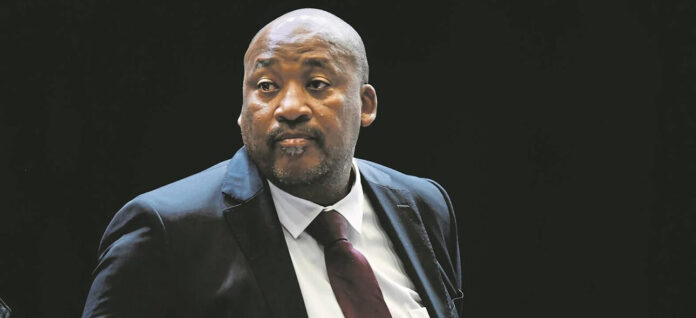
Gayton McKenzie is many things, but a coward is not one of them. A man who faced down far worse than a bad headline does not need a ban. He knows a ban looks like fear, and fear is the one thing nobody has ever accused him of.
Hence, it’s puzzling that his Patriotic Alliance has banned the media. He says the party took a conscious decision, which is at least reassuring.
Imagine a party banning the press by accident. That would worry us. A conscious ban is deliberate, and we simply think it is a mistake.
McKenzie knows this already. He built a party from nothing, and he knows a ban looks like panic. He knows it looks like a strongman move.
So we will not lecture him on the obvious. We will only remind him of a few things.
History has a pattern
History follows a pattern. First comes the ban, then the silence, then the trouble. Despots love a quiet newsroom, right up until the walls fall down. Ask the men who once owned every headline. Most are gone, and their parties are gone, and their bans are gone. The press remains.
The press is not the enemy. The press is a mirror, and sometimes the mirror shows a bad angle. You do not smash the mirror; you fix the angle. Gayton says the coverage is all bad news. Some of it may be unfair, and some of it may be lazy.
READ MORE: Patriotic Alliance deals DA blow in fiercely contested Stellenbosch by‑election
That is a fair complaint, so make it. Name the stories. Challenge the facts. That is a fight a party can win.
A ban is a fight a party cannot win. It hands opponents a gift, turning a small story into a big one. It turns a party leader into a headline about censorship, and it makes the media the victim. No party wants that role for its rivals.
Bigger fires are burning
There are bigger priorities. South Africa has real fires. Jobs are scarce, power is unreliable, water is leaking, crime is bold, and young people are losing hope. Those are the fights that matter. A war with the press is a sideshow, and it burns energy, trust, and time.
There is also the law. The Electoral Commission of South Africa states plainly that a free press is vital to the electoral landscape. Political parties may not ban, intimidate, or attack the media. Every party signs the Electoral Code of Conduct to contest elections, and that code is not a suggestion. It is a contract.
The law is not a suggestion
The rules are clear. Parties must respect media access, and journalists must work without intimidation or exclusion. A party may disagree with a story, but it may not shut the door.
The code also forbids harassment, attacks on journalists at events, and trolling them and their families online. The pen may sting, but the response may not.
READ MORE: Patriotic Alliance calls for greater recognition for Khoi and San communities
The consequences are serious. The IEC can refer a breach to the Electoral Court, where sanctions range from heavy fines to jail time.
Extreme violations can disqualify candidates or strip a party of its votes. A ban is not a brave stand. It is a legal risk to every candidate on the list and to every voter who chose them.
Take a better decision
So here is our advice, offered with warmth. Give Gayton a hug. Invite the journalists. Answer the hard questions, take the bad photo, and laugh at the bad cartoon. Keep the doors open, because a party that faces the press looks confident, while a party that hides looks scared.
A party that hides also looks like a case file.
READ MORE: What does Patriotic Alliance NEC really do?
Gayton, you took a conscious decision. Now take a better one. Lift the ban. Talk to the people, all of the people, the ones who cheer and the ones who jeer.
That is how you build, and that is how you last.
- Gayton McKenzie's Patriotic Alliance has imposed a ban on the media, a decision the party admits was conscious and deliberate.
- The Electoral Commission of South Africa mandates that political parties must provide media access and forbid banning, intimidation, or attacks on journalists, as outlined in the Electoral Code of Conduct.
- Violating the Electoral Code can result in severe consequences including fines, jail time, disqualification of candidates, or stripping a party of votes.
- The article argues that banning the media creates negative headlines about censorship and ultimately benefits the party's opponents.
- South Africa faces more pressing challenges such as unemployment, unreliable power, water issues, crime, and youth disenchantment, which the article suggests should be the party's primary focus instead of a conflict with the press.


