


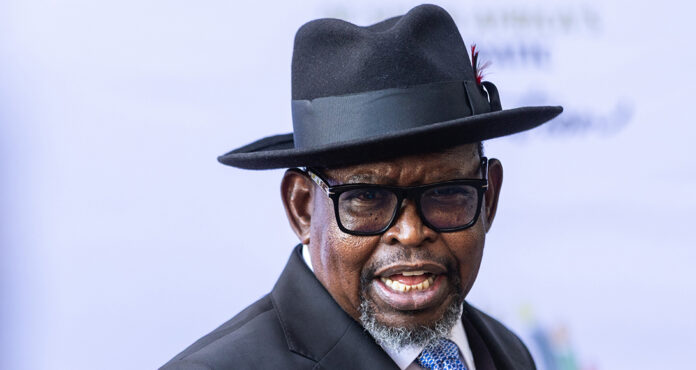
Finance Minister Enoch Godongwana deliberately began his speech on Wednesday by identifying three anniversaries: 70 years since the Women’s March of 1956, 50 years since the Soweto uprising of 1976, and the 30 years since the adoption of the Constitution in 1996.
Godongwana then made a politically significant admission. “They also remind us that political freedom must be matched by economic progress.”
This sentence provides the philosophical foundation for examining the entire budget. It acknowledges that achieving political rights and achieving economic freedom are different historical undertakings.
The Women’s March and the position of women in 2026
The women who marched in 1956 opposed an apartheid system that used legislation to restrict their movement, employment opportunities and freedom.
Seventy years later, women possess constitutional equality and political rights.
But the budget acknowledges that violence against women remains a major national problem.
Treasury announced R3.8-billion to employ more than 3,500 social workers, R186-million for forensic and investigative capacity, and plans to increase sexual offences courts from 55 to 101.
READ MORE: Soweto uprising heroine Sibongile Mkhabela says spirit of ’76 non-existent
These are substantial commitments, although the additional courts and personnel have not all been delivered.
The historical contradiction is that women have achieved formal citizenship and equality before the law, but the state must still devote considerable resources to protecting their physical security.
The political milestone is therefore not simply that women have secured rights. It is that, 70 years after the march, the state is still confronting conditions that prevent many women from exercising those rights safely.
The Soweto uprising and the economic position of young people
The 1976 uprising challenged an education system designed to reproduce racial subordination.
Fifty years later, apartheid education has been abolished. Millions of children receive subsidised schooling, and the state funds the national school nutrition programme.
But consider the employment statistics.
In the second quarter of 2026, South Africa’s official youth unemployment rate for people aged 15–34 reached 47.4%.
Approximately five million young people in this age group were unemployed.
This is a particularly troubling comparison with 1976. The generation that challenged apartheid education demanded a different future.
READ MORE: June 16 today – We need an uprising against the new-age ‘enemy’
Half a century later, almost half of economically active young people in the defined youth age group cannot secure employment.
This raises a question that goes beyond whether the state has expanded access to education.
What is the economic value of educational freedom when the economy cannot absorb large numbers of those who complete their education?
The budget provides for additional infrastructure investment and economic reforms.
But Treasury has reduced its 2026 growth forecast from 1.6% to 1.2%.
That is far below the sustained growth the country needs to significantly expand employment.
The historical achievement is undeniable. The economic outcome remains deeply contested.
Thirty years of constitutional democracy
This is where the analysis becomes even more consequential.
South Africa’s Constitution promises equality, dignity and socioeconomic rights.
But the Constitution does not, by itself, redistribute inherited wealth, create employment or build productive industries.
READ MORE: Constitution does not represent values of SA people
The government itself acknowledged the scale of the remaining racial divide in February 2026.
Cabinet reported that average white household income remained approximately five times higher than average Black household income, despite substantial improvements in Black household incomes since 2006.
That is the background against which Godongwana celebrates 30 years of constitutional democracy.
A distinction becomes necessary
The Constitution abolished legally enforced racial inequality. It did not automatically abolish the economic structures produced by that inequality.
The question is whether successive governments have used the economic and legislative powers available under the Constitution sufficiently to change those structures.
Section 217 expressly permits procurement measures advancing people disadvantaged by past discrimination.
The budget must therefore be examined not merely against fiscal sustainability but against the constitutional objective of substantive equality.
- Finance Minister Enoch Godongwana highlighted three anniversaries in his speech: 70 years since the Women's March of 1956, 50 years since the Soweto uprising of 1976, and 30 years since the adoption of the Constitution in 1996.
- The 2026 budget allocates R3.8 billion for more than 3,500 social workers, R186 million for forensic and investigative capacity, and plans to increase sexual offences courts from 55 to 101 to address violence against women.
- South Africa's youth unemployment rate for ages 15–34 reached 47.4% in Q2 2026, with approximately five million young people unemployed despite expanded access to education.
- The Treasury reduced its 2026 economic growth forecast from 1.6% to 1.2%, which is below the level needed to significantly expand employment opportunities.
- Despite 30 years of constitutional democracy promising equality, average white household income remains about five times higher than average Black household income, highlighting ongoing economic disparities.


