
Affordable housing represents a significant opportunity for South Africa’s municipalities—not just to address the country’s housing shortage, but also to expand the rates base and stimulate local economies. To fully capitalize on this opportunity, municipalities must provide land and basic services, enforce by-laws and regulations, and partner with funders, developers, researchers, and civil society.
This was the key message of the 2nd Property Development Summit, co-hosted by the South African Local Government Association (Salga) and the Gauteng Partnership Fund (GPF), held this week in Modderfontein, just outside Johannesburg.
Local government at the center of property development
Dada Morero, Executive Mayor of Johannesburg and host of the summit, welcomed delegates and urged them to use the platform “to unlock the full value of the property development ecosystem.” He emphasized that local government is central to property development, from releasing strategically located land and providing basic services to delivering infrastructure that allows projects to proceed.
Morero cited a recent example of private sector collaboration: a 10-million-litre reservoir installed to help Johannesburg address its water supply challenges. “We have full confidence that the private sector is willing to help municipalities unlock opportunities,” he said, demonstrating the potential of public-private partnerships.
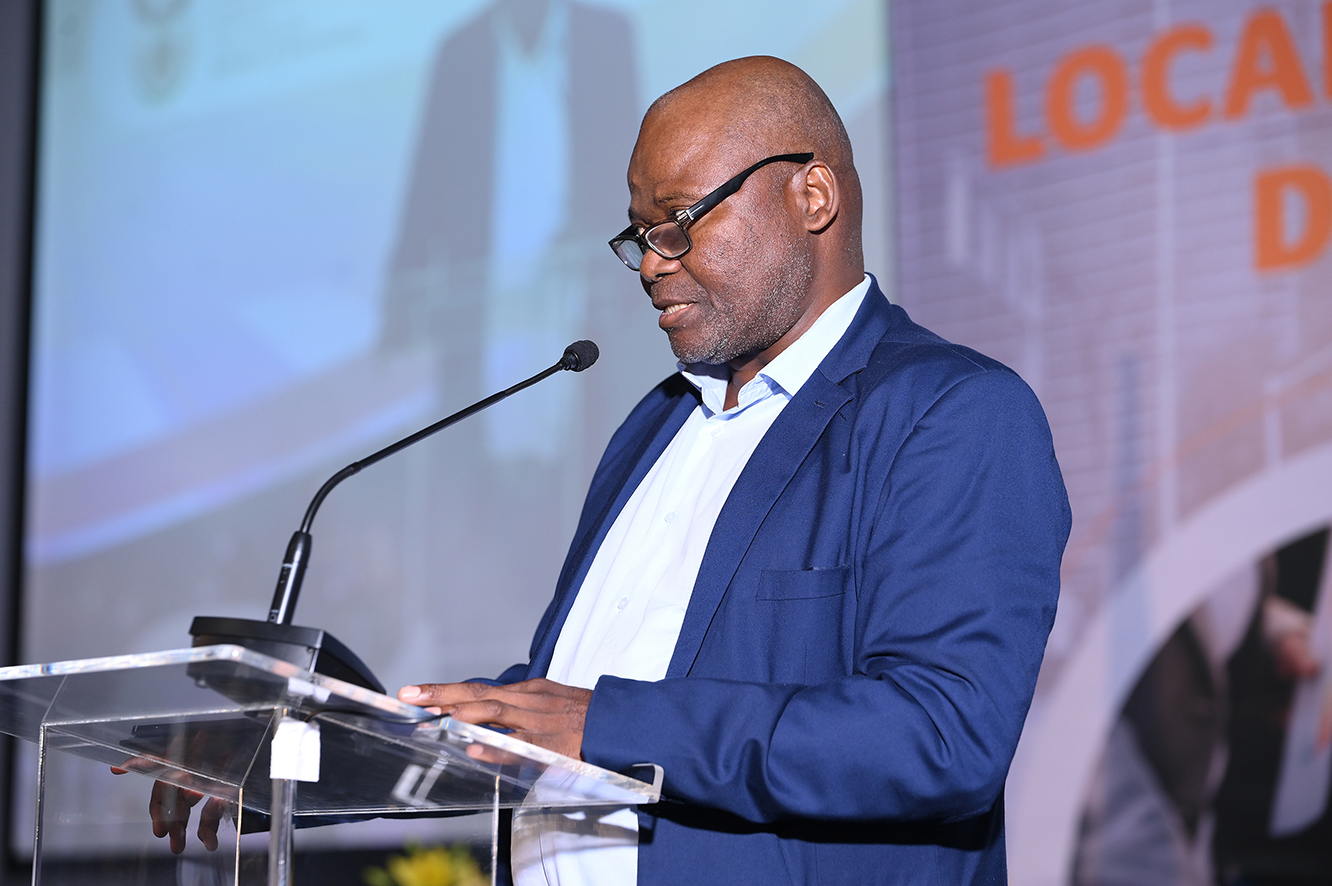
Property as a social construct
Salga President Bheke Stofile described property as a “social construct,” shaped by economics, law, history, and the collective effort of stakeholders. He warned that the local government fiscal model is increasingly “unsustainable” and “morally hazardous.”
Stofile pointed to challenges such as municipalities being ordered by courts to provide services for illegally occupied land without receiving additional resources. He stressed that urbanization in South Africa is largely unplanned, occurring “by accident” as people flock to cities seeking opportunities.
Work with Parliament to review the Prevention of Illegal Eviction and Unlawful Occupation of Land Act (PIE Act) is ongoing, and Stofile said that reforms will be crucial to stabilizing the property development sector and attracting investment.
Rethinking housing policy
Thembi Simelane, Minister of Human Settlements and former Salga president, said forums like the summit have “diagnosed the problem; now it is time to fix it.” Government is reviewing low-cost and affordable housing policies, including eligibility criteria for social housing and specifications for delivery, such as the standard 40-square-meter RDP house.
She noted that the 2004 Breaking New Ground initiative marked a radical shift, delivering houses with full amenities near economic opportunities, rather than the basic RDP model of the early democratic era. Currently, there are almost three million applicants on the housing roster, with 70% comprising economically active citizens. Simelane highlighted that part of the solution involves offering serviced stands to those who can afford them, enabling individuals to build their own homes.
Lessons from Namibia
The summit also drew international input from Samuel Oe Amseb, President of the Association for Local Government of Namibia. He emphasized that public-private partnerships are critical to accelerating housing delivery. “The biggest enemy to housing delivery is profit,” Amseb said. “Infrastructure delivery is often treated as business, rather than an opportunity to improve lives.” He urged Africa to shift its focus from talking about infrastructure backlogs, energy crises, and land use to providing decent housing for all citizens.
Gauteng Partnership Fund’s expanding mandate
Lindiwe Kwele, CEO of GPF, outlined the fund’s growing role. Beyond providing blended finance, GPF now acts as a full-fledged property developer and funder, focusing on rental housing, social housing, student accommodation, and mega-settlements of 10,000 units or more. The fund now offers turnkey property development solutions, including planning, financing, zoning, and servicing.
Kwele emphasized that “the future of human settlements will be collectively determined,” highlighting the importance of collaboration between municipalities, the private sector, and other stakeholders.
Infrastructure as a development driver
Renowned property economist Francois Viruly told delegates that bulk infrastructure often lags behind development needs—a challenge requiring coordinated action from all spheres of government. He pointed out that of South Africa’s 6.9 million properties, about 76% are low-value properties, illustrating the massive opportunity in affordable housing.
A panel discussion revealed that many municipalities struggle to approve developments due to incomplete implementation of the Spatial Planning and Land Use Management Act (SPLUMA) of 2013. Incomplete regulations and limited capacity continue to impede progress. Infrastructure availability is key: parts of Johannesburg, including Bryanston and Midrand, have developments on hold due to water and electricity constraints, although the city has announced project pipelines to address these issues.
The City of Mangaung offered an example of effective reform, reducing its application and approval process from two years and 256 days to just 30 days—a move applauded by delegates as the type of intervention needed to attract investment.
The path forward
The summit underscored that affordable housing is not just a social imperative but also an economic opportunity for municipalities. Strategic land release, infrastructure investment, public-private partnerships, and policy reforms are all critical to unlocking the potential of South Africa’s property development ecosystem. As government, municipalities, and the private sector collaborate more effectively, affordable housing can drive economic growth, improve urban planning, and enhance the quality of life for millions of South Africans.
- Affordable housing offers South African municipalities a key opportunity to address housing shortages, expand their rates base, and stimulate local economies through land provision, service delivery, by-law enforcement, and partnerships.
- Local government leaders highlighted the central role of municipalities in property development, emphasizing public-private collaboration and infrastructure delivery to unlock urban growth potential.
- Challenges include unsustainable local government fiscal models, unplanned urbanization, and legal burdens from illegally occupied land; reforms to the PIE Act and housing policies are needed for stabilization and investment attraction.
- The Gauteng Partnership Fund is expanding from financing to full property development services targeting rental, social, student housing, and large settlements, promoting collaborative approaches among stakeholders.
- Infrastructure constraints and incomplete regulatory frameworks hinder property development approvals; examples like Mangaung’s streamlined processes show progress, underscoring the need for coordinated policy, infrastructure investment, and partnerships to drive affordable housing growth.
Affordable housing represents a significant opportunity for
Dada Morero, Executive Mayor of Johannesburg and host of the summit, welcomed delegates and urged them to use the platform “to unlock the full value of the property development ecosystem.” He emphasized that local government is central to property development, from releasing strategically located land and providing basic services to delivering infrastructure that allows projects to proceed.
Morero cited a recent example of private sector collaboration: a 10-million-litre reservoir installed to help Johannesburg address its water supply challenges. “We have full confidence that the private sector is willing to help municipalities unlock opportunities,” he said, demonstrating the potential of public-private partnerships.
Salga President Bheke Stofile described property as a “social construct,” shaped by economics, law, history, and the collective effort of stakeholders. He warned that the local government fiscal model is increasingly “unsustainable” and “morally hazardous.”
Stofile pointed to challenges such as municipalities being ordered by courts to provide services for illegally occupied land without receiving additional resources. He stressed that urbanization in
Work with Parliament to review the Prevention of Illegal Eviction and Unlawful Occupation of
Kwele emphasized that “the future of human settlements will be collectively determined,” highlighting the importance of collaboration between municipalities, the private sector, and other stakeholders.
Renowned property economist Francois Viruly told delegates that bulk infrastructure often lags behind development needs—a challenge requiring coordinated action from all spheres of government. He pointed out that of
A panel discussion revealed that many municipalities struggle to approve developments due to incomplete implementation of the Spatial