


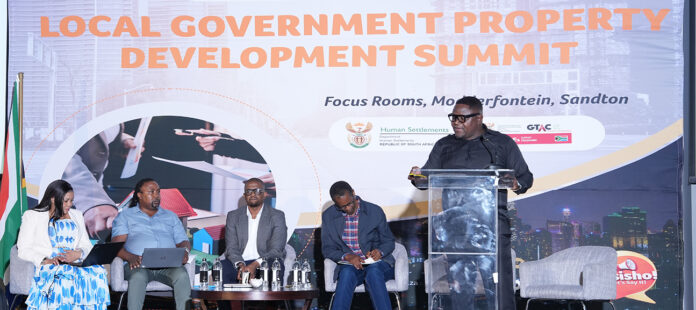
South Africa’s municipalities have been urged to improve efficiency across a range of areas in order to enable the smooth functioning of the property market and facilitate development and sales.
Gilly Dlamini, an executive director at the Banking Association of South Africa spoke at the 2nd South African Local Government Association Property Development Summit, which took place outside Johannesburg this week.
Dlamini emphasised that without municipalities, there would be no sale, foreclosure and rate and tax collection from a transaction.
“We cannot afford to have our municipalities fail,” said Dlamini.
Municipalities must review the practice of using property sales to collect any arrears on rates and taxes, Dlamini urged. He noted that some sellers can dispute the owed amount and back out of a sale.
He encouraged municipalities to adopt the good practices of banks to improve their billing and revenue collection.
Banks also depend on municipalities for crucial documents related to a property sale and if these are not properly archived or prove fraudulent, then transactions cannot withstand scrutiny in the event of the sale being taken to court.
Dlamini said in the case of funding a development project, any bottlenecks in the value chain, including municipal challenges, lead to an increase in development project costs.
He said municipalities must prioritise large clients and provide good service as they are significant contributors to revenue, and lastly, there should be no political interference in the functioning of municipalities.
Hannes Coetzee, the MMC for Community Safety in the City of Tshwane, who stood in for Executive Mayor Dr Nasiphi Moya, said the first area that the municipality paid attention to was the enforcement of by-laws through a weekly blitz to hotspots, with support from hundreds of law enforcement officers.
Coetzee conceded that when it comes to city planning, there are a lot of “grey areas”.
In December 2024, the city introduced an electronic filing system to speed up building and development approvals. This had received positive feedback from developers.
As part of the inner-city rejuvenation, the City of Tshwane has targeted illegal water and electricity connections.
Coetzee said they are also focusing on their Top 500 customers, who include automotive companies in Rosslyn, and they deploy a rapid response team in the event of electricity disruption or service delivery
Sarah Ruiters, a project manager and lead at the Commercial Fund at the Gauteng Partnership Fund (GPF) said another key area of non-compliance was on building specifications where a house does not comply with standards set by the National Housing Builders Registration Council and a property can thus not be sold.
Ruiters said municipalities needed to enforce by-laws in order to help GPF to fund projects and make them bankable.
A delegate made a suggestion that in order to facilitate the entry of previously disadvantaged developers, funders can reduce developer’s contributions to 3% of the project value.
Dlamini said banks already take on higher risk through raised impairments, and any additional risk would be taken on by Development Finance Institutions.


