


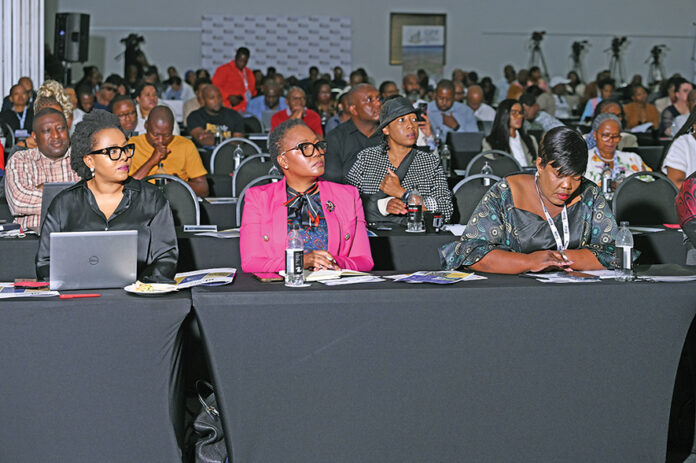
The 2nd Local Government Property Development Summit highlighted innovative approaches to affordable housing, showing how public-private partnerships between municipalities and funders can move residents from rental dependency to asset ownership.
A series of case studies presented at the summit illustrated successful models both locally and regionally. Namibia was represented by the Association of Local Government of Namibia, contributing the Ongos Valley development as a regional example. Located about 14km northwest of Windhoek’s Central Business District (CBD), Ongos Valley offers a combination of rent-to-own apartments and sectional title ownership, enabling residents to gradually acquire assets while still benefiting from structured rental arrangements.
Local success stories
Several South African projects were also featured. In eThekwini, the Cornubia development—a large, complex project—demonstrates the potential of integrated, multi-stakeholder initiatives to deliver affordable housing at scale. In the Western Cape, the Property Development Forum shared experiences addressing the needs of backyard dwellers, illustrating how structured partnerships can support vulnerable communities while promoting compliance with building standards.
In the Eastern Cape, the Mbhashe Local Municipality in the Amathole District Municipality provided another practical example. Anchored in Idutywa and covering the towns of Elliotdale and Willowvale, the Orange Heights project is an inner-town development comprising roughly 150 one-to-three-bedroom apartments. Residents initially access these units through structured leases, and over time, qualifying beneficiaries move toward sectional title ownership. This approach ensures long-term asset transfer rather than permanent rental dependency.
Benefits for municipalities and communities
This model offers multiple advantages for municipalities. Firstly, it allows municipalities to retain land ownership while relying on private developers to fund construction, reducing fiscal strain. Secondly, it aligns with municipal frameworks such as the Integrated Development Plan, Spatial Development Framework, and Local Economic Development initiatives.
By facilitating the move toward sectional title ownership, these projects create sustainable wealth for residents. They generate ongoing revenue streams for municipalities, uplift precincts through increased economic activity, and provide opportunities for local labour during construction, maintenance, and operations. Additionally, these developments support Small, Medium, and Micro Enterprises (SMMEs), stimulating local economies and fostering broader community participation.
The role of the Western Cape Property Development Forum
The Western Cape Property Development Forum brings together a wide range of property industry stakeholders, including 16 industry associations, construction companies, private developers, consultants, and legal and financial professionals. The forum plays a key advocacy role, lobbying for industry standards and promoting affordable housing initiatives.
Recently, the forum has focused on unlocking opportunities for previously disadvantaged developers, helping to level the playing field in property development. One notable example is the R540-million Conradie Park mixed-use development project, which supports the City of Cape Town in addressing the challenge of delivering suitably located social housing while balancing a range of community needs.
A shift from rental to ownership
The case studies presented at the summit show that structured, collaborative approaches can reduce long-term rental dependency, promote wealth creation, and support municipal sustainability. By engaging private developers, municipalities retain strategic oversight while leveraging external funding to expand housing stock.
The emphasis on asset transfer rather than permanent rentals aligns with broader economic and social objectives. Residents gain security and equity, municipalities benefit from fiscal and land-use efficiencies, and local economies are strengthened through job creation and business opportunities.
Looking ahead
The summit highlighted that public-private partnerships are critical for the future of affordable housing in South Africa. With structured leases, rent-to-own models, and support for emerging developers, municipalities can address both housing shortages and economic development simultaneously.
By replicating successful models such as Ongos Valley, Cornubia, Orange Heights, and Conradie Park, municipalities can create sustainable, scalable housing solutions that balance social need with financial viability. These projects also demonstrate how collaboration between municipalities, funders, developers, and industry forums can produce practical, replicable solutions for affordable housing challenges across the country and the region.
- The 2nd Local Government Property Development Summit showcased case studies on public-private partnerships between municipalities and funders to deliver affordable housing.
- Namibia’s Ongos Valley development features rent-to-own and sectional title apartments, offering a model from the Association of Local Government of Namibia.
- Local South African case studies include the Cornubia complex in eThekwini, backyard dwellers’ experiences and the Orange Heights housing project in Mbhashe Municipality, which promotes asset transfer through structured leases.
- The housing projects help municipalities retain land ownership, reduce fiscal strain by involving private developers, create local jobs, support Small Medium and Micro Enterprises, and stimulate economic activity.
- The Western Cape Property Development Forum supports the industry by advocating standards and affordable housing, exemplified by the R540-million Conradie Park mixed-use development in Cape Town.


