
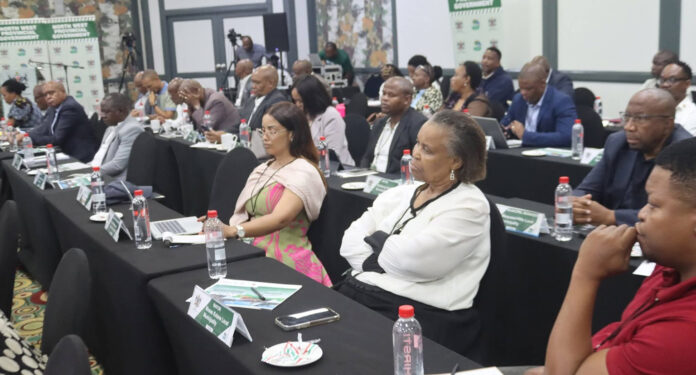
Agriculture has been positioned as a cornerstone of North West’s economic strategy, with Premier Lazarus Mokgosi outlining a plan to revitalise rural economies and strengthen food security.
He was speaking at the launch of the Provincial Growth and Development Strategy (PGDS), which has been described as a definitive reset of the province’s economic path based on collaboration and accountability.
“Our vision for a united and transformed agricultural sector for inclusive growth remains the cornerstone for the North West Province,” Mokgosi said.
The strategy aims to modernise the sector while ensuring that growth is inclusive and benefits rural communities.
“With its mission to ensure sustainable food security, socio-economic growth and transformation of the agricultural sector through research and technology development, our province projects a better future for rural communities within this sector,” Mokgosi said.
He said a key focus was household-level food security. “This includes household food security initiatives, which are primarily aimed towards reducing vulnerability status by at least 5% each year.”
Mokgosi said that, to support this, the province has introduced agri-hubs in partnership with academic institutions.
“We have already initiated a provincial agri-hub in collaboration with the North West University.”
These hubs are designed to integrate research, innovation, and commercial activity.
“The agri-hub model seeks to strengthen existing ones and create new partnerships within all three spheres of government, the private sector, and civil
society,” he said.
Mokgosi said the infrastructure was also being upgraded to support agricultural production.
“This initiative will also be reinforced by the completion of the refurbishment of fifty thousand tonnes of grain storage facility in Springbokpan.”
The premier said the province was expanding into new markets.
“We will also increase our footprint in the citrus and potato markets by scaling production in these commodities.”
Mokgosi emphasised the importance of collaboration between traditional and commercial farming sectors.
“We need every piece of farmland back into full-scale production,” he said.
Livestock development, particularly goat farming, has been identified as a high-growth opportunity.
“We have also stepped up efforts to transform goat farming in the province. This programme will ensure that goat farmers in the province not only participate but lead in the agricultural economy,” he said.
Large-scale projects such as the Taung Irrigation Scheme are expected to drive further growth.
“With an estimated budget of R 1.5-billion for the upgrading of the scheme, eleven projects will be initiated.”
Through these initiatives, agriculture is being repositioned not just as a traditional sector but as a dynamic engine of economic development.
Energy and the digital economy are also what Mokgosi sees as future growth. He said North West was placing technology, energy and human capital at the centre of its future economic trajectory.
“At this critical juncture, the North West Province commits through the Provincial Growth and Development Strategy a transformative economic development agenda that will leverage investments in technology and human capital,” he said.
Mokgosi said energy was a key pillar of this transformation.
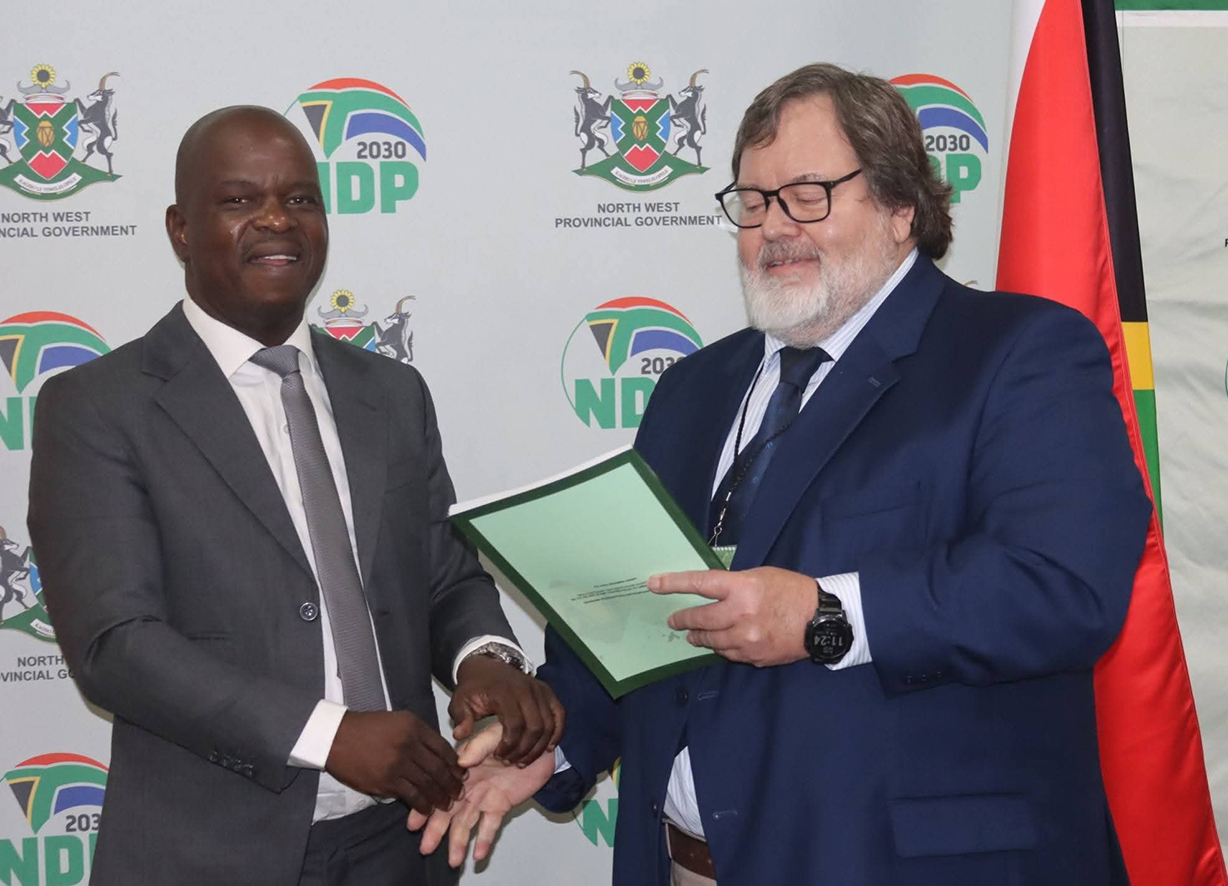
“Our province is estimated to have the capacity to connect up to 3.47 gigawatts of new electricity generation onto Eskom’s transmission grid.”
He told the media and members of the provincial government that renewable energy, particularly solar, was expected to drive investment.
“The full development of the solar PV potential is estimated to attract up to R50-billion in new capital investment into the province,” he said.
Mokgosi said industrial development was being accelerated through special economic zones.
“We have adopted Special Economic Zones (SEZ) as an instrument that fosters and deepens economic re-industrialisation,” he said.
The premier said Bojanala SEZ alone was expected to generate significant employment.
“The SEZ has the potential to create twelve thousand jobs.”
Digital transformation was another central focus.
“We will integrate advanced digital technologies into agriculture, manufacturing, services, and logistics. The digital economy will promote and attract domestic and foreign investment, promote ease of doing business, and connect marginal communities.”
Youth and women were positioned at the centre of this transformation.
“By prioritising skills development, entrepreneurship, and access to capital for youth and women, the province positions these groups as central drivers of inclusive economic growth and job creation,” said Mokgosi.
He said sustainability underpins all these initiatives.
“All initiatives will align with national and provincial sustainability goals, promoting environmentally responsible practices.”
The Premier concluded with a strong emphasis on accountability and delivery.
“We will strengthen the implementation plan through district-based delivery models, public-private partnerships, and clear performance targets across all departments, as well as quarterly public reporting and accountability,” the Premier added.
- North West Province’s new Provincial Growth and Development Strategy (PGDS) prioritizes agriculture to revitalize rural economies, ensure food security, and promote inclusive growth through modernization, research, and technology.
- Key initiatives include household food security programs, establishment of agri-hubs in partnership with North West University, upgrading grain storage infrastructure, and expanding citrus, potato, and livestock (goat) farming markets.
- Large-scale projects like the R1.5 billion Taung Irrigation Scheme and collaboration across government spheres aim to boost agricultural production and transform farming sectors.
- The PGDS emphasizes industrial development via Special Economic Zones (SEZs) to create jobs, digital transformation to increase investment and inclusivity, and renewable energy investments, especially solar power, targeted to attract R50 billion.
- The strategy centers on youth and women empowerment, sustainability, and accountability through skills development, entrepreneurship support, public-private partnerships, district delivery models, and transparent public reporting.
Agriculture has been positioned as a cornerstone of
He was speaking at the launch of the Provincial
“Our vision for a united and transformed agricultural sector for inclusive growth remains the cornerstone for the
“
He said a key focus was household-level food security. “
Mokgosi said that, to support this, the province has introduced agri-hubs in partnership with academic institutions.
“We have already initiated a provincial agri-hub in collaboration with the
“
society,” he said.
Mokgosi said the infrastructure was also being upgraded to support agricultural production.
“
“We will also increase our footprint in the citrus and potato markets by scaling production in these commodities.”
Mokgosi emphasised the importance of collaboration between traditional and commercial farming sectors.
“We need every piece of farmland back into full-scale production,” he said.
Livestock development, particularly goat farming, has been identified as a high-growth opportunity.
“We have also stepped up efforts to transform goat farming in the province.
Large-scale projects such as the
“
Energy and the digital economy are also what Mokgosi sees as future growth. He said
“At this critical juncture, the
Mokgosi said energy was a key pillar of this transformation.
“Our province is estimated to have the capacity to connect up to 3.47 gigawatts of new electricity generation onto Eskom’s transmission grid.”
He told the media and members of the provincial government that renewable energy, particularly solar, was expected to drive investment.
“
Mokgosi said industrial development was being accelerated through special economic zones.
“We have adopted Special Economic Zones (SEZ) as an instrument that fosters and deepens economic re-industrialisation,” he said.
“
Digital transformation was another central focus.
“We will integrate advanced digital technologies into agriculture, manufacturing, services, and logistics.
“By prioritising skills development, entrepreneurship, and access to capital for youth and women, the province positions these groups as central drivers of inclusive economic growth and job creation,” said Mokgosi.
He said sustainability underpins all these initiatives.
“All initiatives will align with national and provincial sustainability goals, promoting environmentally responsible practices.”
“We will strengthen the implementation plan through district-based delivery models, public-private partnerships, and clear performance targets across all departments, as well as quarterly public reporting and accountability,” the Premier added.