


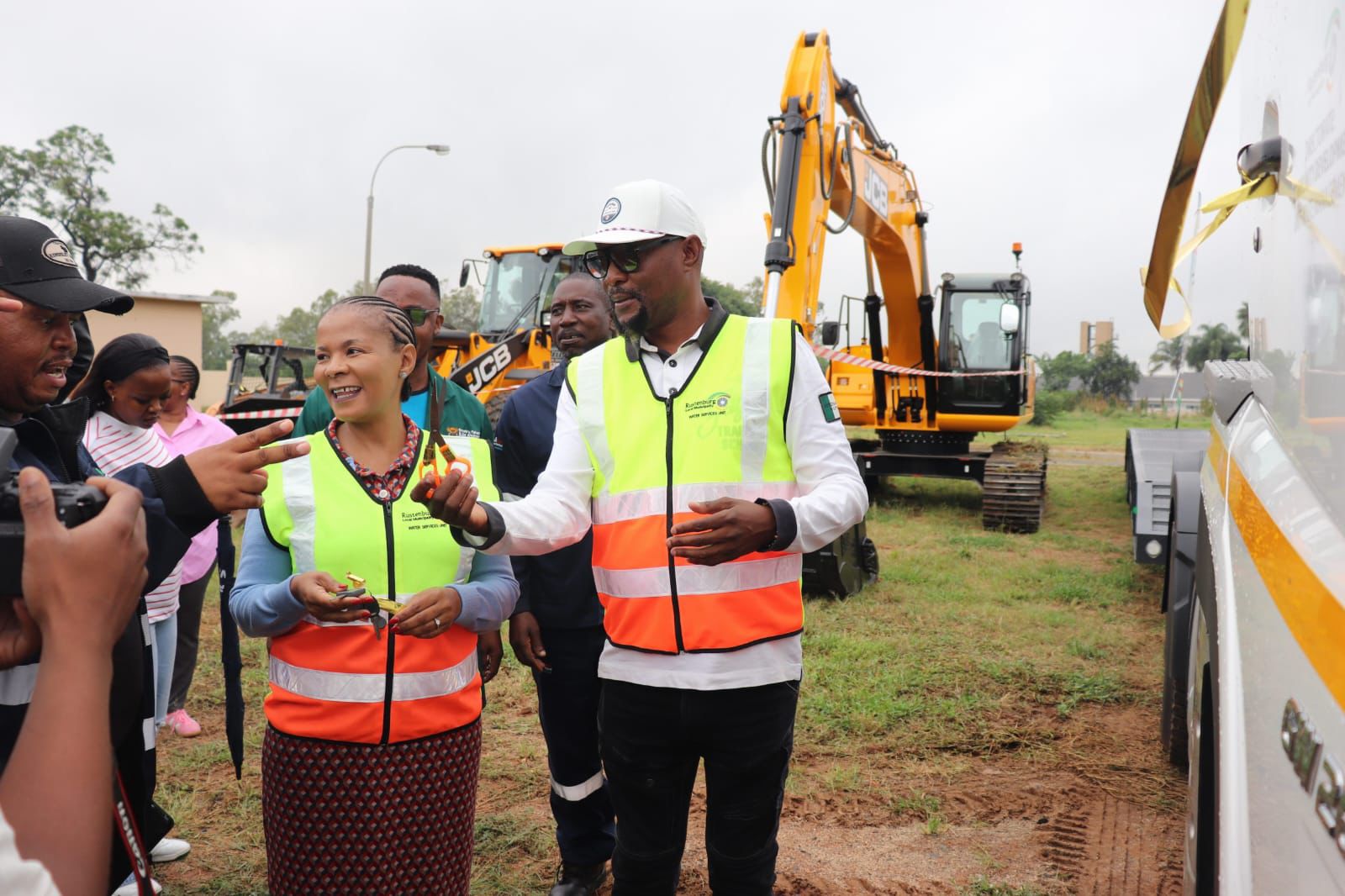
From clearing illegal dumping sites to improving road access and maintaining neighbourhood infrastructure, Rustenburg Local Municipality’s City at Work campaign is demonstrating the value of taking municipal services into communities.
For a resident navigating a damaged road, living beside an illegal dumping site or walking past an overgrown public space, service delivery is measured in everyday experience.
In Rustenburg, the City at Work campaign has brought these concerns into focus through municipal operations that combine infrastructure maintenance, environmental cleaning and attention to community needs. Its achievements can be seen in interventions across neighbourhoods: a gravel road opened, road markings refreshed, waste removed and public spaces cleared.
The campaign’s significance lies in bringing different municipal functions together around the places where residents live. Roads, drainage, waste management and public-space maintenance are connected. Addressing them together gives communities a more comprehensive response to the condition of their surroundings.
Rustenburg Local Municipality’s 2026–2027 Integrated Development Plan describes City at Work as a programme extending across wards, towns, villages and settlements, with environmental cleaning, pothole repairs, water infrastructure maintenance and law enforcement among its priorities. That places the campaign within the municipality’s broader service-delivery agenda.
Operations reported across Phokeng, Monakato, Boitekong, CBD, Phatsima, Tsitsing and Tlaseng and currently in Tlhabane and surrounding areas, show the geographical reach of the campaign. The communities have different needs and settlement patterns, making an approach that brings teams into individual areas relevant.
In residential areas such as Geelhoutpark and Zinniaville, reported activities included clearing overgrown public spaces, unblocking stormwater channels, repairing streetlights and carrying out road maintenance. Each task addresses a different aspect of a functioning neighbourhood, while collectively contributing to its upkeep.
Stormwater maintenance, for example, channels the need to remain clear to carry run-off. Removing accumulated material is an important part of routine maintenance and helps protect the function of drainage infrastructure. Similarly, attention to overgrown spaces and streetlights supports the practical use of public areas.
Road access has been another important area of work.
In Phokeng’s Kgale area, Ward 6, teams loaded mine stone for resurfacing a road used for funeral access. The reported activity was preparation for the resurfacing work, and its purpose highlights the range of community needs that municipal road maintenance must accommodate.
Roads serve households, businesses, schools and community gatherings. Their importance is especially clear when access is needed for occasions such as funerals, when families and visitors depend on routes that can accommodate movement through the area.
In Mosenthal, Ward 44, reported work included painting stop signs and speed humps. Renewing the markings helps make traffic controls more visible. Alongside major roadworks, this maintenance is an essential part of looking after the road environment.
The Mosenthal operations also included cemetery grass cutting, clearing illegal dumping, removing overgrowth and picking up litter. Taken together, the activities show the breadth of work involved in maintaining a community’s shared spaces.
Cemetery maintenance deserves particular recognition. Cemeteries are places of remembrance and family connection and their upkeep forms part of the municipality’s responsibility towards public facilities. Grass cutting contributes to a better maintained environment for people visiting the graves of loved ones.
In Monakato, Ward 25, City at Work teams undertook illegal-dumping clearance and vegetation removal at several sites. June reports recorded work on open stands opposite houses 475, 949 and 540, at Monakato Park opposite house 1048, and near Living Sound Church.
The detail in these reports is valuable. It locates the work in residents’ surroundings and gives substance to statements about service delivery. An intervention can be assessed more meaningfully when the site and the activity are identified.
Clearing an open stand near homes or maintaining a neighbourhood park responds to concerns that residents encounter daily. Such work also demonstrates why environmental services are central to community well-being. The condition of shared land influences how people experience the neighbourhood around them.
Sunrise Park provides another example of the campaign’s achievements. In June, teams reported completing illegal-dumping clearance. The day’s operations then moved to illegal-dumping clearance and vegetation removal.
The campaign also draws attention to the cumulative importance of municipal maintenance. A cleared dumping site, a repainted traffic marking or a maintained cemetery may be a modest intervention when viewed individually. Across several communities, however, these activities represent a substantial body of practical work.
Their value should be understood at the scale at which residents experience them. A household beside a cleared site sees a change in its surroundings. A road user encounters a renewed marking. A family visiting a cemetery benefits from attention to its upkeep.
The national relevance of Rustenburg’s experience lies in the connection between municipal responsibility and everyday life. Public discussion of local government often centres on large projects and budgets. Routine maintenance is equally important because it determines how infrastructure and facilities serve communities.
City at Work offers a practical example of bringing that maintenance into public view. Its reported operations show municipal teams attending to several service areas in neighbourhoods, giving the campaign a recognisable presence.
The presence also creates an opportunity for stronger accountability. Reports that identify sites, describe activities and distinguish completed work from preparations give residents a clearer basis for understanding progress. Maintaining this level of detail will be important as the campaign continues.
The achievements should also be understood alongside the work that remains. Clearing a dumping site requires continued waste-management attention to prevent its return. Road repairs and renewed markings require follow-up maintenance. Drainage channels need regular inspection and cleaning.
Sustaining the gains is therefore the next measure of success. Lasting improvement depends on incorporating the work into consistent municipal operations.
The strongest legacy of City at Work would be a dependable pattern of maintenance.
Residents have a role in protecting the improvements through responsible waste disposal, reporting damaged infrastructure and caring for shared facilities. Community participation can help preserve the results of municipal work, while the municipality retains responsibility for delivering services and responding to reported needs.
The contribution of municipal employees is central to the campaign’s record. Clearing waste, cutting vegetation, maintaining roads and renewing markings require physical work, equipment, coordination and persistence. Recognising the tasks gives proper attention to the people who translate municipal plans into visible action.
Addressing the workers, the executive mayor councillor, Shiela Mabale-Huma, said: “To our dedicated municipal teams, community workers and the residents of Rustenburg I want to take this moment to thank and encourage each one of you. What we are doing is more than just service delivery — it is restoring dignity, pride, and hope in our communities.
“From patching potholes, cutting grass along the R104, replacing damaged water pipes, cleaning park and cemeteries, to registering our indigents and ensuring by-law compliance — every task matters.
“To our teams on the ground braving the sun and working tirelessly: Your work is seen. Your work is valued. Your work is building the Rustenburg we all want.”
Across the communities reached by City at Work, the reported achievements provide a grounded account of progress.
Together the activities, show what an active municipal presence can accomplish when attention is directed towards specific needs. They also provide a foundation on which Rustenburg can build further improvements through maintenance, reporting and engagement with communities.
The campaign assists the municipality in living up to its vision of “An environmentally friendly city, where all communities enjoy a high quality of life and diversity”.
- From clearing illegal dumping sites to improving road access and maintaining neighbourhood infrastructure, Rustenburg Local Municipality’s City at Work campaign is demonstrating the value of taking municipal services into communities.
- For a resident navigating a damaged road, living beside an illegal dumping site or walking past an overgrown public space, service delivery is measured in everyday experience.
- In Rustenburg, the City at Work campaign has brought these concerns into focus through municipal operations that combine infrastructure maintenance, environmental cleaning and attention to community needs.
- Its achievements can be seen in interventions across neighbourhoods: a gravel road opened, road markings refreshed, waste removed and public spaces cleared.
- The campaign’s significance lies in bringing different municipal functions together around the places where residents live.


