


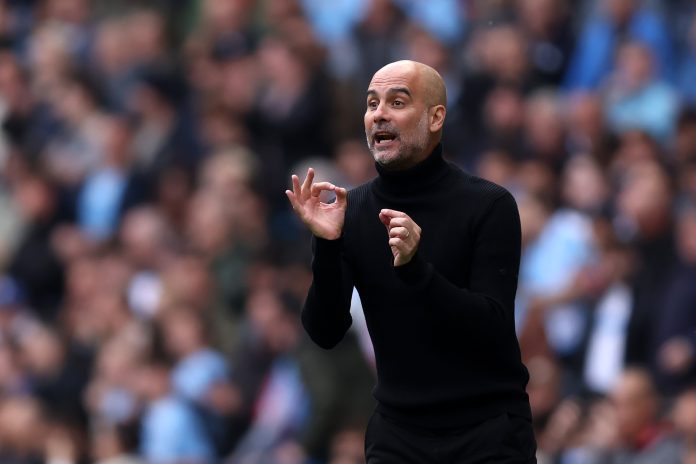
Much is being said about Pep Guardiola’s departure from Manchester City, a phoenix he awakened in the decade he spent in Manchester. Fans and rivals alike are singing praise.
For many, this is simply a football story, which it is. But it is also more than that. It is a
meditation on becoming and being. On loving, leading and leaving. On the discipline of
formation and the moral intelligence required to know both how to build something and how to release it with dignity. Football merely provides the setting. The human condition and leadership are the real issues here.
On Loving
I must declare my position at the outset. I am a Manchester City fan of fifteen years, which
means I must also confess something that football culture considers a rather serious moral
failing: I abandoned Arsenal, my childhood team. I know. I know. In the religion of football,
this is the kind of apostasy that invites permanent excommunication from everyone who
knew you before the conversion. One Thamsanqa Mafu does not miss the opportunity to
berate me for this (although he says nothing about Thabani Buthelezi abandoning Moroka
Swallows after decades of uselessness).
But I made my peace with it long ago, and watching Guardiola build what he built at the Etihad Stadium across a glorious decade, I have never once regretted the choice. If anything, I have felt vindicated in ways that only football can vindicate a person: loudly, publicly and with silverware.
But the love I want to speak about here is not the love of a supporter for a club, however
complicated and occasionally embarrassing that love may be. It is the love that Guardiola
brought to his work: the love visible in how he embraced players after victories and consoled them after defeats, in how he embraced and kissed grown men on the forehead on the touchline without a moment’s self-consciousness, in how he wept at the end of campaigns with the uninhibited transparency of someone who had given everything they had and knew it.
That is not the behaviour of a man performing for the cameras. That is the behaviour of a
human being who loves what he does and loves the people he does it with, and who has never made peace with the idea that professional distance is a virtue.
Before Guardiola could love an institution as a leader, he first had to be loved by one as a
follower. Under Johan Cruyff at Barcelona, the young Guardiola was not merely coached. He
was nurtured. He inherited a philosophy of courage, positional intelligence and collective
discipline that would define everything he subsequently built. He received a worldview
before he projected one. He was poured into before he poured out. And those who watched
him carefully over the years could see Cruyff in him at every turn: in the way he spoke about the game, in the way he demanded thought from players whose previous coaches had demanded only effort, in the way he treated football as a form of art that happened to have a scoreline attached to it.
Formation of this depth is only possible when the relationship between teacher and student is carried by genuine love, the kind that takes the other person’s potential more seriously than they take it themselves. I accept that my teacher friends from notorious township schools will scold me for this.
This is what the philosophical distinction between becoming and being rests on. It is the
restless, often painful process through which one acquires shape, discipline and identity
through submission to something greater than oneself. Being concerns fulfilment and
maturity: the settled authority of one who has endured enough to know both their power and their limits. Yet human beings desire being without enduring becoming. They seek
recognition before apprenticeship, authority before discipline and arrival before formation.
They want the trophy without the decade that precedes it.
Guardiola’s career is a negation of that impatience. One becomes before one is. And the becoming is only possible inside a love serious enough to form you – something painfully lacking in our politics today (it is very rare to witness politicians give such a companionate embrace as that of Mandela and Castro, Mandela and Tambo, Mandela and Arafat).
On Leading
When Guardiola arrived at Manchester City, he did not arrive in an empty house. He
inherited resources that many managers can only dream of. The Abu Dhabi ownership had
invested immense wealth into the club long before his arrival, and he also inherited the
success of predecessors who had already elevated Manchester City into a competitive
institution. Yet Guardiola understood something that many wealthy institutions fail to
understand. Money can buy instant success. It cannot buy sustainability. Money can buy
players. It cannot buy philosophy, culture or institutional memory. It cannot buy the kind of
collective courage that holds together when the game is in the balance, and the crowd is
turning, and the opposition has just scored, and everyone in the stadium is wondering whether the dream is over.
European football has demonstrated this lesson in the most expensive ways imaginable. Paris Saint-Germain assembled some of the most celebrated individual talent in football history yet failed, year after painful year, to convert financial supremacy into sustained institutional excellence. They had superstars. They lacked a soul.
Chelsea, under successive regimes of extraordinary spending, experienced cycles of dramatic success followed by managerial instability and cultural drift, because investment in players was never matched by investment in philosophy. They bought everything except coherence.
Even Real Madrid, the most decorated club in European history, has experienced periods in which financial power produced individual brilliance without collective direction: brilliant players orbiting each other like expensive planets without a sun.
Money creates acceleration, like those fast cars. It does not necessarily create direction and endurance. Guardiola recognised this early and rebuilt the club’s intellectual and cultural foundations rather than simply adding to its financial ones. He embedded a philosophy that could survive individual players, temporary setbacks and the constant seduction of short-termism that afflicts every institution drunk on its own resources.
He changed not merely results, but consciousness. In England and Germany, football
traditions had long prioritised directness, physical endurance and relentless pace: the kind of football that made you feel something had been accomplished even when nothing particularly intelligent had occurred.
Guardiola introduced a different imagination of the game entirely. If I may borrow words from those TikTok commentaries: “possession became a religion, movement became language, space became strategy. The ball moved not because players
were chasing it but because players were thinking about where it needed to be before it
arrived there. Even critics of his methods were eventually forced to admire the intellectual
beauty of what he created.”
Coaches across England who spent years publicly dismissing Guardiola’s approach quietly began teaching their academy players to play out from the back. ‘Imitation, as they say, is the sincerest form of flattery, even when delivered in denial.’
What is striking is that even rivals who spent years resisting his football eventually
recognised the significance of his contribution. My friend David Maimela, an unapologetic
Liverpool loyalist and fierce defender of Arne Slot, made a remarkably humble concession
when Guardiola’s departure was announced. Maimela has always teasingly referred to
Guardiola as “Pep Store”, likening him to a retail shop for the working class rather than the
kind of football elegance a Liverpudlian could respect. He said it with great affection, of
course, the way rivals do when they admire someone they are constitutionally required to
oppose.
Yet even Maimela paused when the announcement came and called Guardiola a
“legend”. He said it quietly, almost reluctantly, the way people confess things they have been carrying for a while. Genuine excellence eventually compels acknowledgement, even from those most committed to opposing it.
Other Maimelas like Vincent Magwenya, Joy Rathebe and Dumisa Jele have also conceded that a glorious era is ending. The leadership that Guardiola practised drew its deepest strength from the love that preceded it. He stood beside Lionel Messi through multiple Ballon d’Or victories, understanding that genius of that particular order does not require management so much as stewardship: the careful tending of a flame so rare that the wrong intervention extinguishes it entirely. He guided Robert Lewandowski and later Erling Haaland to Golden Boot seasons, knowing that prolific scorers carry a particular fragility beneath their brilliance, athletes whose entire identity rests on the ball finding the net and who therefore feel every missed chance as a small death.
He trusted Manuel Neuer and Ederson to make the saves that preserved his belief
system in its most precarious moments, understanding that goalkeepers inhabit a loneliness that no outfield player truly comprehends: standing at the edge of the pitch, responsible for everything and involved in very little of it until suddenly everything depends on them in a single unrepeatable second.
But it is in his relationship with error that Guardiola grew most visibly as a leader and most
fully as a human being. Pep coached players who scored own goals in decisive matches,
players who will carry those moments for the rest of their lives, waking at 3am replaying the trajectory of that ball into their own net in front of the world. He
watched gifted defenders make catastrophic errors at the worst possible moments, errors that rewrote the entire season’s narrative in ninety seconds.
In his earlier years, the frustration was visible and immediate. The hands on the head. The eyes to the sky. The expression of a man calculating in real time the precise dimensions of the disaster unfolding before him.
But as Guardiola matured, something beautiful shifted. He became more human. More
realistic about the full range of possibilities that inhabit any field of play: that the same player who produces the moment of genius that wins the championship is also, always, capable of the moment of human fallibility that loses it, as we witnessed this season; that excellence and error live in the same body. That you cannot have the Ballon d’Or and the own goal as separate categories belonging to different types of people. They belong to the same people.
Often the same person, in the same season, sometimes in the same match. To embrace one without accepting the other is not leadership. It is selective loyalty, which is another name for cowardice dressed in managerial authority; a viral disease in our political and public sector organisations.
One of the Inanda proverbs captures this beautifully: as a leader, you cannot claim to love
those you represent without fellowship with those you lead with. Guardiola lived that proverb in every embrace and every difficult conversation and every moment in which he chose to remain present with a player who had just cost him something precious. Fellowship generates trust.
Trust generates sacrifice. Sacrifice generates collective excellence. That chain does not
begin with strategy and tactics, if I may borrow words from the broad church. It begins with the willingness to be present with another human being in their worst moments, not merely their best.
On Leaving
Another Inanda proverb sharpens the point further: the true measure of success is when your successor succeeds. That insight may define Guardiola’s legacy more than trophies or tactical innovations, as much as it defined the legacies of those he succeeded. The real test of Manchester City begins now, after Guardiola.
If the institution continues to flourish under the leadership of those he mentored and formed, then his contribution will have achieved its highest purpose. Institutions that collapse after the departure of a great leader reveal dependency rather than transformation. They reveal that what was built was not a culture but a personality cult.
Personality cults, however brilliant and however decorated, always end in
tears. Guardiola demonstrated awareness in multiple ways throughout his career. He understood his own limitations. He understood the exhaustion produced by sustained excellence: the particular fatigue that accumulates not in the muscles but in the imagination, when the ideas begin to repeat themselves and the hunger that once felt effortless now requires effort.
He understood the danger of remaining too long, of becoming the institution rather than serving it, of confusing his continued presence with the institution’s continued need.
In announcing his departure, he said that deep inside he knew it was his time; that nothing is eternal. There is profound wisdom in that statement. It is the kind of wisdom that cannot be taught in any classroom or leadership programme. It arrives only through years of living seriously inside one’s own experience.
Many leaders fail because they lose this awareness of proportion. They become intoxicated
by continuity. They mistake permanence for purpose. They begin by serving institutions and eventually expect institutions to serve them: to preserve them emotionally and symbolically long past the point at which they are serving anyone. They confuse the office with the person, the title with the contribution, the seat at the table with the ideas that once justified their presence there.
Guardiola resisted that temptation with a discipline that is rare. He understood
that leadership includes the responsibility to create room for renewal, and that sometimes the most generous thing a leader can do for the institution they love is to walk out of it while they still love it.
In reflecting on my own departure from public service a year ago, I argued that managing
endings is among the heaviest responsibilities of leadership. Endings are ethical moments.
They require leaders to distinguish, honestly and without self-deception, between
commitment to mission and attachment to self.
The inability to leave often reveals fear of irrelevance rather than devotion to the institution. It reveals leaders who have quietly transferred their primary loyalty from the mission to themselves, who need the role more than the role needs them, and who, therefore, convince themselves, and sometimes others, that their continued presence serves a purpose that has in truth long since been served.
South Africa knows this story rather too well, across too many institutions, too many decades and too many leaders who built genuinely important things and then stayed to preside over their gradual unravelling. At the risk of dampening the soccer community’s spirits ahead of the 2026 FIFA World Cup, I will not name names.
Guardiola chose differently. He chose the particular courage required to relinquish something you love before circumstances force you to relinquish it in an undignified way.
There is something quietly tearful about watching someone leave something they clearly love with every complicated fibre of who they are.
The footage of Guardiola’s last days at Manchester City: the training ground farewells, the embraces with players who have grown up under his guidance, the quiet conversations that cameras captured but could not hear, carried the particular emotional weight of all genuine endings. Not the false endings of someone who is relieved to go, but the true ending of someone who is choosing to go because the love is still fully intact and they understand that love well enough to know when not to ask it to carry more than it should.
As a fifteen-year supporter, I confess I felt it too. Football does that to you. Even when you were once an Arsenal person.
The paradox of loving, leading and leaving is that they are not three separate seasons in a
leader’s life. There are three obligations present from the first day to the last. You must love the institution and the people in it. You must lead with the fullness of everything you have been formed to give. And you must carry the awareness of leaving from the very beginning: not as a morbid preoccupation with endings, but as the discipline that prevents you from ever confusing your presence with the institution’s purpose.
Guardiola’s words in his departure transcend football entirely. Nothing is eternal. In that
simple statement lies an entire philosophy of leadership, mortality and institutional humility
that our continent and our institutions need to hear and take seriously (praying that our
politicians will read this part).
The football was beautiful. The love behind it was more beautiful still. And the leaving,
considered, voluntary and dignified, was perhaps the most instructive thing of all.
In South Africa, where the distance between institutional promise and institutional
performance remains one of our most painful national contradictions, these three lessons
carry an urgency that goes well beyond any sport.
Our institutions do not merely need talented individuals. They require leaders capable of the love that forms, the leadership that transforms and the wisdom to leave before they become the obstacle to what they once made possible.
In the Aspen-African Leadership Initiative fellowship that I belong to, someone once advised us, as leaders in organisations: “Always remember to build something that outlives you. Develop people who exceed you. That is the meaning of moving from success to
significance.”
And when your season has ended, leave the stage before the music forces you off it (Bobby!).
- Pep Guardiola's departure from Manchester City marks the end of a transformative decade where he built a sustainable football culture rooted in love, formation, and leadership beyond money and trophies.
- His leadership emphasized deep human connections with players, embracing both their triumphs and failures, fostering trust, sacrifice, and collective excellence.
- Guardiola inherited a financially powerful club but prioritized embedding a lasting philosophy and culture, influencing English football's style and challenging approaches based on mere spending.
- His decision to leave reflects rare leadership wisdom, recognizing the importance of renewal and not confusing personal attachment with institutional purpose, thereby avoiding a personality cult.
- The article draws broader lessons for leadership in institutions, especially in South Africa, emphasizing the need for leaders who build enduring legacies, love deeply, lead effectively, and have the courage to leave with dignity.


