


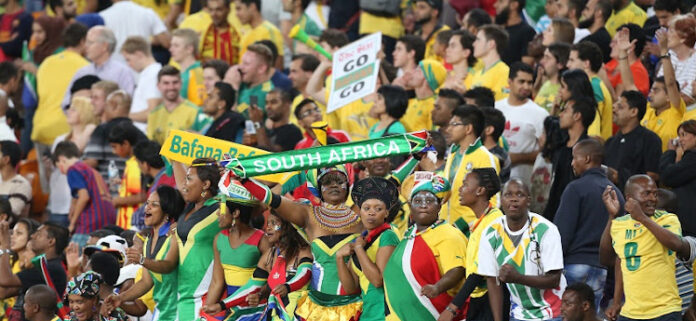
When Bafana Bafana clinched their place in the 2026 Fifa World Cup, a wave of euphoria swept across South Africa, creating a powerful national moment.
This shared joy grew even louder when the tournament draw revealed an exciting piece of nostalgia: South Africa will once again face Mexico in the opening match, evoking memories of their thrilling encounter in 2010.
Having genuinely qualified for the first time since 2002, this accomplishment represents more than just sporting success; it is a testament to black excellence overcoming persistent and challenging obstacles that many people face daily within this nation.
The festive atmosphere was almost disrupted by an all-too-familiar administrative error known as the “Mokoena-gate” incident.
Due to a mistake in managing yellow card accumulations, three vital points were lost, negating a well-earned win.
Such severe incompetence and self-sabotage typify the unfortunate stereotype often associated with black South African narratives—a relentless struggle against internal disorganisation that jeopardises hard-won achievements.
In this context, the achievements of coach Hugo Broos deserve significant recognition.
The Belgian Afcon champion has remarkably transformed the team into bronze medal winners at the recent Afcon tournament.
However, his success underscores an unsettling trend: international figures like Broos often offer a more stable and respectful environment for predominantly black talent compared to many local counterparts.
This team regularly faces doubt and is compelled to continually prove itself—a challenge all too familiar to numerous black South Africans who experience undue scepticism toward their accomplishments.
The team’s talent is evident, as they’ve achieved an impressive and steady performance with an unbeaten streak of over 20 games in regulation time.
Additionally, the squad boasts promising young players like Relebohile Mofokeng, Mbekezeli Mbokazi, and Mohau Nkota, who are becoming essential to the team’s current success and future potential.
In South Africa, and worldwide, this sport is undeniably the most popular—boasting over 5-billion fans globally—but local corporate support for the national team often falls short of reflecting its significance.
While international brands provide backing, significant local investments frequently bypass this beloved sport that embodies majority aspirations, leaving state-owned enterprises like SAA as leading supporters from within the country.
This isn’t merely a critique; it’s an appeal for enhanced involvement and investment from South African businesses to better align their resources with widespread public passion.
Dismissing Bafana’s achievements when compared to other local sports reflects a narrow perspective.
Achieving success in football is significantly more challenging due to the vast scale of global competition it faces. Additionally, interest in this team extends worldwide; internationally, there appears to be greater informed enthusiasm for Bafana than exists in some regions within South Africa.
In the face of challenges, this predominantly black team exemplifies resilience.
Their roots lie in lively townships—underprivileged yet crucial centres of talent.
Their shared narrative mirrors Sipho Mbule’s journey—a player once dismissed due to scandals but who made a comeback to the national scene through trust and perseverance—which captures the essence of black experiences marked by faith and determination. Even instances of fan tribalism, such as discontent over the absence of Kaizer Chiefs players, highlight how nationalism can occasionally hinder broader collective interests within the black community.
The state of South African football is outstanding, highlighted by World Cup qualification, a third-place finish in the Afcon tournament, and formidable junior teams. This success resonates with the rhythm and energy of our music—Amapiano, Afro House, and Gqom—cultural exports that are distinctly South African.
This is a story that celebrates the pride and heritage of black South Africans. The stage is set for Afcon—this is Bafana’s moment, and this is only the opening chapter of a significant new story of national pride.


