
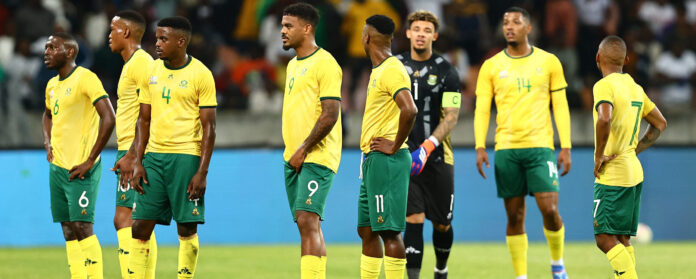
Former Kaizer Chiefs and Orlando Pirates coach Muhsin Ertugral has pointed to fragile player psychology as a key factor in Bafana Bafana’s 2-1 Afcon Last-16 defeat to Cameroon.
While praising Bafana coach Hugo Broos’ impact, Ertugral is urging the Belgian to promote stronger mental resilience and closer cohesion between the national team and clubs. This as South Africa will now focus on preparing for the 2026 Fifa World Cup.
Fifa World Cup preparation
Bafana now have about five months to get ready for the 2026 Fifa World Cup opener against co-hosts Mexico.
“It is the way of, let me say, the team from the psychological point of view. I remember, I was just saying, we don’t have the likes of Benny McCarthy. We don’t have players such as your Steven Piënaar and Doctor Khumalo. Players that say, ‘okay, the sleeves come up now and even if they’re better than us. We’re going to put up with them and put the light on a little bit more on the aggressiveness’. So, that didn’t happen,” Ertugral told SportsBoom.co.za.
“There must be very close communication with the teams (to monitor) performances for the next three, four, five months. That is very important for the players. And you build those relations from the federation to the teams, I think that can be better,” he added.
According to the coach, who is credited with giving erstwhile young players such as Jabu “Shuffle” Mahlangu a chance to play at Amakhosi, it is important to note and recognise how Bafana had Cameroon on the back foot in the opening 20 minutes of the game. And perhaps in the final 15 minutes of the clash.
Missed opportunities
Ertugral says that Bafana created three chances in the opening 20 minutes of the match. Chances that they really should have buried. Instead, Lyle Foster and Relebohile Mofokeng missed from close range.
“After the 20-minute mark, Cameroon seemed to have adjusted to Bafana’s strategy and tactics. And they adjusted accordingly, leading to their first goal of the match. From there on in, Bafana players dropped their heads. And the body language was just not the same as Cameroon dictated terms and played much more aggressively.
“It is the way of, let me say, the team from the psychological point of view. I was just speaking to a friend of mine about it. The point here in South Africa is that you could see Teboho Mokoena was the one that pulled his socks up. You could see from the moment when Cameroon was leading, they were very aggressive. You could see Cameroon was up to it to defend their lead,” he added.
Cohesion with clubs
“I’m sure that the clubs will definitely assist the national team. So, these are the communications and the bridges (that have to be built), I think, on that way. Then you can prepare the players already individually, how you want to set up the system. I think Broos does know. He’s a very experienced coach.
“That’s what we did with the Turkish national team. When I was involved with Turkey, especially for the international players. I was in Milan, I was in Leicester, I was in Lille, where all of our players were playing.
“So, if they can make the coach’s life a bit more easier, I think that’s the next challenge that Hugo Broos is facing. But definitely not any discussion in the direction of the coach. I think he’s given South African football an identity. And you can see the team is much more better than the previous years we had. So that shouldn’t be any discussion from anyone,” he concluded.
- Former Kaizer Chiefs and Orlando Pirates coach Muhsin Ertugral has pointed to fragile player psychology as a key factor in Bafana Bafana’s 2-1 Afcon Last-16 defeat to Cameroon.
- While praising Bafana coach Hugo Broos’ impact, Ertugral is urging the Belgian to promote stronger mental resilience and closer cohesion between the national team and clubs.
- This as South Africa will now focus on preparing for the 2026 Fifa World Cup.
- Fifa World Cup preparation Bafana now have about five months to get ready for the 2026 Fifa World Cup opener against co-hosts Mexico.
- “It is the way of, let me say, the team from the psychological point of view.