


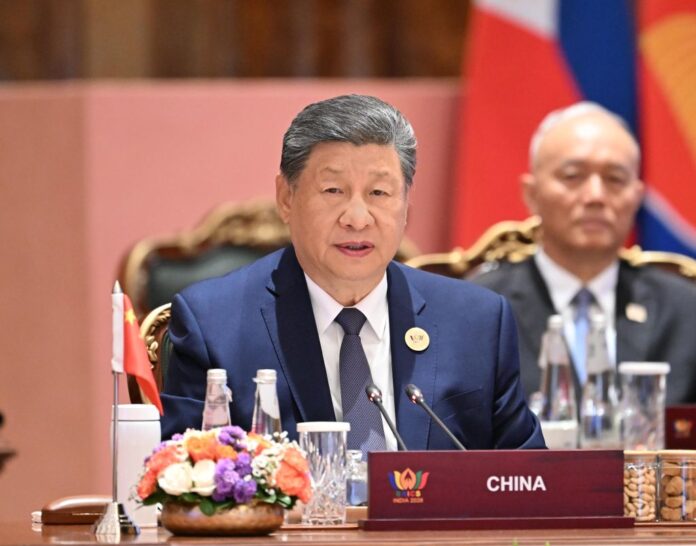
The Fifth Plenary Session of the 20th Central Committee of the Communist Party of China (CPC) was held in Beijing from October 26 to 29.
Sunday World spoke to Chinese Ambassador to South Africa Wu Peng about the outcomes of the meeting and what they mean for China, South Africa and the world.
The Fifth Plenary Session concluded recently. What are its main outcomes?
The session was held in the year in which China marks the CPC’s 105th anniversary and launches its 15th Five-Year Plan. Its most important outcome was the adoption of the Resolution of the CPC Central Committee on Certain Major Issues concerning Persevering with Full and Rigorous Party Self-Governance, which reviews the Party’s achievements in governing itself and sets out systematic arrangements for the years ahead. The session also decided to convene the CPC’s 21st National Congress in Beijing in the second half of 2027.
Why devote an entire plenum to how the Party governs itself?
The CPC has more than 100 million members and leads a country of 1.4 billion people. How well the Party governs itself determines how well China is governed. Through long practice, the CPC has found two answers to the age-old question of how to rise above the historical cycle of rise and fall: the people’s oversight over government, as well as the Party’s self-reform. The longer a party stays in power, the more vigilant it must be. With the world undergoing profound changes, the plenum sends a clear message: self-governance is a journey without end.
WATCH: What Africa can learn from China’s CPC
The plenum highlighted Xi Jinping Thought on Party Building. What is it, and why does it matter?
In June this year, the CPC Central Committee held a national meeting on studying and implementing Xi Jinping Thought on Party Building. The Thought answers a major question of our times: what kind of long-term governing Marxist party should we build, and how should we build it? The plenum’s communiqué describes it as a major theoretical achievement that integrates the basic tenets of Marxism with China’s specific realities and its fine traditional culture, and as a crystallisation of the practical experience and collective wisdom of the Party and the people.
Its core content is summed up in 14 principles, including upholding the Party’s leadership as the defining feature of socialism with Chinese characteristics, upholding the centralised and unified leadership of the Party Central Committee, exercising full and rigorous self-governance, building a team of high-calibre officials, and taking integrated steps against corruption. The Thought runs through the new Resolution as the central idea and provides fundamental guidance for Party building in the years ahead. For the world, it shows how a large governing party can stay close to the people and keep renewing itself. The CPC does not seek to export the thought, but we welcome exchanges with political parties that might find our experience useful.
Corruption is a concern in many countries. What is China’s approach?
The CPC has zero tolerance for corruption, as it has no special interests of its own beyond those of the people. Since 2012, the Party has been willing to offend a few thousand rather than fail 1.4 billion people, pursuing an integrated approach so that officials do not dare, are not able and do not want to be corrupt. The Resolution commits to carrying this fight through to the end.
Every country must find a governance path suited to its own conditions. Our experience is, the fundamental tenet for the CPC and government to maintain authority is to see that the party always is clean, and always strive for a better life for the people.
What does the plenum mean for China’s development and for the world?
A strong, integrated and disciplined governing party means stable and predictable policies, a scarcity in today’s turbulent world. The 15th Five-Year Plan is off to a good start, and the plenum called for tapping deeper into domestic demand, deepening reform and opening up, and pursuing innovation-driven, high-quality growth. A stable, open and growing China will keep offering opportunities to its partners and momentum to the world economy. China will also continue to advance the Global Development Initiative and the Global Governance Initiative, working with fellow developing countries for a more just and equitable international order.
How will this benefit China–South Africa relations?
China–South Africa relations are at their best in history. Guided by our two Presidents, we are building a high-level China–South Africa community with a shared future. Since May 1, China has granted zero-tariff treatment to all 53 African countries with which it has diplomatic relations, including South Africa, and South African apples were among the first goods to enter China tariff-free. According to South African Revenue Service figures, South Africa’s exports to China was up 25% from May to August, outpacing imports from China by 2%. This is the first time in many years. The two sides are also negotiating, through SACU, an early harvest arrangement to give businesses longer-term certainty.
READ MORE: Dennis Munene | China’s zero-tariff offer trumps Washington’s trade blow to SA
The plenum’s emphasis on officials who deliver real results will make our cooperation even more practical and feasible. We look forward to working with our South African friends to turn opportunities into jobs, growth and shared prosperity for our two peoples.
- The Fifth Plenary Session of the 20th Central Committee of the CPC adopted a major Resolution on Party Self-Governance and decided to convene the 21st National Congress in Beijing in late 2027.
- The plenum emphasized Xi Jinping Thought on Party Building, highlighting 14 principles including the Party's leadership, centralised control, rigorous self-governance, anti-corruption, and building a team of high-calibre officials.
- Since 2012, the CPC has pursued a strict anti-corruption strategy aiming for officials to not dare, be able, or want to engage in corruption, committing to this fight until the end.
- The session called for deepening reform, opening up, innovation-driven and high-quality growth, supporting the 15th Five-Year Plan, and advancing Global Development and Governance Initiatives.
- China-South Africa relations are at a historic high with zero-tariff treatment granted to South Africa from May 1, leading to a 25% increase in South African exports to China between May and August.
The Fifth Plenary Session of the 20th Central Committee of the Communist Party of China (CPC) was held in Beijing from October 26 to 29.
Sunday World spoke to Chinese Ambassador to South Africa Wu Peng about the outcomes of the meeting and what they mean for China, South Africa and the world.
The Fifth Plenary Session concluded recently. What are its main outcomes?
The session was held in the year in which China marks the CPC's 105th anniversary and launches its 15th Five-Year Plan. Its most important outcome was the adoption of the Resolution of the CPC Central Committee on Certain Major Issues concerning Persevering with Full and Rigorous Party Self-Governance, which reviews the Party's achievements in governing itself and sets out systematic arrangements for the years ahead. The session also decided to convene the CPC's 21st National Congress in Beijing in the second half of 2027.
Why devote an entire plenum to how the Party governs itself?
The CPC has more than 100 million members and leads a country of 1.4 billion people. How well the Party governs itself determines how well China is governed. Through long practice, the CPC has found two answers to the age-old question of how to rise above the historical cycle of rise and fall: the people's oversight over government, as well as the Party's self-reform. The longer a party stays in power, the more vigilant it must be. With the world undergoing profound changes, the plenum sends a clear message: self-governance is a journey without end.
WATCH: What Africa can learn from China's CPC
The plenum highlighted Xi Jinping Thought on Party Building. What is it, and why does it matter?
In June this year, the CPC Central Committee held a national meeting on studying and implementing Xi Jinping Thought on Party Building. The Thought answers a major question of our times: what kind of long-term governing Marxist party should we build, and how should we build it? The plenum's communiqué describes it as a major theoretical achievement that integrates the basic tenets of Marxism with China's specific realities and its fine traditional culture, and as a crystallisation of the practical experience and collective wisdom of the Party and the people.
Its core content is summed up in 14 principles, including upholding the Party's leadership as the defining feature of socialism with Chinese characteristics, upholding the centralised and unified leadership of the Party Central Committee, exercising full and rigorous self-governance, building a team of high-calibre officials, and taking integrated steps against corruption. The Thought runs through the new Resolution as the central idea and provides fundamental guidance for Party building in the years ahead. For the world, it shows how a large governing party can stay close to the people and keep renewing itself. The CPC does not seek to export the thought, but we welcome exchanges with political parties that might find our experience useful.
Corruption is a concern in many countries. What is China's approach?
The CPC has zero tolerance for corruption, as it has no special interests of its own beyond those of the people. Since 2012, the Party has been willing to offend a few thousand rather than fail 1.4 billion people, pursuing an integrated approach so that officials do not dare, are not able and do not want to be corrupt. The Resolution commits to carrying this fight through to the end.
Every country must find a governance path suited to its own conditions. Our experience is, the fundamental tenet for the CPC and government to maintain authority is to see that the party always is clean, and always strive for a better life for the people.
What does the plenum mean for China's development and for the world?
A strong, integrated and disciplined governing party means stable and predictable policies, a scarcity in today’s turbulent world. The 15th Five-Year Plan is off to a good start, and the plenum called for tapping deeper into domestic demand, deepening reform and opening up, and pursuing innovation-driven, high-quality growth. A stable, open and growing China will keep offering opportunities to its partners and momentum to the world economy. China will also continue to advance the Global Development Initiative and the Global Governance Initiative, working with fellow developing countries for a more just and equitable international order.
How will this benefit China–South Africa relations?
China–South Africa relations are at their best in history. Guided by our two Presidents, we are building a high-level China–South Africa community with a shared future. Since May 1, China has granted zero-tariff treatment to all 53 African countries with which it has diplomatic relations, including South Africa, and South African apples were among the first goods to enter China tariff-free. According to South African Revenue Service figures, South Africa's exports to China was up 25% from May to August, outpacing imports from China by 2%. This is the first time in many years. The two sides are also negotiating, through SACU, an early harvest arrangement to give businesses longer-term certainty.
READ MORE: Dennis Munene | China's zero-tariff offer trumps Washington's trade blow to SA
The plenum's emphasis on officials who deliver real results will make our cooperation even more practical and feasible. We look forward to working with our South African friends to turn opportunities into jobs, growth and shared prosperity for our two peoples.


