


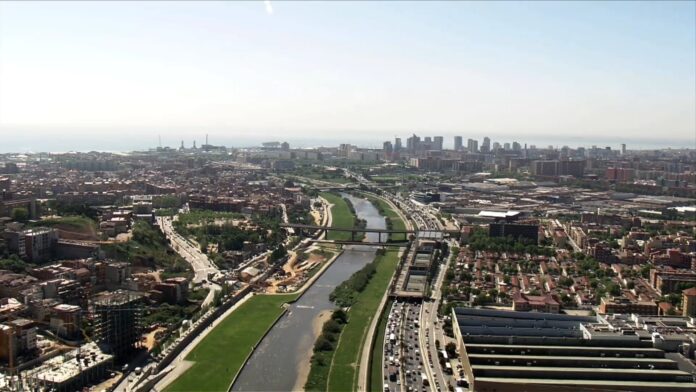
Barcelona offers a glimpse of how cities may have to adapt to a hotter, drier future.
After years of unusually low rainfall, Catalonia endured its most severe drought on record. In February 2024, reservoirs in the crucial Ter-Llobregat system fell below 16% capacity, triggering emergency restrictions affecting millions of people.
Yet Barcelona avoided running dry. A major reason was a transformation under way in the region’s water system.
Instead of depending primarily on rainfall, authorities have increasingly turned to desalination, regenerated wastewater and groundwater. At the height of the drought, desalinated and reclaimed water supplied a significant share of demand, reducing pressure on reservoirs.
Professor Josep Mas-Pla, of the University of Girona and the Catalan Institute for Water Research, says the strategy is increasingly based on combining different sources, with desalination available when natural and recycled supplies cannot meet demand.
But technology has limits.
“People thought, well, with all these engineering solutions, we have solved the water problem in Barcelona. This is obviously not true,” said David Saurí, professor of geography at the Autonomous University of Barcelona.
Saurí points in particular to the high energy demands of desalination, raising questions about cost and long-term sustainability.
Adaptation is also moving inside homes. Some municipalities require grey-water systems in certain new buildings, allowing water from showers and baths to be treated and reused for purposes such as flushing toilets.
Barcelona’s experience matters far beyond Spain. Europe is the world’s fastest-warming continent, with rising temperatures and longer dry periods putting growing pressure on agriculture, rivers, ecosystems and urban water supplies.
At the UN’s Convention to Combat Desertification COP17in Mongolia from August 17 to 28, governments discussed worsening drought, desertification and land degradation. Drought resilience is a central concern as governments consider how cities and regions can prepare for water shortages that may become more frequent and structural.
Barcelona suggests there may be no single answer. Its emerging model instead relies on diversification, conserving traditional resources while making greater use of recycled water, groundwater and desalination.
For Europe, that may offer a model and a warning: adapting to a drier future will require not only new technology but also new ways of managing every available drop.
- In February 2024, reservoirs in Catalonia's Ter-Llobregat system dropped below 16% capacity, leading to emergency water restrictions for millions.
- Barcelona avoided a water crisis by shifting its water supply strategy to include desalination, regenerated wastewater, and groundwater.
- At the peak of the drought, desalinated and reclaimed water supplied a significant portion of Barcelona's demand, easing pressure on reservoirs.
- Some municipalities in the region now require grey-water systems in new buildings to reuse water from showers and baths for toilet flushing.
- Experts highlight that while engineering solutions like desalination help, they have limitations such as high energy demands, underscoring the need for diversified water management.


