


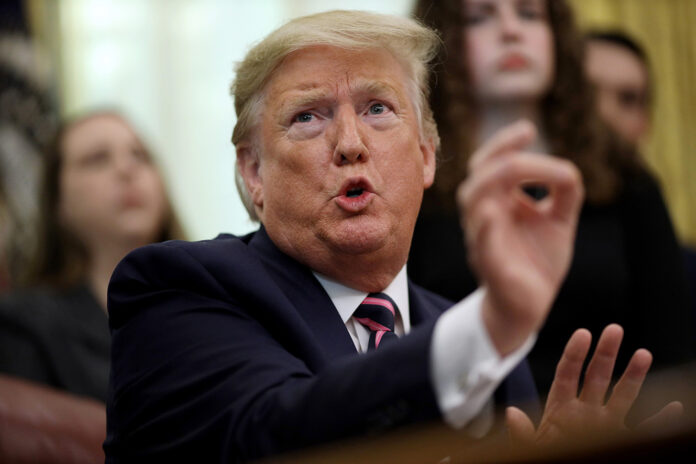
A survey released on Tuesday by the Associated Press–NORC Center for Public Affairs Research found Trump’s approval rating had fallen to 33%, down five points from March. Analysts attribute the decline to his handling of military actions involving Iran and perceived shortcomings in addressing economic challenges at home.
Most respondents said the country is moving in the wrong direction, voicing frustration over persistently high living costs and slow wage growth. Many reported feeling misled by what they described as empty promises on economic relief.
Support for Trump’s economic policies dropped from 38% to 30%, while only a quarter of respondents expressed confidence in his handling of the cost-of-living crisis. Roughly 75% of those surveyed described the US economy in April as “poor” or “somewhat poor,” a sharp increase from about two-thirds (66%) in February.
Similar findings emerged from a Reuters–Ipsos poll, which reported that Trump’s approval rating dropped to 36%, marking a new low, with just 26% of respondents approving of Trump’s response to rising living costs.
Analysts noted a widening gap between Trump’s rhetoric and policy outcomes. While he has pledged to lower gasoline prices and usher in a “golden age” for the US economy, military tensions with Iran have driven oil prices higher, and sweeping tariffs have also added uncertainty to global trade.
Economic strain is becoming increasingly visible across multiple sectors. As energy prices surge, ripple effects spread through aviation, tourism, manufacturing, agriculture, and consumer goods, driving up costs for fuel, electricity, air travel, and groceries.
At the same time, US defense contractors are benefiting from heightened geopolitical tensions. Companies including RTX Corporation, Northrop Grumman, and GE Aerospace reported strong first-quarter growth. GE Aerospace posted a 25% increase in revenue, while RTX raised its full-year outlook, citing robust demand for munitions and advanced weapons systems.
However, the broader economic impact on consumers has been negative. Goldman Sachs warned on Tuesday that American households are bearing the brunt of inflation linked to the Iran conflict. Gasoline prices have risen nearly 40% since hostilities escalated, representing an estimated $140 billion annual drag on household incomes, Goldman Sachs’s analysis says. It also said that lower-income households are disproportionately affected, spending roughly four times as much on fuel as a share of income compared to top earners.
Consumer confidence has also plunged. The University of Michigan’s Consumer Sentiment Index fell to 47.6 in April, an 11% drop from March and the lowest reading in the survey’s 74-year history, below levels seen during both the 2008 financial crisis and the 1980s inflation shocks.
Economists warn that reduced consumer spending could trigger revenue declines and layoffs, particularly in leisure, hospitality, retail, and transportation. Goldman Sachs estimates that the Iran conflict could cost the US roughly 10,000 jobs per month.
The Port of Long Beach recorded a 5.2% year-on-year drop in container volumes last month. Executives of the port said tensions around the Strait of Hormuz, combined with tariffs, have made global shipping routes more costly and less reliable, affecting port operations and the roughly three million US jobs tied to port activity.
“When ships are rerouted to avoid conflict zones, it sets off a chain reaction,” said Port of Long Beach CEO Noel Hacegaba. “Routes get longer, costs go up, and ultimately consumers feel it.”
Retailers and shippers are already passing on higher fuel costs. Ocean carriers have raised rates, trucking surcharges have climbed as much as 25%, and companies including Amazon have introduced temporary logistics surcharges. The US Postal Service is planning an 8% price increase as well.
The aviation sector is also feeling the strain. United Airlines recently lowered its full-year profit forecast, reporting a $340 million year-on-year increase in first-quarter fuel costs. Several low-cost carriers have urged Congress to suspend aviation taxes to ease the burden, while Spirit Airlines faces worse financial stress, with rising fuel prices threatening its restructuring plans.
As geopolitical tensions persist and economic pressures mount, the gap between corporate gains in the defense sector and the financial strain on ordinary Americans is becoming increasingly pronounced – fueling public dissatisfaction and raising questions about the sustainability of current policies.
- Trump's approval rating dropped to 33% in April, largely due to dissatisfaction with his handling of military tensions with Iran and domestic economic challenges.
- Public confidence in the US economy is low, with 75% rating it as "poor" or "somewhat poor," and only 30% supporting Trump's economic policies amid rising living costs and slow wage growth.
- Rising energy prices caused by geopolitical tensions and tariffs have increased costs across multiple sectors, driving up fuel, electricity, travel, and grocery expenses.
- Defense contractors like RTX and GE Aerospace are seeing strong growth due to increased demand for military products, contrasting with widespread economic difficulties faced by consumers.
- Consumer confidence hit a historic low, and economists warn that inflation and higher costs could lead to job losses, especially in retail, hospitality, and transportation, with supply chain disruptions further exacerbating economic strain.


