The US-Israel-Iran conflict entered 35th day with no end in sight, as Israeli military said on Friday that its air defences were operating to down missiles fired from Iran.
In a statement, the Israeli military said it had “identified missiles launched from Iran toward the territory of the State of Israel”, adding that “defensive systems are operating to intercept the threat”. There were no immediate reports of any casualties or damage.
Dubai strike claim ‘a lie’
On Thursday, Iran’s Islamic Revolution Guard Corps (IRGC) said that it had hit a data centre of the US Oracle tech corporation based in Dubai. However, the Dubai Media Office dismissed the claim on social media, calling it false. Earlier the same day, the IRGC reported targeting and destroying Amazon’s cloud computing center in Bahrain.
Meanwhile, Yemen’s Houthi group said it had launched a fourth wave of coordinated ballistic missile attacks on Israel, framing the action as part of a broader regional confrontation. Houthi military spokesperson Yahya Sarea told the group’s al-Masirah television, “We will not stop here and will respond according to whether the enemy escalates or de-escalates.”
US, Iran square off
Separately, US President Donald Trump also renewed threats against Iran on Thursday, urging the country to make a deal “before it’s too late”. He also posted a video of the US bombing a newly-constructed bridge on Thursday between Tehran and the major northwest suburb of Karaj.
Iran Foreign Minister Abbas Araghchi responded: “Striking civilian structures, including unfinished bridges, will not compel Iranians to surrender.”
Iran’s armed forces responded to Trump with a warning of “more crushing, broader and more destructive” attacks in store.
Iran’s Fars News Agency later listed several bridges in Saudi Arabia, Kuwait, Abu Dhabi and Jordan, which host US military bases, as potential targets for Iran’s military in response to the US attack.
Oppositions in US, Israel
The joint US-Israel military strikes on Iran have drawn criticism. Over 100 international law experts from institutions including Harvard, Yale, Stanford and the University of California signed an open letter warning that US actions and officials’ statements “raise serious concerns about violations of international human rights law and international humanitarian law, including potential war crimes”.
The letter, published on the website of the Just Security policy journal, highlighted Trump’s March remarks suggesting strikes on Iran were “just for fun” and Pentagon chief Pete Hegseth’s comments about ignoring “stupid rules of engagement”.
Separately, public support in Israel for the ongoing campaign is declining. An Institute for National Security Studies poll shows that only 43.5% of Israelis now expect significant damage to Iran, down from 69% in the early days of the conflict.
Support for continuing military operations until Iran’s government is overthrown has dropped from 63% in the first days of the war to 54% after about two weeks and now to 45.5%, and 63% of Jewish respondents believe the Israeli military is collapsing, as indicated by the chief of staff.
Hormuz crisis and humanitarian impact
Britain chaired a virtual meeting on Thursday of some 40 countries to explore ways to restore freedom of navigation that did not produce any specific agreement, although participants agreed that all nations should be able to use the waterway freely, one official said.
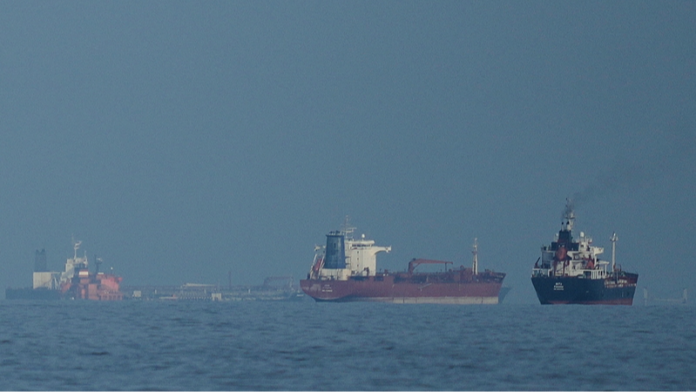
Iran has effectively shut down the Strait of Hormuz, which normally carries about a fifth of the world’s total oil trade, in retaliation for US-Israeli attacks that began on February 28.
Tehran offered a competing vision for future control of the strait and said it was drafting a protocol with neighbouring Oman that would require ships to obtain permits and licences.
An Iranian military spokesperson said the strait would remain closed “long term” to the US and Israel.
The UN Security Council is scheduled on Friday to vote on a draft resolution proposed by Bahrain to authorise “defensive” force to protect shipping in the strait.
Meanwhile, the humanitarian situation across the Middle East is deteriorating rapidly. The UN Office for the Coordination of Humanitarian Affairs reported that nearly 15% of Lebanon’s territory has been affected by displacement orders in the past month. Half of the healthcare facilities supported by the UN Population Fund in conflict areas have been forced to close due to violence.
- Israel's military reported intercepting missiles launched from Iran, with no casualties or damage reported amid ongoing conflict entering its 35th day.
- Iran's IRGC claimed attacks on US-linked data centers in Dubai and Bahrain, though Dubai authorities denied the Dubai strike; Yemen's Houthi group launched missile attacks on Israel.
- US President Trump threatened Iran and showed footage of a US bombing near Tehran; Iran vowed more destructive retaliation, including targeting US bases in the Middle East.
- Over 100 international law experts criticized US-Israel strikes on Iran as potential war crimes, while Israeli public support for the campaign and confidence in military leadership are declining.
- The Strait of Hormuz remains effectively closed by Iran, disrupting global oil trade; international talks failed to restore navigation, and the humanitarian crisis in the region is worsening significantly.