


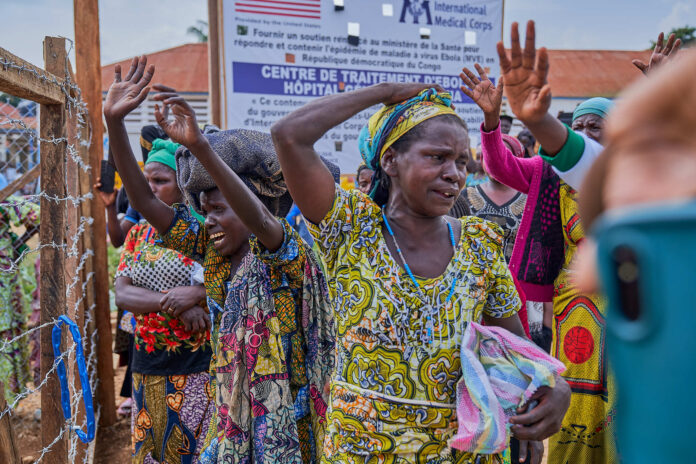
Women and children continue to bear the brunt of the Ebola outbreak in eastern Democratic Republic of the Congo (DRC), where the epidemic is deepening a humanitarian crisis in the conflict-hit province of Ituri, the United Nations says.
The outbreak is unfolding in a region where nearly a million people have been displaced, with women and children making up about 80% of the displaced population, according to the UN Office for the Coordination of Humanitarian Affairs (Ocha).
The UN Children’s Fund (Unicef) said children accounted for nearly one-third of Ebola-related deaths, despite representing about a quarter of confirmed cases.
Maternal deaths nearly double as fear keeps patients away
The outbreak was also severely disrupting access to essential healthcare. In the areas hardest hit by Ebola, the use of health services had fallen by more than 40% in recent months as fear of infection discouraged people from seeking treatment, UNICEF said.
The UN Population Fund warned that fear of Ebola and overstretched health services were preventing many pregnant women from accessing maternal care.
Maternal deaths in Ituri had nearly doubled since the outbreak began, with an average of about six women dying each week from childbirth-related complications.
Ebola infection during pregnancy remained associated with an extremely high risk of foetal loss, the agency added.
Massive outreach effort targets misinformation
Ocha said rebuilding public trust was critical to containing the outbreak.
Unicef and its partners, working alongside the DRC Ministry of Public Health, the World Health Organisation and the Africa Centres for Disease Control and Prevention, have deployed about 13 000 community workers.
The teams have reached more than 2.4 million people with information on Ebola prevention and early detection and conducted more than 500 000 household visits to combat misinformation and encourage early treatment.
- Women and children constitute about 80% of the nearly one million displaced people in the Ituri province due to the Ebola outbreak and conflict.
- Children represent nearly one-third of Ebola-related deaths, despite making up about a quarter of confirmed cases, according to UNICEF.
- Use of health services in the hardest-hit Ebola areas has declined by over 40% recently, as fear deters people from seeking treatment.
- Maternal deaths in Ituri have nearly doubled since the Ebola outbreak began, with about six women dying weekly from childbirth complications.
- About 13,000 community workers have reached over 2.4 million people with Ebola information and conducted more than 500,000 household visits to combat misinformation.


