


Crude oil has spiked sharply again on renewed fears of escalating military activity in Iran. At the same time, the rand is trending weaker against the dollar, reflecting both global uncertainty and South Africa’s underlying vulnerability.
And that is where the problem begins. Because this is not just another inflation cycle.
This is a supply shock – once again – and we are responding as if it is something else entirely.
The rising cost of oil is not being driven by excessive demand. It is being driven by geopolitical risk, supply disruption, and uncertainty around one of the world’s most critical energy corridors.
For South Africa, a net importer of fuel, the transmission is immediate and unforgiving.
Higher oil prices mean higher fuel costs. Higher fuel costs mean higher transport costs. Higher transport costs mean higher food and input prices, and ultimately higher inflation.
At the same time, a weaker rand amplifies the problem. We are paying more, in local currency terms, for the same imported fuel. This is how global shocks become domestic pressure. This is a classic supply-side inflation shock.
And yet, the policy response remains focused on demand. The conversation has shifted, again, towards tighter monetary conditions.
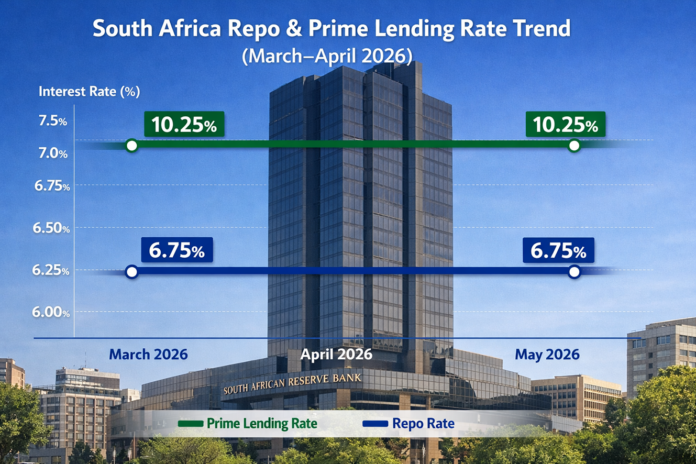
The tone from the South African Reserve Bank is shifting. While no increase has been announced, the risk of higher interest rates is clearly rising.
But let’s be clear about what that actually means. Higher interest rates reduce borrowing. They reduce spending and they reduce investment. In other words, they reduce aggregate demand.
And here lies the contradiction. South Africa does not have a demand problem; it has a growth problem.
Growth is weak – borderline stagnant. Businesses are cautious. Consumers are already under pressure. Investment is constrained. And yet, we are preparing to tighten further. At a time when the economy needs to expand, we are effectively slowing it down.
South Africa cannot continue to respond to every external shock by tightening into weakness. Because raising interest rates will not lower the global oil price. It will not resolve conflict in the Middle East. It will not materially reduce supply-driven inflation.
What it will do is weaken domestic economic activity.
So the question must be asked more directly: Are we fighting inflation, or are we killing growth in the process?
To be clear, the role of the South African Reserve Bank remains critical. Inflation must be contained. Credibility matters. Expectations must be anchored.
But monetary policy cannot carry the entire burden, especially when the source of inflation lies outside the domestic economy. And right now, we desperately need growth. We need higher levels of economic activity, we need increased investment, and we need stronger aggregate demand feeding into higher GDP.
Without that, the economy does not stabilise, it stagnates.
This is where policy needs to shift. If inflation is being driven by supply, then supply-side solutions must take centre stage.
Energy is the first priority.
South Africa’s reliance on imported fuel is a structural weakness. Every spike in oil prices feeds directly into inflation. Reducing that exposure, through alternative energy, efficiency, and local capacity, is not optional. It is essential.
Second, logistics.
Transport inefficiencies amplify inflation. When fuel costs rise, a weak logistics system magnifies the impact. Fixing ports, rail, and distribution is not just a growth strategy, it is an anti-inflation strategy.
Third, economic structure.
An economy that exports raw materials and imports finished goods will always be vulnerable to external shocks. Increasing local production and value addition reduces that vulnerability, and builds real, sustainable growth.
And then comes the bigger point.
We need to think differently. South Africa cannot stabilise its economy by suppressing it. It cannot continue to respond to global shocks with policies that reduce already weak demand.
We need to grow the economy and contain inflation at the same time.
That requires coordination. It requires targeted intervention. It requires policy that supports expansion while addressing cost pressures at their source.
Because without growth, there is no buffer, no resilience and no capacity to absorb shocks.
Yes, inflation must be contained, but not at the expense of the very growth we so desperately need.
Because if we continue down this path, we may succeed in controlling inflation while failing to build an economy that can actually grow.
And that is a far bigger risk.
- Van Doesburgh is an economist, and a regular commentator on South Africa’s economic landscape, focusing on financial markets, policy, and business strategy. vandoesburghm@cput.ac.za
- Crude oil prices have surged due to fears of escalating conflict in Iran, driving supply-side inflation in South Africa, which is a net fuel importer.
- Rising oil costs increase fuel and transport expenses, pushing up food and input prices, while a weakening rand intensifies the impact by making imports more expensive.
- South Africa’s current policy response focuses on tightening monetary policy through higher interest rates, which reduces demand but does not address supply-driven inflation or stimulate growth.
- The economy faces weak growth and investment, so further interest rate hikes risk slowing economic activity rather than resolving inflation caused by external shocks.
- The article advocates for supply-side solutions like boosting alternative energy, improving logistics, and enhancing local production to reduce vulnerability and support sustainable growth alongside inflation control.


