


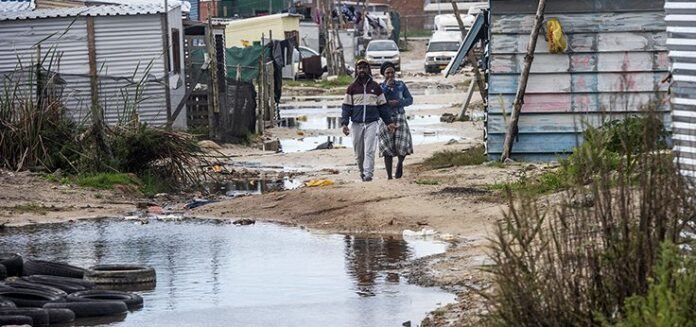
Civil society groups have renewed calls for the introduction of a Universal Basic Income (UBI) grant as unemployment figures skyrocket and poverty remains a concern.
Amandla.mobi led a panel-discussion on the UBI, urging President Cyril Ramaphosa and National Treasury to look into the matter ahead of the Budget Speech next month.
The event was attended by Amandla.mobi founding director Koketso Moeti, former statistician-general of South Africa Pali Lehohla and South African Human Rights Commission (SAHRC) commissioner Nomahlubi Khwinana, among others.
Alignment with Upper Bound Poverty Line
The panel emphasised the call for the grant to align with the Upper Bound Poverty Line (UBPL), which currently stands at R1, 634 per month to the qualifying citizens aged between 18 and 59.
Moeti noted that the 2025 Poverty Trends Report by StatsSA showed 66% people in the country lived below the UBPL in 2023. She said this was not a routine economic challenge but a national emergency.
The South African population for 2023 was approximately 62.3 million. This would mean that 41.1 million people are living below the UBPL. For government to implement the UBI grant, at least R67.1-billion a month is needed to make the payments.
According to the report, the UBPL was set at R2, 635 per person per month at the then prices. This number dropped from 78.7% in 2006.
“We need something different, created for our specific national needs and challenges. More and more research is showing the extent to which a UBI, unlike the meagre amount of current grants, can act as an investment. Which – implemented properly – can stimulate the economy.
Essence of social security as an investment
“We call that economic stimulus ‘the multiplier effect’. It refers to how government investment into social security budget (or public services) is actually multiplied. This report outlines how such a multiplier can work in our economy, applying ground-breaking research from Brazil by Dante Cardoso,” said Moeti.
Moeti explained that distributing the UBI grant would boost consumption and assist business-minded people to open up businesses. Something which would assist another person in employment.
Despite hardships to find enough funds prompting the failed 2% value added tax increase in 2025, Lehohla insisted that it was possible for South Africa to find enough funds for the UBI grant.
Finance Minister Enoch Godongwana had announced in the nullified budget that old age, disability and care dependency grant have all increased to R2, 335, from R2, 185 from the 2024/25 financial year.
However, the R150 increase was changed to R120. Thus increasing the grant to R2, 310 and a further R10 increase announced for October. The R370 Covid-19 social relief stress (SRD) grant, meant for unemployed people, was extended to March 2026.
Integrating grant with job opportunities
Godongwana also announced that government was exploring means to integrate the SRD grant with employment opportunities. This may include job-seekers allowance.
Lehohla said South African wealth leaks through government projects and bribery. Through inefficient and means-tested grant bureaucracy, and human capital stagnation. He described these as “the zero-sum economy that excludes 95% of the potential workforce”.
He said social protection should be considered as an investment and not a cost. Considering that people who need money will always find use for it. Lehohla said the R370 grants have contributed to the growth of grocery stores such as Pick n Pay.
He said the multiplier effect showed that per R1 invested in UBI yields R1.78 in GDP growth within three years. And he emphasised that money should be directed to townships and village economies.
- Civil society groups have renewed calls for the introduction of a Universal Basic Income (UBI) grant as unemployment figures skyrocket and poverty remains a concern.
- Amandla.mobi led a panel-discussion on the UBI, urging President Cyril Ramaphosa and National Treasury to look into the matter ahead of the Budget Speech next month.
- The event was attended by Amandla.mobi founding director Koketso Moeti, former statistician-general of South Africa Pali Lehohla and South African Human Rights Commission (SAHRC) commissioner Nomahlubi Khwinana, among others.
- Alignment with Upper Bound Poverty Line The panel emphasised the call for the grant to align with the Upper Bound Poverty Line (UBPL), which currently stands at R1, 634 per month to the qualifying citizens aged between 18 and 59.
- Moeti noted that the 2025 Poverty Trends Report by StatsSA showed 66% people in the country lived below the UBPL in 2023.


