


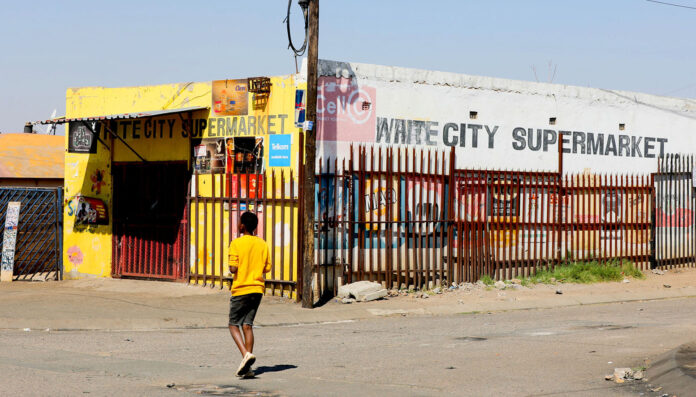
Premier Group, the producer and supplier of Blue Ribbon, one of South Africa’s leading bread brands, says the March and March protest action has had a significant impact on its business, with more than 400 foreign-owned spaza shops in KwaZulu-Natal (KZN) still closed months after the unrest.
According to the company, the protests disrupted informal trade routes, altered consumer behaviour and affected service delivery in key markets.
“From a market disruption perspective in terms of the civil unrest in terms of the March and March xenophobia attacks, the region that still remains by far the most impacted is the KwaZulu-Natal market, whereby our estimates in excess of 400 smaller spaza trading stores are still closed following the unrest in July, and they are still not opened up yet,” said Premier Group chief executive Kobus Gertenbach during the company’s interim results media presentation on Tuesday.
March on March, an anti-illegal immigration movement led by former radio personality Jacinta Ngobese-Zuma, organised a shutdown march on June 30 aimed at giving undocumented immigrants an ultimatum to leave South Africa.
READ MORE: March and March protestors threaten to stop MTN8 final between Pirates and Sundowns
Impact on informal trade
Gertenbach said the company is still trying to determine how many of the closed shops will eventually reopen and how informal retail supply chains will evolve in response to the disruption.
“We, at this point in time, are trying to assess exactly to what extent any of these stores are going to reopen and how the route to market has changed as a result of the closure of these points, where ultimately people still need to find somewhere to buy food to eat and ultimately the supply chains will respond and there will be a different route to market,” he said.
READ MORE: ‘He’s destabilising organisation’: March and March cuts ties with Ngizwe Mchunu
“In the short term, what it did is cut down on a lot of sales volumes in that core market. We will see how things play out now that the local elections are over and whether a lot of the foreigners and people who used to run those stores will have the confidence to reopen them again.”
Gertenbach said it was still too early to determine whether the foreign entrepreneurs who previously operated the stores had left the country permanently or were simply waiting for conditions to improve before resuming business.
Premier’s support for spaza shops
The company said it had a long history of supporting informal traders during times of crisis.
“In the wake of the July 2021 KZN riots we did it, and in the wake of the KZN floods we did it,” Gertenbach said.
“Because we have a direct relationship with spaza shops through our bread deliveries on a daily basis, we are quite capable of supplying spaza shops with free stock on the first day of opening up in order to give them free float and working capital so that they can start trading again.”
Informal traders are a critical part of Premier’s business. Gertenbach said about 70% of the company’s bread is sold through the informal trade channel.
“So we are very protective of that environment, and we will always do what we can in order to support them and help them come back and get on their feet after the adverse consequences of the political situation,” he said.
Profound, disruptive impact
In its latest interim results, Premier said the period leading up to South Africa’s local elections was marked by significant disruption caused by the March and March demonstrations, which took place between May and July 2026.
The company described the protests as having a “profound and disruptive impact” on the country, affecting consumers, businesses and public services.
READ MORE: Singer dropped from African gospel awards after backing March and March
Premier said the demonstrations changed consumer behaviour and disrupted service delivery in parts of its operations, particularly in KZN. The company noted that a large number of spaza shops remained closed, creating challenges for informal retail channels and weighing on trading activity.
Despite the difficult operating environment, Premier said its teams maintained service levels through disciplined cost management, operational efficiency and a focus on protecting margins. The company added that employees responded with agility and resourcefulness throughout the period.
Outlook after the elections
Looking ahead, Premier said it expects conditions to improve following the local government elections. The company expressed hope that political instability affecting informal trade would begin to normalise, allowing businesses and communities to recover.
While acknowledging the disruption caused by the March and March protests, Premier said it remained optimistic that trading patterns would stabilise and that alternative routes to market would emerge as affected communities rebuild and businesses regain confidence.
- Premier Group, the producer and supplier of Blue Ribbon, one of South Africa’s leading bread brands, says the March and March protest action has had a significant impact on its business, with more than 400 foreign-owned spaza shops in KwaZulu-Natal (KZN) still closed months after the unrest.
- According to the company, the protests disrupted informal trade routes, altered consumer behaviour and affected service delivery in key markets.
- “From a market disruption perspective in terms of the civil unrest in terms of the March and March xenophobia attacks, the region that still remains by far the most impacted is the KwaZulu-Natal market, whereby our estimates in excess of 400 smaller spaza trading stores are still closed following the unrest in July, and they are still not opened up yet,” said Premier Group chief executive Kobus Gertenbach during the company’s interim results media presentation on Tuesday.
- March on March, an anti-illegal immigration movement led by former radio personality Jacinta Ngobese-Zuma, organised a shutdown march on June 30 aimed at giving undocumented immigrants an ultimatum to leave South Africa.
- READ MORE: March and March protestors threaten to stop MTN8 final between Pirates and Sundowns Impact on informal trade Gertenbach said the company is still trying to determine how many of the closed shops will eventually reopen and how informal retail supply chains will evolve in response to the disruption.


