


In a rare piece of good news for the bean counters at the National Treasury, South Africa’s debt burden has slimmed down overnight, at least on paper.
Revised GDP figures have made the economy look bigger, allowing Treasury to report healthier fiscal ratios without changing any of the underlying revenue, spending or debt numbers.
The department said on Thursday that South Africa’s debt burden is lower than previously estimated and key fiscal indicators have improved following the rebasing and benchmarking of the country’s gross domestic product (GDP).
According to Treasury, revised GDP figures released by Statistics South Africa on October 29 have reduced the country’s debt-to-GDP ratio, with government debt now estimated to have peaked at 74.6% of GDP in 2025/2026, compared with the 78.4% projected in the 2026 Medium-Term Budget Policy Statement (MTBPS). The ratio is also expected to fall below 70% by 2032/2033, a year earlier than previously forecast.
Bigger economy, same debt
The improvement stems from Statistics South Africa’s 2026 GDP rebasing and benchmarking exercise, which increased the size of the economy in nominal terms without altering underlying revenue, expenditure or debt figures.
Treasury stressed that the revisions were a “mechanical” consequence of a larger GDP denominator and did not reflect any change in fiscal policy assumptions.
Read more: National Treasury wants greater say over appointment of municipal CFOs
The rebasing exercise increased nominal GDP by 5.1%, or R393 billion, in 2025/2026 and by an annual average of R294 billion between 2018/2019 and 2025/2026.
As a result, most fiscal metrics expressed as a percentage of GDP have improved.
Deficit outlook improves
Treasury said the main budget deficit for 2026/2027 is now estimated at 3.5% of GDP, compared with the 3.7% projected in the MTBPS.
The consolidated budget deficit improves by an average of 0.2 percentage points of GDP over the medium term, while debt-service costs decline to an average of 5.1% of GDP from the 5.4% previously estimated.
Read more: National Treasury foresees economic shocks as minister slashes inflation target
The primary budget surplus, a key measure of fiscal sustainability that excludes interest payments on debt, is projected at 1.6% of GDP in 2026/2027, rising to 2.8% by 2029/2030.
Although slightly lower than earlier GDP-based estimates, Treasury said the government remains on track to achieve its fiscal consolidation targets.
Treasury sees validation of fiscal strategy
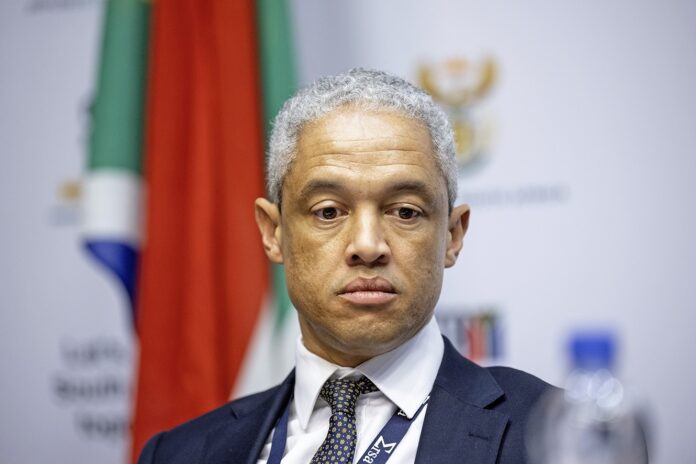
National Treasury director-general Duncan Pieterse said the revised calculations showed the government was continuing to meet its fiscal objectives.
“The fiscal metrics look even better than we had projected based on Statistics South Africa’s revised GDP data,” he said.
He added that stronger fiscal indicators were helping to lower borrowing costs while supporting investment and economic growth.
Read more: Godongwana’s lofty infrastructure plans threatened by skills shortages
Treasury also emphasised that GDP benchmarking is conducted every five years in line with international standards and is designed to better capture structural changes in the economy through improved data sources and methodologies.
The department is expected to present a revised macroeconomic forecast and fiscal framework in the 2027 National Budget.
- In a rare piece of good news for the bean counters at the National Treasury, South Africa’s debt burden has slimmed down overnight, at least on paper.
- Revised GDP figures have made the economy look bigger, allowing Treasury to report healthier fiscal ratios without changing any of the underlying revenue, spending or debt numbers.
- The department said on Thursday that South Africa’s debt burden is lower than previously estimated and key fiscal indicators have improved following the rebasing and benchmarking of the country’s gross domestic product (GDP).
- According to Treasury, revised GDP figures released by Statistics South Africa on October 29 have reduced the country’s debt-to-GDP ratio, with government debt now estimated to have peaked at 74.6% of GDP in 2025/2026, compared with the 78.4% projected in the 2026 Medium-Term Budget Policy Statement (MTBPS).
- The ratio is also expected to fall below 70% by 2032/2033, a year earlier than previously forecast.


