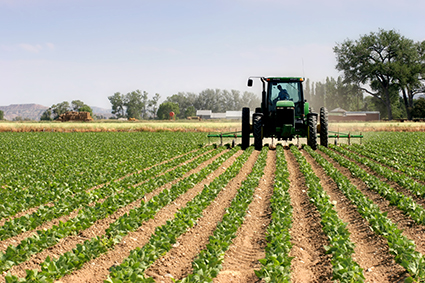

The agricultural sector is proposing that the government should urgently amend its fuel price adjustment policy.
AgriSA and Agbiz want the Department of Mineral Resources and Energy to immediately introduce an out-of-cycle fuel price adjustment, arguing that this will better reflect current market conditions and will stabilise supply in rural areas already showing signs of strain.
The two organisations called for “the introduction of temporary, more regular reviews, instead of the standard monthly adjustment for the duration of the current energy price volatility”.
Government currently makes price adjustments on the first Wednesday of the month.
Organisations warn against delays
Theo Boshoff, CEO of Agbiz, expressed to Sunday World on Tuesday that weekly or biweekly fuel price adjustments would be more preferable.
The organisations urged the government to immediately increase fuel prices, as delays could ripple through food production and supply chains.
“This is in line with what associations representing fuel retailers have also asked for. These measures are not intended to increase costs to the sector but rather to ensure that pricing reflects underlying conditions more accurately, thereby reducing incentives for panic buying or supply withholding,” they said.
Their call comes as the department is yet to announce the fuel price increase for April, despite data from the Central Energy Fund showing that petrol prices might increase by nearly R6, while diesel might cost R10 more.
The organisations warned that fuel is one of the largest input costs in agriculture, typically accounting for between 12% and 18% of total production expenses.
When fuel prices surge or supplies tighten, farmers face immediate financial pressure, which can lead to reduced output or higher prices further along the value chain.
The proposal by AgriSA and Agbiz follows a joint survey conducted on March 24 and 27 among farmers and fuel retailers supplying to the agricultural sector.
Fuel rationing and constrained supply
While official statements have suggested that national fuel supply remains stable, the findings reveal a more fragile situation.
Across several farming regions, they said, respondents reported constrained supply and growing instances of fuel rationing. Retailers are limiting volumes due to uncertainty about when they can refill.
The agricultural bodies said the current challenges are not driven by a single factor but are a combination of global oil market volatility, shifting supply chain dynamics, and behavioural responses within the market such as stockpiling and cautious selling.
If fuel prices do not reflect real-time market conditions, such a scenario can create distortions that worsen shortages; this would then encourage panic buying or prompt suppliers to hold back stock in anticipation of future price increases.
AgriSA and Agbiz emphasised that a more flexible pricing mechanism would help ease these pressures by aligning pump prices more closely with underlying costs, thereby improving confidence across the supply chain.
- AgriSA and Agbiz urge the government to implement an immediate out-of-cycle fuel price adjustment to better reflect current market conditions and stabilize rural fuel supply.
- They propose temporary, more frequent reviews of fuel prices (weekly or biweekly) instead of the current monthly adjustment schedule to address energy price volatility.
- The organisations warn that delayed fuel price adjustments risk disrupting food production and supply chains, as fuel accounts for 12-18% of agricultural production costs.
- A recent survey revealed constrained fuel supplies and rationing in farming regions, with retailers limiting volumes due to uncertainty and fears of future shortages.
- The groups stress that a flexible pricing mechanism would reduce market distortions, prevent panic buying, and restore confidence across the agricultural fuel supply chain.
AgriSA and Agbiz want the Department of Mineral Resources and Energy to immediately introduce an out-of-cycle fuel price adjustment, arguing that this will better reflect current market conditions and will stabilise supply in rural areas already showing signs of strain.
Government currently makes price adjustments on the first Wednesday of the month.
“
When fuel prices surge or supplies tighten, farmers face immediate financial pressure, which can lead to reduced output or higher prices further along the value chain.
While official statements have suggested that national fuel supply remains stable, the findings reveal a more fragile situation.
Across several farming regions, they said, respondents reported constrained supply and growing instances of fuel rationing. Retailers are limiting volumes due to uncertainty about when they can refill.
If fuel prices do not reflect real-time market conditions, such a scenario can create distortions that worsen shortages; this would then encourage panic buying or prompt suppliers to hold back stock in anticipation of future price increases.
AgriSA and Agbiz emphasised that a more flexible pricing mechanism would help ease these pressures by aligning pump prices more closely with underlying costs, thereby improving confidence across the supply chain.