


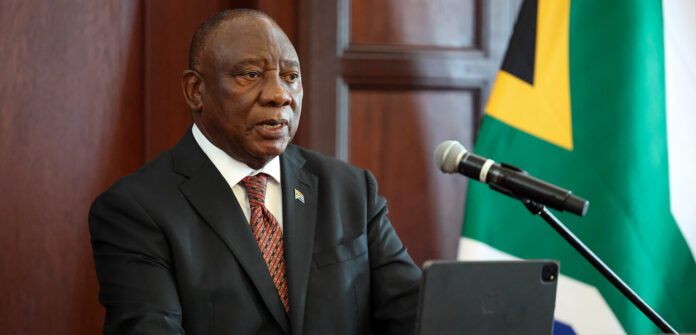
President Cyril Ramaphosa has warned that unless regulatory pressure is eased, many businesses will remain locked out of formal economic participation or struggle to grow.
Ramaphosa was speaking at the 2026 National Local Economic Development Summit in Ekurhuleni, aimed at unlocking resources, infrastructure and skills for LED, and ease of doing business and an enabling environment.
Need for more supportive environment
He said the summit should mark a turning point in building a more supportive environment for small, micro and medium enterprises (SMMEs), which he described as central to redefining South Africa’s growth path.
Ramaphosa highlighted that the system is working against SMEs as entrepreneurs are required to pay a lot to be regulated. He said these regulations should be eased up so businesses can operate.
‘Infrastructure maintenance crucial’
He also placed infrastructure maintenance at the centre of South Africa’s economic challenges, warning that years of neglect at municipal level are holding back growth and investment.
This event comes two weeks after the country secured investment pledges. Ramaphosa said these commitments will not translate into jobs or development if basic infrastructure continues to deteriorate.
“It is a major concern that we have not adequately prioritised infrastructure maintenance,” said Ramaphosa.
Municipalities ‘must come to the party’
He said there is a growing gap between what municipalities are expected to spend on maintaining infrastructure and what they actually allocate, highlighting a systemic failure that is undermining service delivery.
He said municipalities are meant to set aside about 8% of the value of their assets for maintenance, but in reality many are putting aside less than 1%.
Ramaphosa said this underinvestment is directly felt by businesses and communities through unreliable electricity, water shortages and deteriorating roads, all of which weaken local economic activity.
‘Fix governance’
He emphasised that service delivery and unlocking economic development depend on fixing governance.
Ramaphosa emphasised that infrastructure is not simply a technical issue but the foundation on which local economies are built, particularly for small businesses and township enterprises.
“Energy security, water provision, roads and rail lines are the foundation of growth.
“Municipalities must be the frontline in unblocking infrastructure constraints, ensuring that the local industrial park has the power it needs, that tourists can enjoy clean and safe beaches, and that township businesses have streetlighting to trade safely beyond daylight hours,” said Ramaphosa.
Attracting investment
He warned that without urgent action to improve maintenance and management, even well-intentioned investment strategies would fall short, as investors ultimately depend on functioning local systems.
“When investors build their business in our country, they don’t set up factories or open call centres on the lawns of the Union Buildings or in front of the Houses of Parliament. This investment takes place in metros, cities, towns and villages,” said Ramaphosa.
Call for stronger revenue collection
He also called for stronger revenue collection and better financial management at municipal level, alongside greater use of private sector partnerships to close infrastructure gaps.
He said reversing the decline in infrastructure maintenance is essential if municipalities are to play their role as drivers of economic growth and job creation.
“South Africa is a country of entrepreneurs. Our task is to unleash their potential and, in so doing, to build an inclusive economy that creates opportunities for all,” said Ramaphosa.
Rural road infrastructure a concern
In an earlier speech, Bheke Stofile, president of the South African Local Government Association, echoed these concerns highlighting that rural road infrastructure remains one of the most urgent challenges facing local economic development.
He said poor road conditions continue to limit access to markets, jobs, schools and healthcare, with many rural areas still relying on damaged gravel roads that are costly and difficult to maintain.
Stofile proposed that municipalities lead a large-scale interlocking brick road programme, supported by innovation and skills development, to create jobs and build local industries.
“This initiative, village by village, can become a substantial employment programme rooted in infrastructure delivery. It fosters local industry, creates skilled jobs, reduces long-term costs, enhances climate resilience, and instils dignity through production. This is the LED vision we need,” said Stofile.
“The time has come to move beyond a narrow understanding of local government. Municipalities are not merely service points, they are sites of production, coordination, planning, and transformation. They are where the economy manifests in daily life, where exclusion is felt most keenly, and where renewal can begin most tangibly,” he added.
Visit SW YouTube Channel for our video content
- President Cyril Ramaphosa urged easing regulatory pressure to enable small, micro, and medium enterprises (SMMEs) to grow and participate in South Africa’s economy.
- He stressed the critical need for improved municipal infrastructure maintenance, highlighting years of neglect are hindering economic growth and investment.
- Municipalities currently underfund infrastructure upkeep, allocating less than 1% of asset value instead of the recommended 8%, leading to poor service delivery.
- Ramaphosa called for fixing governance, stronger revenue collection, better financial management, and increased private sector partnerships to address infrastructure challenges.
- South African Local Government Association President Bheke Stofile emphasized rural road infrastructure issues and proposed a job-creating interlocking brick road program to boost local industries and economic development.


