
Black emerging farmers are being armed with a new push to break through funding barriers, crippling infrastructure costs and compliance hurdles that continue to shut many small agricultural businesses out of South Africa’s lucrative farming economy.
The Izwi Labantu Land and Agriculture Association (ILLAA) says it wants to move beyond talk and advocacy by building a structured programme to empower farmers, improve access to essential infrastructure, unlock funding and help black-owned agricultural enterprises penetrate established commercial markets.
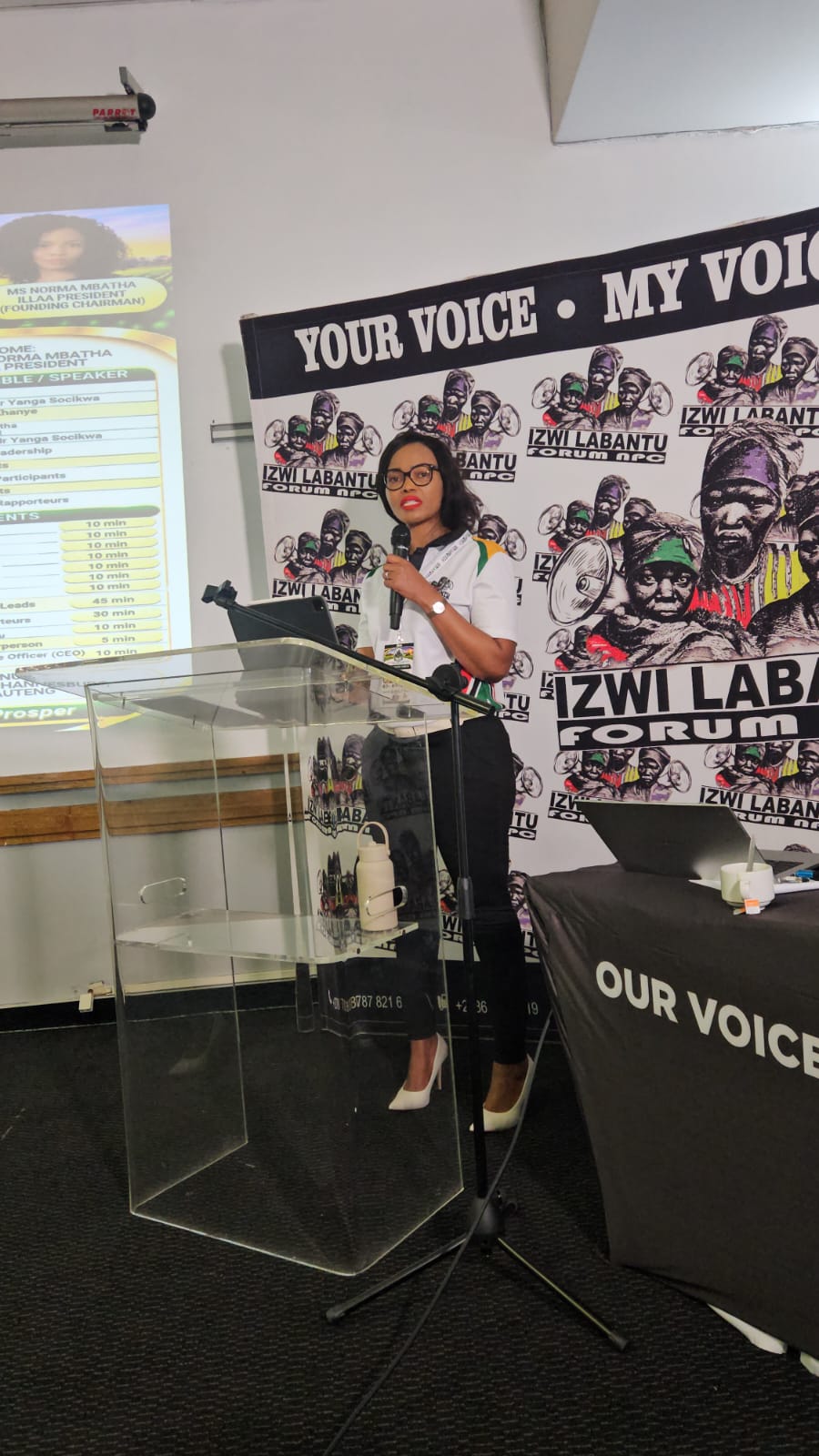
The association made the commitment during a strategic workshop at Apollo Conferencing Hotel in Randburg, Gauteng, on Tuesday, where its leadership and strategic partners mapped out interventions aimed at addressing the challenges confronting emerging farmers.
Led by president Norma Mbatha, who is also executive chairperson of the powerful lobby group, Izwi Labantu Forum (ILF), the organisation outlined an ambitious agenda centred on farmer empowerment, institutional accountability, sustainable agricultural development and confronting alleged discrimination and harassment in the sector.
Farmers demand support and protection
Mbatha said ILLAA was determined to ensure emerging farmers were not left to fend for themselves in an agricultural economy where access to resources, infrastructure, finance and markets remained critical to business survival.
READ: Izwi Labantu lodges complaint against Presidency’s Nonceba Mhlauli, Mduduzi Mbada
“We stand firm on our mission to fight for emerging farmers and bring to an end all forms of discrimination and abuse directed at them. Our priority is to ensure that farmers receive the support, protection and opportunities necessary to participate meaningfully in the agricultural economy,” she said.
The association said its work would also involve engaging government, particularly the departments responsible for land reform and rural development, and agriculture, to ensure that farmers’ challenges were addressed.
From talk to tangible results
But the workshop’s focus was not limited to advocacy, with ILLAA seeking to establish a more structured framework for delivering interventions and measuring progress.
A key resolution was the development of a 90-day operational plan that will outline priority projects, responsibilities, resource requirements, timelines and measurable outcomes.
READ: ILF’s Norma Mbatha and Deputy Minister Nonceba Mhlauli in showdown over Black farmers’ plight
The plan will initially prioritise urgent farmer interventions, membership mapping and administrative alignment, with longer-term objectives including improved productivity, institutional development, sustainable farming businesses and greater access to established markets.
The proposed operational plan is expected to provide a roadmap for implementation, ensuring that the organisation’s commitments are translated into practical interventions rather than remaining resolutions on paper.
Leadership under the spotlight
Mbatha also called for improved coordination within the association, emphasising the importance of understanding the ILLAA Constitution and clarifying the respective responsibilities of the ILF headquarters and the ILLAA national executive committee.
She said leadership should be measured by service, accountability and results rather than titles and positions.
The association’s leadership is expected to strengthen its institutional structures and align its activities with the needs of farmers, while ensuring that accountability remains central to its programmes.
Solar and water solutions to cut farming costs
For many emerging farmers, unreliable electricity, inadequate water infrastructure and the rising cost of production remain major obstacles to expanding operations and competing commercially.
Sakisa Energy and Technology Group presented solutions aimed at addressing these challenges through solar energy, battery storage, water pumping systems, storage tanks and filtration infrastructure.
READ: Black farmers give Ramaphosa 14 days to respond to land reform demands
The company also offers technical support, equipment, training and extension services tailored to farmers’ individual operational needs.
Sakisa representative Fani Nchaupa told the workshop that the company had registered 142 farmers, with 102 sets of farmer details successfully captured.
Preliminary assessments and pricing exercises have been conducted in the Free State, Gauteng, KwaZulu-Natal and Northern Cape, while 47 farmers have received preliminary costings for solar systems ranging from 16kW to 50kW.
The proposed installations are based on individual farming requirements and are aimed at reducing energy costs while improving the reliability of electricity for agricultural production.
Water security a priority
The programme also seeks to tackle water shortages through boreholes, storage and filtration solutions, recognising that access to reliable water remains essential to sustaining farming operations.
The proposed infrastructure interventions are aimed at helping farmers overcome some of the production constraints that threaten the viability of agricultural enterprises, particularly those operating in areas where access to reliable water and electricity is limited.
READ: Fight between black farmers and government continues unabated
The initiative seeks to improve farmers’ productive capacity while reducing their vulnerability to infrastructure-related disruptions.
Farmers target corporate money
The workshop also spotlighted the struggle by emerging farmers to access corporate funding and enterprise and supplier development programmes, with SA Corp Group proposing a programme to help black farmers become commercially and financially ready to compete for opportunities.
SA Corp chief executive Stanley Bezuidenhout said corporate funding opportunities were available, but many emerging farmers were unable to access them because their businesses lacked the necessary formalisation, compliance and financial structures.
“SA Corp’s objective is to bridge this gap by transforming informal farming operations into verified, compliant and financially prepared agricultural enterprises. This proposed programme will provide support through company registration, tax compliance, accounting services, financial statements, business plans, funding applications and business development training,” he said.
Formalising farming businesses
The proposed programme would take farmers through four stages: formalisation, compliance, funding readiness and supplier readiness.
The support would include company registration, tax compliance, accounting services, preparation of financial statements, business plans, funding applications and business development training.
The programme is designed to help farmers move from informal farming operations into structured, financially compliant businesses capable of attracting investment and accessing commercial opportunities.
Opening doors to supply chains
The ultimate objective is to help farmers access corporate enterprise development funding, procurement opportunities and other agricultural support programmes that could unlock growth and improve the commercial sustainability of their operations.
READ: Black farmers drag state to SAHRC over allegations of ‘systemic’ abuse
Other strategic partners participating in the engagement included Land Bank, Maximum Land Productivity and the Association of China-Africa Small-holder Agriculture (ACASA).
ILLAA says it wants to build an agricultural environment where emerging farmers are recognised as business owners rather than perpetual beneficiaries of development programmes.
The organisation believes that empowering black farmers with technical expertise, financial support, infrastructure and market access could help them build sustainable businesses, create jobs, generate income and contribute to rural economic development.
But the association’s promises will ultimately be judged on whether its planned interventions translate into tangible support on the ground, with the proposed 90-day operational plan expected to serve as the first test of its commitment to delivering results.
- The Izwi Labantu Land and Agriculture Association (ILLAA) is launching a structured programme to empower black emerging farmers by improving access to infrastructure, funding, and markets in South Africa’s agricultural sector.
- ILLAA's 90-day operational plan aims to deliver priority projects with clear responsibilities, resource needs, timelines, and measurable outcomes focused on sustainable farming and institutional development.
- Sakisa Energy and Technology Group is providing solar energy and water infrastructure solutions tailored to farmers to reduce costs and address unreliable electricity and water shortages.
- SA Corp Group plans a support programme to help black farmers formalise their businesses, comply with regulations, and become ready to access corporate funding and supplier development opportunities.
- Strategic partners in the initiative include Land Bank, Maximum Land Productivity, and the Association of China-Africa Small-holder Agriculture, all aiming to help emerging farmers move from beneficiaries to sustainable business owners.