


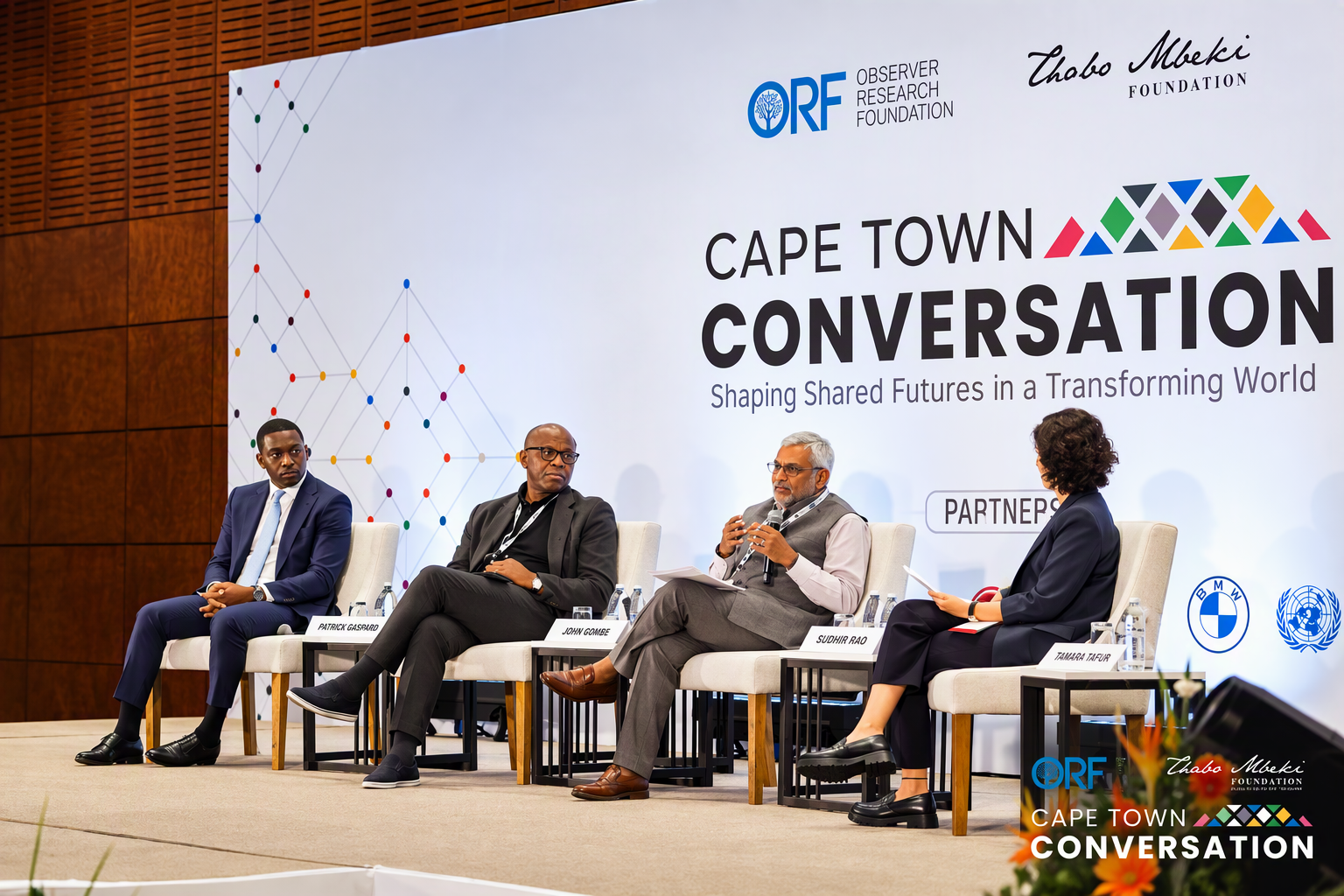
The relationship between India and Africa needs to manifest in jobs, skills transfer and greater co-operation. That was the key message at one of the plenaries at the Cape Town Conversation underway in the Mother City.
The fourth edition of the convening of policymakers, business leaders, multilateral institutions, researchers, civil society and other stakeholders is interrogating, among others, the intra-relationships in the global south.
The challenge for Africa-India relations is how best to turn collective demographic strengths and economic potential into greater cooperation. The panel seized the question of what needs to change that partnership to become more consequential.
Need to consider greater cooperation
The moderator, Sunaina Kuma, who holds the position of director and senior fellow at the Centre for New Economic Diplomacy at the Observer Research Foundation, challenged the panel of experts to make the considerations for greater cooperation, while noting that a successful partnership stood to benefit a third of the global population.
Former minister of solid minerals development in Nigeria, Kayode Fayemi, noted that the relationship between Africa and India needed a restart.
“India and Africa need to move from historical solidarity and emotional connection to strategic partnership,” Fayemi said. His submission is that cooperation between the two regions should grow beyond trade and identify digital public infrastructure, maritime security and climate action as areas where a longer-term partnership could be built.
Read more: SA Tourism says lack of direct flights an obstacle in attracting Indian tourists
India and Africa account for about three billion people, a vantage point which Fayemi said the two regions ought to use more to exert influence on the global landscape.
Subcontinents punching below their weight
The former minister warned that the “two subcontinents with three billion people are punching below their weight”. According to Fayemi, India’s and Africa’s shared history and scale would be better used to support more coordinated action to shape global governance and press for a just international order.
Echoing Fayemi’s sentiment of starting from a new footing, former minister of energy from Ghana, Herbert Krapa, emphasised that investment from India should strengthen African economies rather than simply extract from them.
“We need to create meaningful jobs, build capacity and transfer skills on the continent,” he said. He called for financing and investment agreements that support local content, technology transfer and value addition so that raw materials are not simply moved out of the region.
Read more: Xi, Modi agree China, India should be partners
Krapa urged for cooperation anchored on one another’s strengths. “We complement rather than compete,” he said, pointing to regional hubs for processing and manufacturing. Policy alignment and cooperation across the African Continental Free Trade Area, he said, could connect producers to markets and expand regional value chains.
Former secretary at India’s Ministry of External Affairs (Economic Relations), Dammu Ravi, noted that strong political ties needed to be bolstered by equally strong economic partnerships.
“How do we bring India and Africa into shared supply chains?” Ravi asked. He pointed to manufacturing, renewable energy and power infrastructure as areas for closer cooperation and highlighted local-currency trade settlement and digital public infrastructure as practical ways to strengthen economic links.
The Cape Town Conversation is an annual convening born out of a partnership between the Thabo Mbeki Foundation and the Observer Research Foundation.
Read more: Cyril Ramaphosa arrives in New Delhi as India hosts 18th Brics Summit
Subscribe To Our Newsletter or get the news delivered to your phone via our WhatsApp Channel.
- The Cape Town Conversation is the fourth edition of an annual convening focused on intra-relationships in the global south, including Africa-India relations.
- Kayode Fayemi, former Nigerian minister, emphasized moving Africa-India relations from historical solidarity to strategic partnership, highlighting digital infrastructure, maritime security, and climate action as key areas for cooperation.
- Fayemi stated that India and Africa, together representing about three billion people, are currently "punching below their weight" on the global stage and should coordinate to influence global governance.
- Herbert Krapa, former Ghanaian energy minister, called for Indian investments in Africa to focus on job creation, capacity building, skill transfer, and value addition, rather than just resource extraction.
- Dammu Ravi, former secretary at India’s Ministry of External Affairs, urged stronger economic ties backed by political relations, suggesting cooperation in manufacturing, renewable energy, power infrastructure, local-currency trade, and digital infrastructure.


