


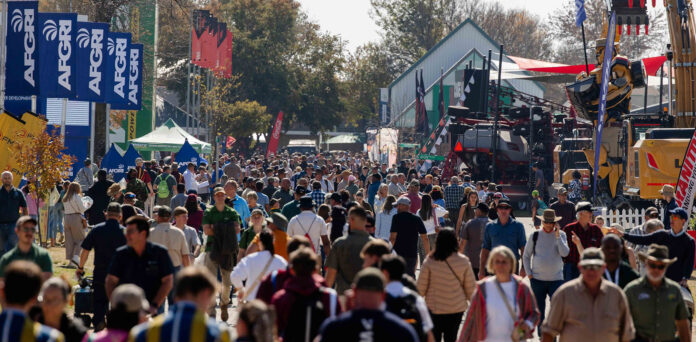
There are a few places that illustrated the vibrancy of South Africa’s agriculture as clearly as at Nampo, the largest agricultural technology show in the southern hemisphere. I spent time this week at Nampo in the Free State, observing new equipment from various suppliers, technological innovations in seeds, fertilisers, livestock products, automotive suppliers and financial solutions, among others.
At this one place, one gets a feel for the state of the South African farming sector and interest in our sector from various stakeholders globally.
There is also an opportunity to have deeper conversations with stakeholders. The conversations this year ranged from narratives about agriculture (its positioning in the public) to issues of trade wars, geopolitics, biosecurity (plant and animal health), and agriculture’s place in the changing world.
The mood was generally positive at Nampo, though people didn’t hide the fact that the South African farming sector faces some challenges. Foot-and-mouth disease in the beef and dairy industries, along with African swine fever in the pig industry, are among the pressing challenges the industry faces.
In the various panel discussions, this was also one of the points emphasised as a hindrance to South Africa’s agricultural growth prospects. Some viewed this as a wake-up call; we needed to ensure we improve plant health and focus on it more, as diseases would be as damaging to crops as what we are witnessing in livestock.
Fortunately, our field crops and fruits are in good condition, and investment in animal health would also improve from where things are at the moment.
Inefficiencies in logistics, poorly run municipalities, and unmaintained roads are among the issues that place pressure on the farming sector.
This is something even visitors to Nampo experience as they drive through North West and the Free State, noticing the decay of roads and towns in these provinces, which illustrate the inept governance and the pressure businesses are under as a result of these failures.
The logistics issues don’t end with roads and poorly run towns; they also extend to the ports. South Africa has made enormous progress in improving efficiency at Durban and Eastern Cape ports. The gains were clear in the robust agricultural exports in 2025, which reached a record $15.1 billion (up 10% year on year). But the Port of Cape Town faced significant challenges from the end of 2025 through 2026, and table grape producers felt the negative impact, and had to use far away ports from their production zones in the Eastern Cape.
We are now, fortunately, at a point where Transnet, organised agriculture, and the private sector are collaborating to improve efficiency.
Aside from the cattle and pork industries, which face various challenges, activity in field crops, horticulture and wine has generally been upbeat, and expected harvests are plentiful.
For example, South Africa’s 2025-26 summer grain and oilseed harvest is estimated at 20.8 million tonnes, up 1% year-on-year. Export volumes from the stone fruit and pome industries have increased by 12% year-on-year, driven by a large harvest. Also, the figures recently released by the South African Table Grape Industry show that the final figures for the 2025-26 table grapes inspected for export were 81.25 million cartons (4.5kg cartons), a 3% year-on-year increase.
The production conditions for vegetables remain favourable and have supported increased field activity. The poultry industry also had a better start to the year, supported by lower feed prices (maize and soybeans).
Overall, 2026 is likely to show a mixed growth picture. The mood, as observed and discussed at Nampo, suggests a year of mixed fortunes.
But going into 2027, there are risks ahead. The higher input costs, fuel and fertiliser, because of the Middle East war, along with expected El Niño drought, are some of the risks that could weigh on the sector and on employment conditions.
The grain industry begins summer crop plantings in October, and this is likely to coincide with higher input costs. The decisions farmers make in October will affect the fortunes of the sector in 2027 and through to the start of 2028.
Sihlobo, a member of the Presidential Economic Advisory Council, is presidential envoy on agriculture and land. He is chief economist at the Agricultural Business Chamber of South Africa and a senior fellow in Stellenbosch University’s department of agricultural economics.
- Nampo, the largest agricultural technology show in the southern hemisphere, showcased South Africa’s vibrant farming sector, featuring innovations in equipment, seeds, livestock, and financial solutions.
- Key challenges discussed included livestock diseases (foot-and-mouth, African swine fever), biosecurity concerns, and infrastructure issues like poor roads, inefficient logistics, and port problems affecting exports.
- Despite challenges in cattle and pork industries, other sectors like field crops, horticulture, wine, poultry, and summer grain harvests showed positive growth and strong export performance in 2025-26.
- South Africa’s agricultural exports reached a record $15.1 billion in 2025, supported by improvements in port efficiency, though the Port of Cape Town faced difficulties impacting table grape exporters.
- Looking ahead, 2026 may bring mixed agricultural growth, with risks from rising input costs linked to the Middle East war and an expected El Niño drought potentially affecting 2027 crop planting and sector outlook.


