


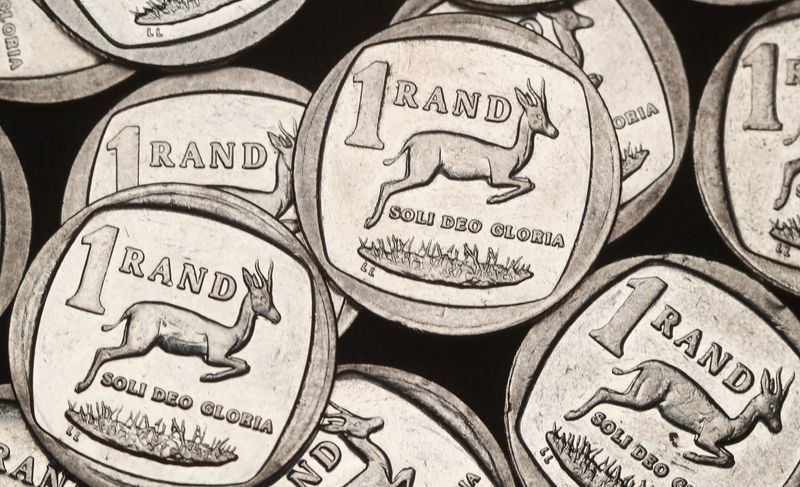
The South African rand touched a one-year low in early trade on Friday, weakening on uncertainty over coalition talks after local elections, compounded by pressure from a stronger dollar and a hawkish split in a central bank decision to hold rates.
By 05:40 GMT on Friday, the rand traded at 17.56 against the dollar, hovering near its weakest in 12 months.
The risk-sensitive currency has recently been pressured by a firmer greenback, which has flirted with a 19-month high, and uncertainty around the coalition talks, while a hawkish split in the central bank’s decision to hold rates underscored persistent inflation concerns.
Thursday’s decision was a close call, with four Monetary Policy Committee members voting to keep the policy rate unchanged and three favouring a 25-basis-point increase.
Investors are focusing on coalition talks as a key test of whether increasingly fragmented politics can deliver stable governance in South Africa’s economic hub.
READ: ActionSA ‘still far from coalition deal in Joburg and Tshwane’
As the African National Congress and its partners negotiate local power-sharing, it is nearing a deal with smaller rivals to govern Johannesburg, sidelining the pro-business Democratic Alliance despite its first-place finish in the city.
“Ousting the DA at the local government level could spill over into the GNU, potentially destabilising national politics and having more significant implications for investor sentiment,” the Bureau for Economic Research said in a weekly review note.
South Africa’s benchmark 2035 government bond was steady in early deals, with the yield at 8.635%
- The South African rand fell to a one-year low at 17.56 against the dollar amid uncertainty over coalition talks and pressure from a stronger dollar.
- The U.S. dollar reached near a 19-month high, contributing to the rand's weakness.
- The South African Reserve Bank's Monetary Policy Committee had a split decision, with four members voting to hold rates and three favoring a 25-basis-point increase.
- The African National Congress is close to forming a coalition to govern Johannesburg with smaller rivals, potentially sidelining the Democratic Alliance despite its electoral win.
- South Africa's 2035 government bond yield remained steady at 8.635% in early trade.
The South African rand touched a one-year low in early trade on Friday, weakening on uncertainty over coalition talks after local elections, compounded by pressure from a stronger dollar and a hawkish split in a central bank decision to hold rates.
By 05:40 GMT on Friday, the rand traded at 17.56 against the dollar, hovering near its weakest in 12 months.
The risk-sensitive currency has recently been pressured by a firmer greenback, which has flirted with a 19-month high, and uncertainty around the coalition talks, while a hawkish split in the central bank's decision to hold rates underscored persistent inflation concerns.
Thursday's decision was a close call, with four Monetary Policy Committee members voting to keep the policy rate unchanged and three favouring a 25-basis-point increase.
Investors are focusing on coalition talks as a key test of whether increasingly fragmented politics can deliver stable governance in South Africa's economic hub.
READ: ActionSA 'still far from coalition deal in Joburg and Tshwane'
As the African National Congress and its partners negotiate local power-sharing, it is nearing a deal with smaller rivals to govern Johannesburg, sidelining the pro-business Democratic Alliance despite its first-place finish in the city.
"Ousting the DA at the local government level could spill over into the GNU, potentially destabilising national politics and having more significant implications for investor sentiment," the Bureau for Economic Research said in a weekly review note.
South Africa's benchmark 2035 government bond was steady in early deals, with the yield at 8.635%


