


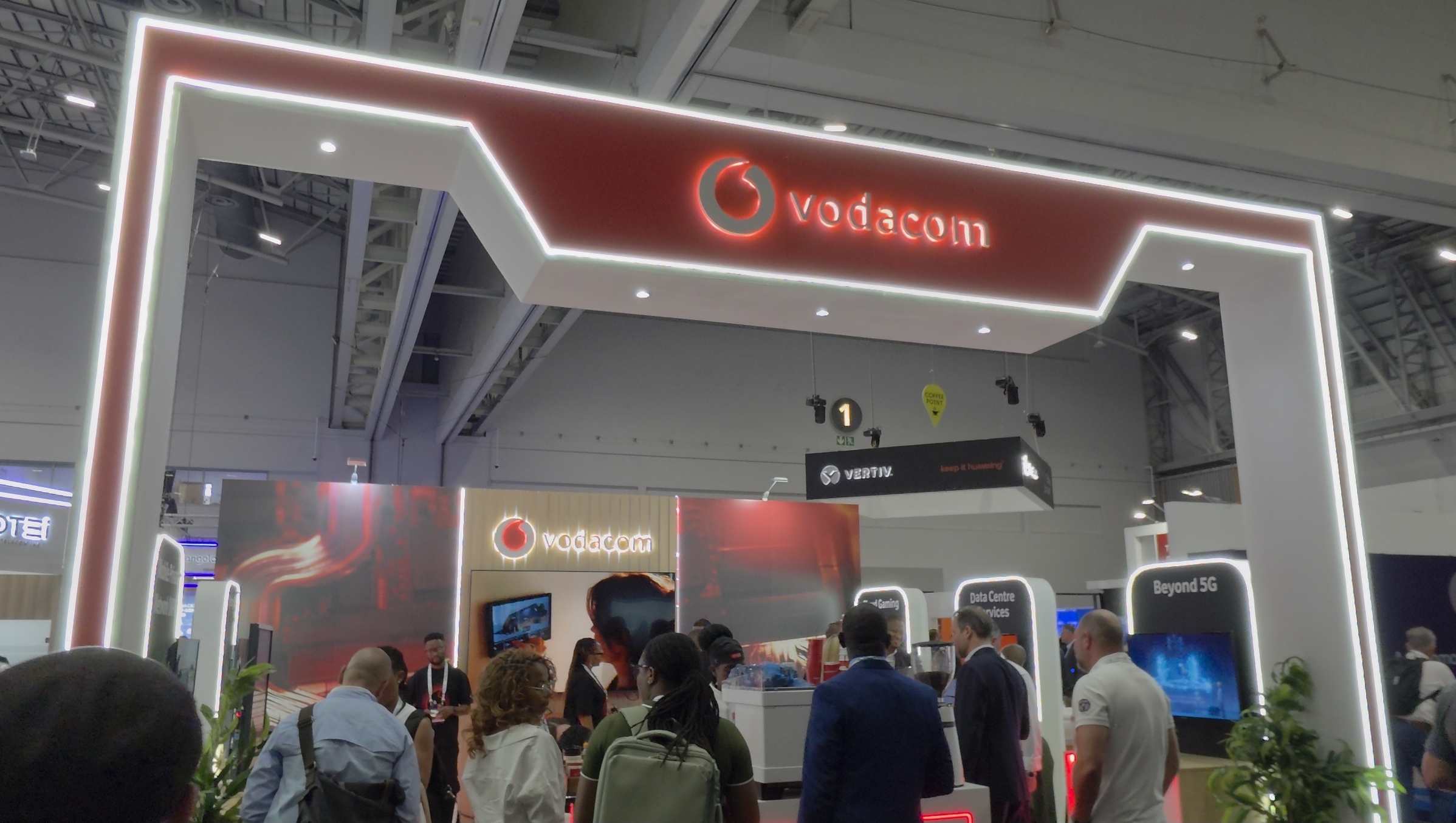
Vodacom South Africa and Chinese telecommunications giant Huawei have successfully tested new wireless technology designed to support future 6G connectivity, although commercial deployment remains dependent on regulatory approval and spectrum availability.
The companies showcased their upper 6GHz (U6GHz) radio technology during the opening day of the 2026 Africa Tech Festival in Cape Town on Tuesday, highlighting its potential to improve internet speeds, network capacity and indoor connectivity.
The development comes as telecommunications operators face growing pressure to expand 5G coverage while managing increasing data consumption and infrastructure costs.
READ: Vodacom’s East Africa bet boosts earnings, but court battle clouds takeover
Adham Stoltz, Vodacom South Africa’s head of technology strategy, said the operator was exploring technologies that could deliver faster, more affordable connectivity while preparing for future network requirements.
“It’s not something that is ready to go out into the market tomorrow,” Stoltz cautioned. He explained that Vodacom’s 5G network currently covers almost 60% of South Africa’s population, with further expansion planned.
Diane Keitsemore, Vodacom’s managing executive for radio network engineering, said the successful trial represented an important development in addressing network congestion and improving customer experience.
“We are the first to test the upper 6-gig radio. And we are excited about it,” Keitsemore said. “What we see from this innovation is the fact that it will help us with our indoor penetration. It will help us with also capacity in the network, especially in areas where we see high demand.”
She explained that the technology could help relieve congestion on existing 4G networks, particularly in densely populated urban areas where demand for mobile data continues to increase.
Huawei, which partnered with Vodacom on the trial, believes its RetinaMIMO innovation and VitaAAU equipment could address some of the technical challenges associated with higher-frequency spectrum.
David Li, President of Huawei’s Wireless TDD Product Line, said the partnership represented an important step towards developing next-generation connectivity. “Together with Vodacom, we are exploring Huawei’s latest innovations and products for U6GHz, the next golden spectrum,” Li said.
READ: MTN in talks to acquire rival Telkom
However, the upper 6GHz spectrum has not yet been made available for commercial mobile deployment in South Africa. Responding to questions about regulatory challenges, Vodacom said it continued engaging with the Independent Communications Authority of South Africa (ICASA) ahead of future spectrum allocation processes.
The operator also identified artificial intelligence as a critical component of its network strategy, particularly in identifying suitable locations for 5G expansion, improving network performance and responding to infrastructure failures.
While the successful trial demonstrates technical progress, neither company has announced a commercial rollout date. Further regulatory approvals, spectrum allocation and infrastructure investment will be necessary before the technology becomes available to South African consumers.
- Vodacom South Africa and Huawei successfully tested upper 6GHz (U6GHz) radio technology aimed at future 6G connectivity during the 2026 Africa Tech Festival in Cape Town.
- Vodacom's 5G network currently covers almost 60% of South Africa’s population, with plans for further expansion.
- The trial technology aims to improve internet speeds, indoor penetration, network capacity, and relieve congestion on existing 4G networks in high-demand urban areas.
- The upper 6GHz spectrum needed for commercial deployment has not yet been allocated in South Africa, pending regulatory approval from ICASA.
- Vodacom emphasized artificial intelligence's role in its network strategy for optimizing 5G expansion, network performance, and addressing infrastructure issues.
Vodacom South Africa and Chinese telecommunications giant Huawei have successfully tested new wireless technology designed to support future 6G connectivity, although commercial deployment remains dependent on regulatory approval and spectrum availability.
The companies showcased their upper 6GHz (U6GHz) radio technology during the opening day of the 2026 Africa Tech Festival in Cape Town on Tuesday, highlighting its potential to improve internet speeds, network capacity and indoor connectivity.
The development comes as telecommunications operators face growing pressure to expand 5G coverage while managing increasing data consumption and infrastructure costs.
READ: Vodacom's East Africa bet boosts earnings, but court battle clouds takeover
Adham Stoltz, Vodacom South Africa’s head of technology strategy, said the operator was exploring technologies that could deliver faster, more affordable connectivity while preparing for future network requirements.
“It’s not something that is ready to go out into the market tomorrow,” Stoltz cautioned. He explained that Vodacom’s 5G network currently covers almost 60% of South Africa’s population, with further expansion planned.
Diane Keitsemore, Vodacom’s managing executive for radio network engineering, said the successful trial represented an important development in addressing network congestion and improving customer experience.
“We are the first to test the upper 6-gig radio. And we are excited about it,” Keitsemore said. “What we see from this innovation is the fact that it will help us with our indoor penetration. It will help us with also capacity in the network, especially in areas where we see high demand.”
She explained that the technology could help relieve congestion on existing 4G networks, particularly in densely populated urban areas where demand for mobile data continues to increase.
Huawei, which partnered with Vodacom on the trial, believes its RetinaMIMO innovation and VitaAAU equipment could address some of the technical challenges associated with higher-frequency spectrum.
David Li, President of Huawei’s Wireless TDD Product Line, said the partnership represented an important step towards developing next-generation connectivity. “Together with Vodacom, we are exploring Huawei’s latest innovations and products for U6GHz, the next golden spectrum,” Li said.
READ: MTN in talks to acquire rival Telkom
However, the upper 6GHz spectrum has not yet been made available for commercial mobile deployment in South Africa. Responding to questions about regulatory challenges, Vodacom said it continued engaging with the Independent Communications Authority of South Africa (ICASA) ahead of future spectrum allocation processes.
The operator also identified artificial intelligence as a critical component of its network strategy, particularly in identifying suitable locations for 5G expansion, improving network performance and responding to infrastructure failures.
While the successful trial demonstrates technical progress, neither company has announced a commercial rollout date. Further regulatory approvals, spectrum allocation and infrastructure investment will be necessary before the technology becomes available to South African consumers.


