



The United Arab Emirates (UAE) has announced it will leave the Organisation of the Petroleum Exporting Countries (OPEC), effective Friday.
This has triggered another shock in global energy markets and pushed Brent crude oil prices over $110 (R1 658) per barrel.
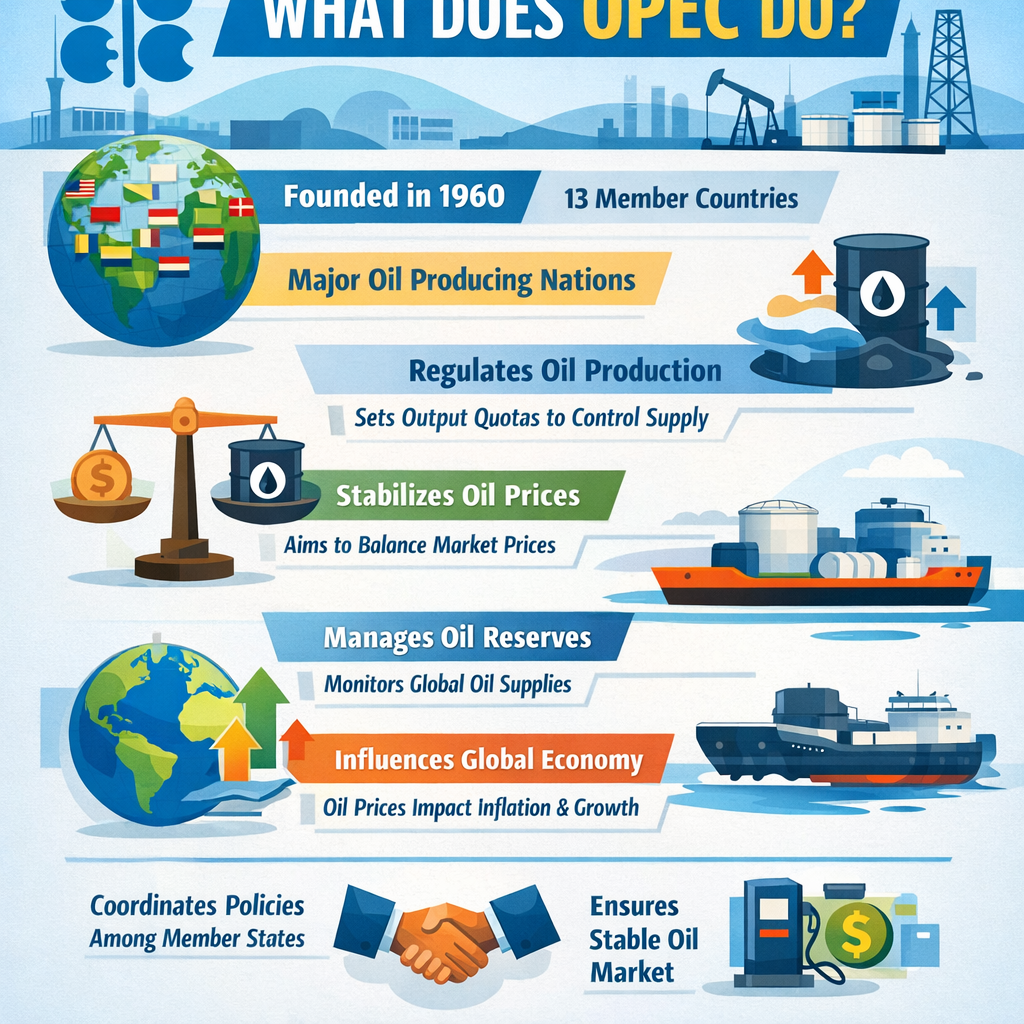
A group of major oil-producing nations forms the cartel to regulate oil prices and ensure they remain affordable for consumers.
Deliberate policy shift
Suhail Mohammed Faraj Al Mazrou, UAE Minister of Energy and Infrastructure, said the decision reflects a deliberate policy shift aimed at aligning the country’s energy strategy with evolving global market conditions and long-term economic priorities.
“The UAE’s decision to exit OPEC reflects a policy-driven evolution aligned with long-term market fundamentals.
“We thank OPEC and its member countries for decades of constructive cooperation. We remain committed to energy security, providing reliable, responsible, and lower-carbon supply while supporting stable global markets,” said Mazrou.
The announcement marks a major shift in global energy dynamics as the war in the Middle East, which has been going on for nine weeks, continues to drive oil prices higher amid an increasingly unstable supply outlook.
The war involves the US and Israel, which launched military strikes against Iran, a founding member of OPEC. The attacks have also led to the death of Iran’s supreme leader, Ali Khamenei.
Iran blocks Strait of Hormuz
In response, Iran blocked the Strait of Hormuz, disrupting the global oil market as prices surged above $100 per barrel in March, but the oil shipping lane has now been reopened under strict measures, and negotiations over a ceasefire continue.
The UAE has been one of the targets of Iran’s retaliation against Gulf countries hosting US military assets.
Its departure from OPEC follows nearly six decades of membership. The country first joined the group in 1967 through the Emirate of Abu Dhabi, prior to the formation of the UAE federation in 1971.
- The UAE announced its exit from OPEC, effective Friday, causing Brent crude oil prices to surge above $110 per barrel.
- The departure reflects a strategic policy shift by the UAE to align its energy approach with changing global markets and economic priorities.
- The UAE expressed gratitude for decades of cooperation with OPEC but remains committed to energy security and stable, responsible supply.
- The decision comes amid ongoing Middle East conflict involving US and Israeli strikes on Iran, a founding OPEC member, which has destabilized oil supply.
- Iran’s blocking and recent reopening of the Strait of Hormuz further disrupted global oil markets, with the UAE being targeted in regional retaliations.


