
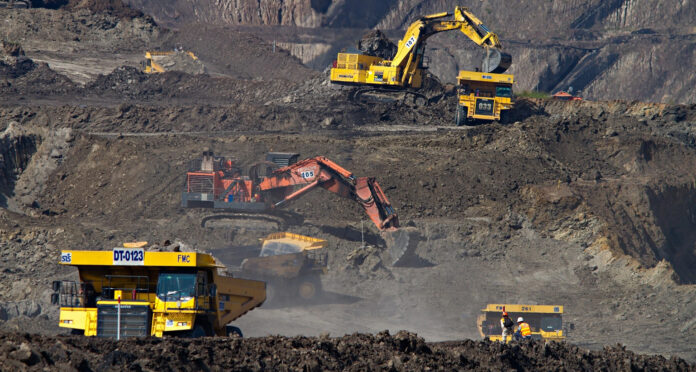
Zimbabwe has stunned global commodity markets by banning the export of all raw minerals and lithium concentrates with immediate effect. This is part of a broader policy shift by Zimbabwe, aimed at forcing mining companies to process minerals domestically and capture more value from its natural resources.
The decision was announced on February 25 2026 by Zimbabwe’s Ministry of Mines and Mining Development. It applies to all unprocessed minerals, including lithium concentrates that were previously destined for export markets, mostly in China. The ban fastens the government’s earlier plan to stop lithium concentrate exports by 2027.
Africa’s largest lithium producer
Zimbabwe is Africa’s largest lithium producer and a strategically important supplier to the global battery industry. The country exported approximately 1.1 million tonnes of lithium concentrate in 2025 alone. This generated $513.8-million in export revenue in 2025. However, most of that lithium was exported in raw or semi-processed form. This left foreign refiners, especially in China, to capture the bulk of the economic value in battery markets.
The Zimbabwean government says that model must now end. Officials cited widespread export leakages, malpractice, and the need to ensure Zimbabwe derives full economic benefit from its mineral wealth. The ban is intended to force mining companies operating in Zimbabwe to build local processing plants. To also create jobs and strengthen domestic industrial capacity rather than exporting cheap raw materials.
Lithium carbonate futures surged by more than 6% (+ $1,495 per tonne) in China following the announcement. A reflection of market fears over potential supply disruptions. Shares in major lithium producers around the world also jumped sharply. This as investors anticipated tighter global supply and stronger prices.
China to be hardest hit
China, which dominates global lithium refining, is expected to be among the hardest hit. Chinese companies, including Sinomine Resource Group, Zhejiang Huayou Cobalt, Chengxin Lithium, and Yahua Group, have invested heavily in Zimbabwe’s lithium sector. And they rely on shipments from the country to feed their processing plants.
Many of those companies now face an urgent need to build refining facilities inside Zimbabwe or risk losing access to the resource entirely.
In the short term, however, the export ban could disrupt Zimbabwe’s own economy. The country currently has limited lithium processing capacity. This means mining companies may be forced to slow production while new refining infrastructure is developed. And this could temporarily reduce export revenues. These are a critical source of foreign currency for the country’s fragile economy.
Worth the risk for Zimbabwe
Yet Zimbabwe’s government appears willing to accept short-term economic pain in exchange for long-term industrial gains. By forcing local beneficiation, Zimbabwe aims to capture significantly more value from its mineral resources. Processed lithium carbonate sells for around $22, 000 to $26, 000 per tonne. This compared with just $800 to $2, 000 per tonne for raw spodumene concentrate. Domestic refining could stimulate industrial development and increase government revenues over time.
Several African countries, including Namibia and Malawi, have introduced or are considering similar restrictions on exporting unprocessed minerals. These governments are seeking to move beyond the historical model in which Africa exports raw resources while importing expensive finished products. Zimbabwe’s move may accelerate that trend.
- Zimbabwe has stunned global commodity markets by banning the export of all raw minerals and lithium concentrates with immediate effect.
- This is part of a broader policy shift by Zimbabwe, aimed at forcing mining companies to process minerals domestically and capture more value from its natural resources.
- The decision was announced on February 25 2026 by Zimbabwe’s Ministry of Mines and Mining Development.
- It applies to all unprocessed minerals, including lithium concentrates that were previously destined for export markets, mostly in China.
- The ban fastens the government’s earlier plan to stop lithium concentrate exports by 2027.