


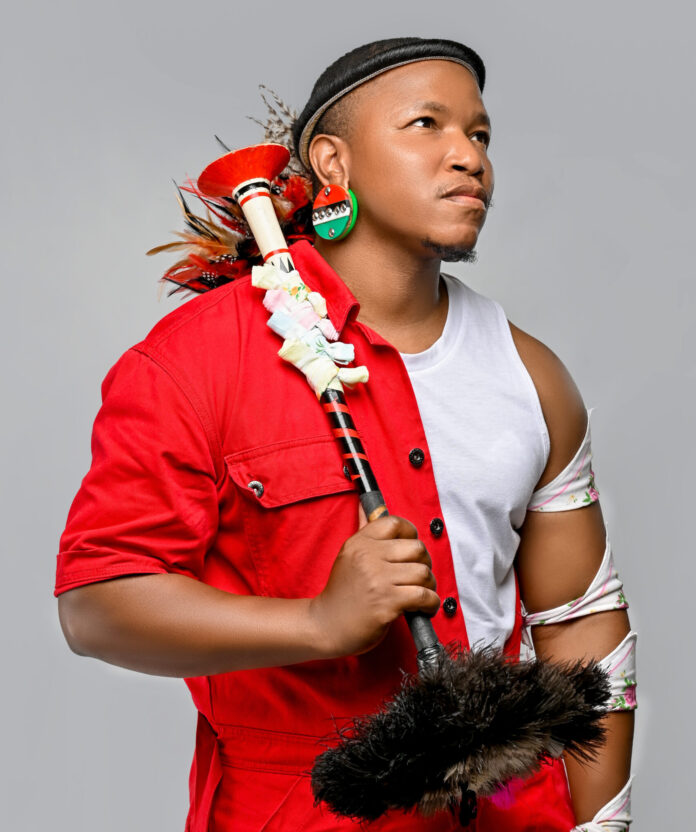
For years, Maskandi star Mzukulu believed his music deserved a place among South Africa’s finest. Now, with his first-ever South African Music Awards (SAMA) nomination, the acclaimed singer says that long-awaited recognition has finally arrived.
The nomination marks a defining moment in a career built on patience, consistency and an unwavering belief in his craft.
Born Dumisani Sfanele Zulu, Mzukulu was raised in the rural town of uLundi in KwaZulu-Natal, where his love for Maskandi was nurtured from a young age. Surrounded by the rich traditions of Zulu culture, he developed a passion for the genre long before stepping into a recording studio.
Birth of a star
He officially launched his music career in 2018 with the release of his debut album, Vukani. The project introduced him to South African audiences and featured the breakout hit MakaBahle, which quickly gained traction and established him as one of Maskandi’s rising stars. Since then, Mzukulu has built a loyal following and cemented his place among the genre’s leading voices.
“This is my very first SAMA nomination, so it means a great deal to me,” Mzukulu told Sunday World.
“It feels like the latest album and the work I’ve put into this project have finally received the recognition they deserve.”
While many artists measure success through chart positions and sold-out concerts, Mzukulu believes a SAMA nomination carries a different kind of significance.
“The SAMAs are among the biggest and most respected music awards in South Africa. After so many years of hard work, dedication and perseverance, this nomination reminds me that the journey has been worth it.”
Credit to loyal fanbase
He is equally quick to credit the loyal fanbase that has stood by him throughout his career.
“This nomination belongs to my fans just as much as it belongs to me. They’ve believed in me from the beginning and always believed this day would come.”
Mzukulu’s rise has mirrored Maskandi’s own transformation. Once regarded as a niche genre rooted primarily in KwaZulu-Natal, Maskandi has become one of the country’s most commercially successful genres, dominating streaming platforms, filling concert venues and earning recognition on the country’s biggest award stages.
According to the singer, the genre’s success lies in its ability to evolve without abandoning its identity.
“We’ve adapted to the way music is changing while staying true to our roots. We’ve introduced fresh sounds, improved production and collaborated with artists from other genres, which has helped bring Maskandi to a wider audience.”
‘Authenticity remains centre of my music’
Despite embracing innovation, Mzukulu insists authenticity remains at the centre of his music.
“I still record songs that stay true to the original Maskandi sound using guitars, bass, drums and concertina. Those songs celebrate our Zulu culture, traditions and the stories of rural life because it’s important that those roots are never lost.”
At the same time, he is not afraid to broaden his appeal. His latest album includes There Is No One Like You, a song performed entirely in English, which he says is one way of introducing Maskandi to a wider audience without compromising its essence.
Away from the stage, Mzukulu sees himself as more than an entertainer.
“Maskandi is deeply rooted in Zulu culture, and I believe it’s my responsibility to protect and promote that heritage. My culture will always remain at the heart of what I do.”
Artist hopes to inspire next generation
As an independent artist, he also hopes his career will inspire the next generation.
“I want my legacy to show that you can build a successful career independently through discipline, dedication and consistency. I also want to be remembered as someone who opened doors for young artists.”
Digital platforms have also transformed his career.
“Facebook and TikTok have helped me reach audiences far beyond Johannesburg and KwaZulu-Natal. They’ve made it easier for promoters to discover my music and for fans across the country to find me.”
Although this is his first SAMA nomination, Mzukulu says the overwhelming response to his latest album, Ng’funa intozami, together with sold-out performances at Durban’s Playhouse Theatre and Carnival City, have already shown him that his music is making an impact. He is now preparing for two Cape Town performances in August, with tickets already close to selling out.
If he walks away with a SAMA trophy, Mzukulu says the victory will belong to everyone who has supported his journey.
“It would mean everything because it would recognise years of hard work and believing in myself even when the recognition wasn’t there. But I honestly think my fans would be happier than I would. This achievement would belong to them too.”
- Maskandi artist Mzukulu received his first South African Music Awards (SAMA) nomination, marking a major milestone in his career.
- Born in rural KwaZulu-Natal, Mzukulu launched his career in 2018 with the debut album *Vukani* and the hit song "MakaBahle," gaining recognition in the Maskandi genre.
- He credits his loyal fanbase and the genre's evolution—embracing modern sounds while staying true to Zulu roots—for his success and Maskandi’s growing popularity.
- Mzukulu balances authentic traditional Maskandi music with new elements, such as English-language songs, to broaden appeal without compromising cultural heritage.
- As an independent artist, Mzukulu aims to inspire future musicians through discipline, consistency, and digital platforms, while promoting Zulu culture and preparing for upcoming performances.


