


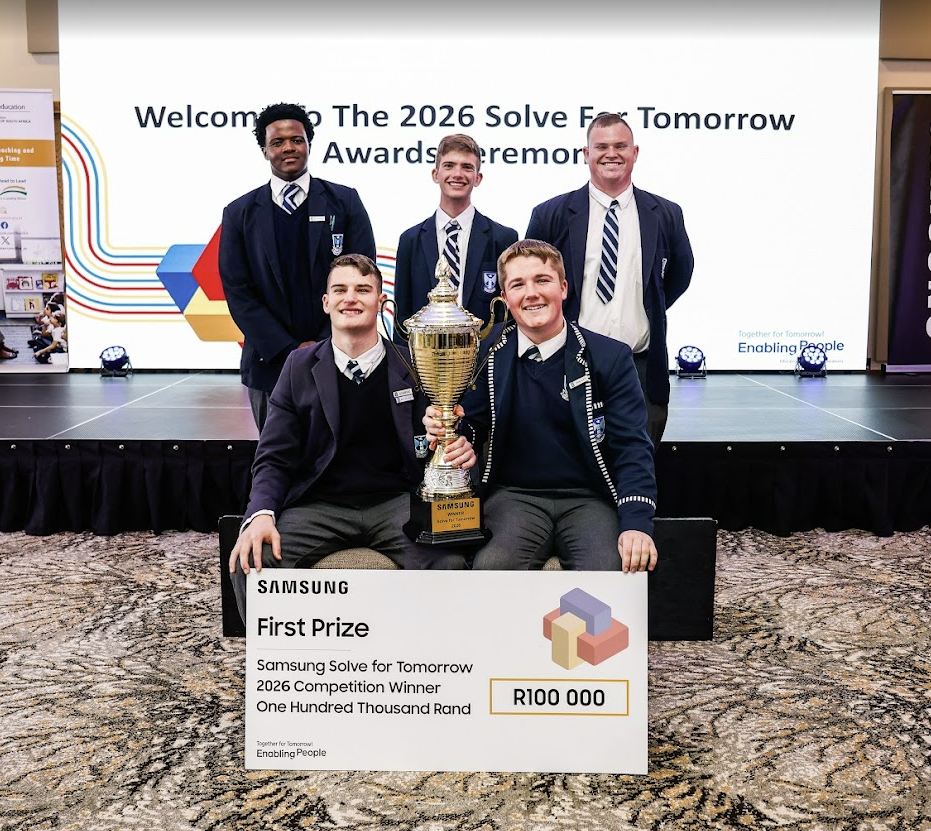
A group of Eastern Cape learners has demonstrated how discarded plastic bottles can be transformed into affordable sports equipment, earning their school top honours in a national technology competition that has recorded a sharp increase in participation.
Cape Recife High School, a special-needs school in Gqeberha, Eastern Cape, emerged victorious in the 2026 Samsung Solve for Tomorrow competition, beating schools from across South Africa with an invention that converts plastic waste into materials used for 3D printing.
The competition, organised by Samsung South Africa in partnership with the Department of Basic Education, attracted 143 project submissions this year, compared with 47 in 2025. The increase highlights growing interest among public school learners in developing technology-based solutions to challenges affecting their communities.
READ: Championing digital inclusion through purposeful partnerships
Cape Recife’s winning prototype uses an electronic device to convert discarded polyethylene terephthalate (PET) bottles into filament that can be used to 3D-print sporting equipment. The project addresses two challenges: plastic pollution and limited access to affordable sporting equipment in disadvantaged communities.
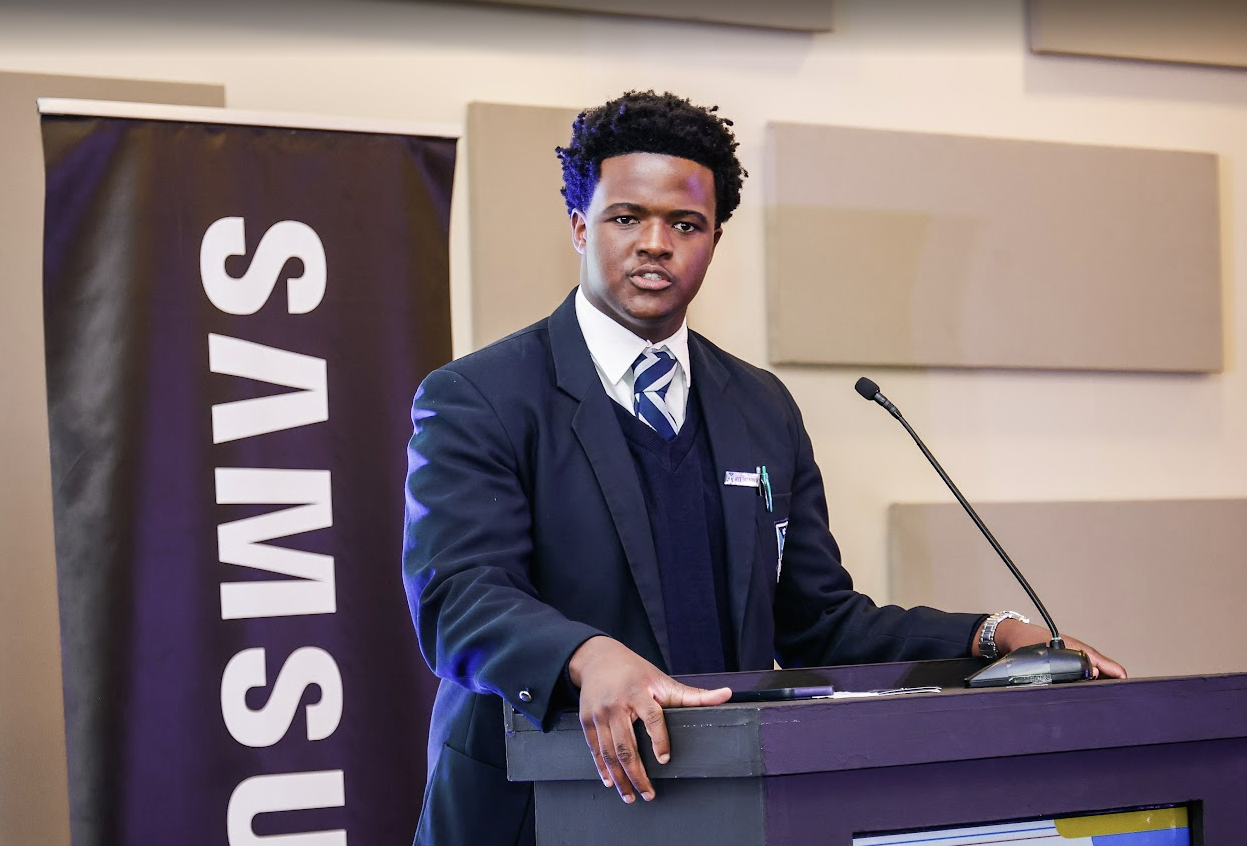
Grade 10 learner Kukhanya Mbebe said the team initially wanted to address a problem affecting their community.
“When we started, we just wanted to fix a problem we saw in our community. Working on this project has taught us how to think like inventors and use technology to make a difference,” Mbebe said.
The school received R100,000 towards purchasing science, technology, engineering and mathematics (STEM) equipment.
Limpopo’s Mbilwi Secondary School secured second place and R50,000 for developing construction materials from waste, while Sekete IV Secondary School in North West received R30,000 for an innovation addressing food insecurity.
The winners were recognised at an awards ceremony in Centurion on October 2, attended by Basic Education Minister Siviwe Gwarube and Samsung Africa president and CEO Simon Lee.
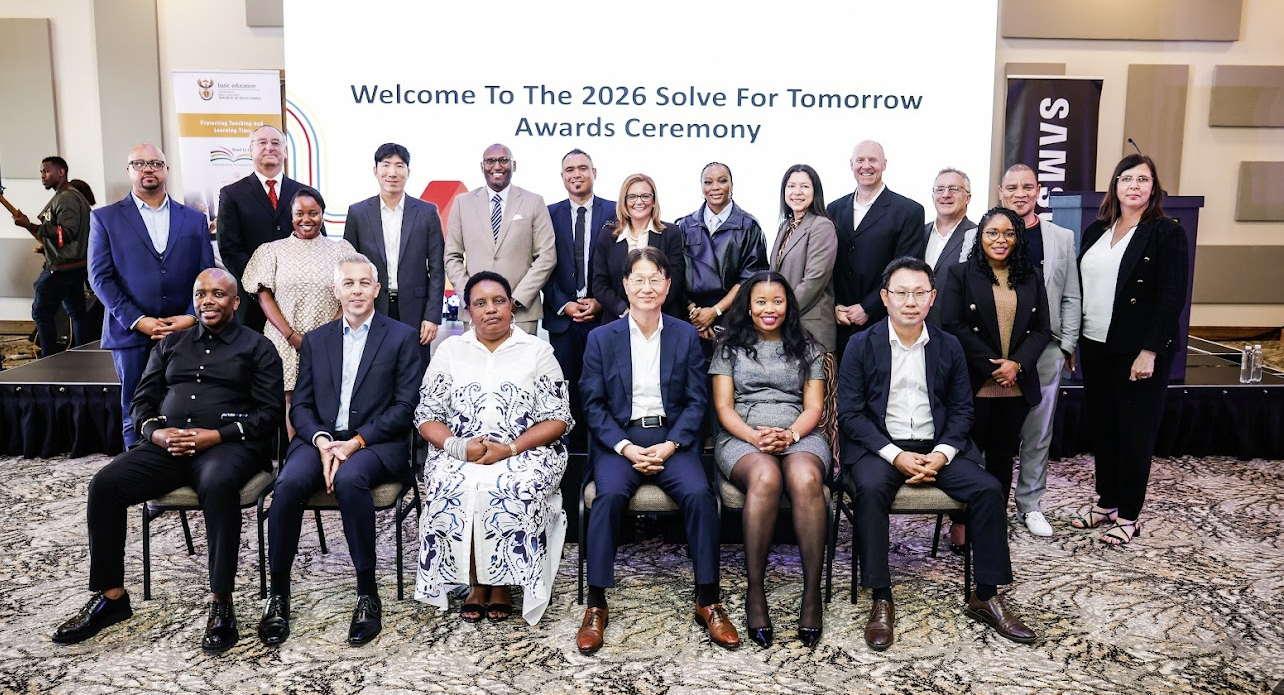
Gwarube emphasised the importance of partnerships between government and the private sector in improving educational opportunities.
“We cannot perpetuate the inequality that currently exists,” she said.
READ: ‘Roll back inequality precipitated by mathematics exclusion’
Participating learners received mentorship, seed funding and connected tablets to develop working prototypes. Samsung said the programme aims to strengthen practical STEM education and encourage greater participation among learners from underserved communities.
- Cape Recife High School in Gqeberha won the 2026 Samsung Solve for Tomorrow competition with an invention that converts plastic waste into 3D printing filament for affordable sports equipment.
- The competition attracted 143 project submissions in 2026, a significant increase from 47 in 2025, showing growing interest in technology-based community solutions.
- Cape Recife’s prototype uses an electronic device to convert discarded PET bottles into filament, addressing plastic pollution and lack of affordable sports gear in disadvantaged areas.
- The winning school received R100,000 for STEM equipment, while second place Mbilwi Secondary School got R50,000, and third place Sekete IV Secondary School received R30,000.
- The awards ceremony on October 2 was attended by Basic Education Minister Siviwe Gwarube and Samsung Africa CEO Simon Lee, with emphasis on government and private sector collaboration to improve education.


