As South Africa prepares to release the 2026 matric results this month, the country will once again gather around a familiar set of numbers.
Pass rates will be analysed, provinces compared, schools ranked and a handful of top achievers held up as symbols of progress. But behind these statistics are young people whose lives will unfold in ways the results cannot predict or prepare them for.
For example, there would be a learner who passes matric with excellent results and enters university confident, only to discover that she struggles to cope at university when there is no clear instruction, no memorandum, and no “right” answer.
Group work would feel foreign, and independent thinking risky. When learning becomes ambiguous, she falters, not because she lacks ability, but because schooling trained her to perform, not to practise learning.
Then there might be a learner who does not pass matric but who spent years repairing phones, helping run a family business, and navigating customers, money, and problem-solving daily. She learned through doing, failing and adapting, yet the system tells her she is deficient and offers her a few structured ways to turn competence into recognised opportunity.
And then, finally, there might be a learner who achieves distinctions under extraordinary conditions, only to be confronted by an economy unable to absorb her because credentials matter less than networks, adaptability, and the capacity to keep learning as work itself changes. In reality, these are not individual failures; these are systemic outcomes.
The matric certificate was designed for a relatively stable world, one in which education led to predictable employment, careers were linear and knowledge endured. Today’s young people enter a radically different landscape where jobs are fragmented, automated, or disappearing.
It is a milieu where artificial intelligence and digital systems are reshaping work faster than curricula. Where informal, gig, and portfolio careers are increasingly common, and where most people will change roles and identities multiple times.
Indeed, it is a world where lifelong learning is no longer aspirational; it is essential. In such an environment, the most important educational outcome is not mastery of content but the capacity to continue learning and actualise it in unfamiliar contexts.
Yet, our schooling system remains dominated by high-stakes assessment that rewards recall, compliance, and short-term performance, which is precisely the opposite of what the future of work demands.
Every January, the public debate centres on whether the pass rates have improved or declined. Who is to blame or praise? Which schools or provinces “performed”, etc? This is the wrong conversation.
The conversation we should be having is far more complex and far more urgent, like, what kinds of learners are we producing? How many pathways into dignified, sustainable livelihoods actually exist? Who is systematically excluded by our current assessment logic? Why do we continue to treat learning as something that ends at the age of 18? So, until we change the conversation, policy responses will remain cosmetic. A matric certificate has meaning only if it opens real, supported pathways.
For too many young people, it does not. Equity is not achieved by ensuring everyone writes the same exam. Equity is achieved when all learners have access to multiple, legitimate routes into productive and sustainable livelihoods, regardless of background, geography, or schooling context. This requires acknowledging uncomfortable truths, that academic pathways cannot be the default measure of success. That failure at 18 cannot be a lifelong sentence, and that learning also happens in workplaces, communities and informal economies. Education systems must serve social and economic realities, not just tradition.
What is missing from our system is not effort or intention, but a pedagogy that treats learning as practice rather than performance. Practice-based pedagogy starts from a different premise where learning happens through doing, reflecting, revising and applying. It is where knowledge is not static; it is contextual and evolving.
Where mistakes are not deficits but data for growth and where learners develop identity and agency through meaningful participation. From this lens, the goal of schooling is not to produce correct answers but to develop capable learners who can enter new situations, make sense of complexity, and continue learning over time.
If South Africa is serious about equity, employability and sustainability, this shift must be reflected in policy, not just rhetoric. It should:
Reframe the purpose of schooling (DBE) – where schooling is explicitly orientated
toward adaptability, applied learning, and lifelong capability, not only examination
success.
Redesign assessment to value practice and progression – where systems should include project-based, applied, and reflective components that capture learning over time, not only performance under pressure.
Build real, respected post-school pathways (DBE and DHET) – where technical, vocational, entrepreneurial and hybrid pathways must be properly funded, socially valued, and clearly connected to economic opportunities and not treated as second-best options.
Enable flexible entry, exit, and re-entry into learning – where modular learning, stackable credentials, and opportunities for learners to return and reskill throughout their lives are supported.
Align education policy with labour and economic realities – where education is designed within the realm of a changing world of work requiring sustained collaboration across
education, industry and community sectors.
Stop using matric as a blunt sorting mechanism – where using a single examination to rank, exclude and limit opportunity in a volatile economy is not only unjust but also economically short-sighted.
Therefore, the success of an education system should not be measured by pass rates alone, but by how many learners can sustain themselves with dignity, how many can adapt when work changes or disappears, how many can continue learning across a lifetime and participate meaningfully in society.
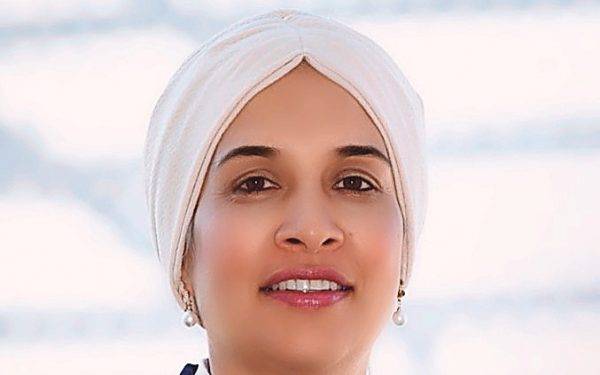
• Prof Yassim is an associate professor, department of education leadership and management, faculty of education, University of Johannesburg.
- As South Africa prepares to release the 2026 matric results this month, the country will once again gather around a familiar set of numbers.
- Pass rates will be analysed, provinces compared, schools ranked and a handful of top achievers held up as symbols of progress.
- But behind these statistics are young people whose lives will unfold in ways the results cannot predict or prepare them for.
- For example, there would be a learner who passes matric with excellent results and enters university confident, only to discover that she struggles to cope at university when there is no clear instruction, no memorandum, and no “right” answer.
- Group work would feel foreign, and independent thinking risky.