



What the release of the Mbalula Dossier on 25 March 2026 makes plain is that AfriForum’s legal and lobbying activities are not proceeding independently of the diplomatic changes in Pretoria.
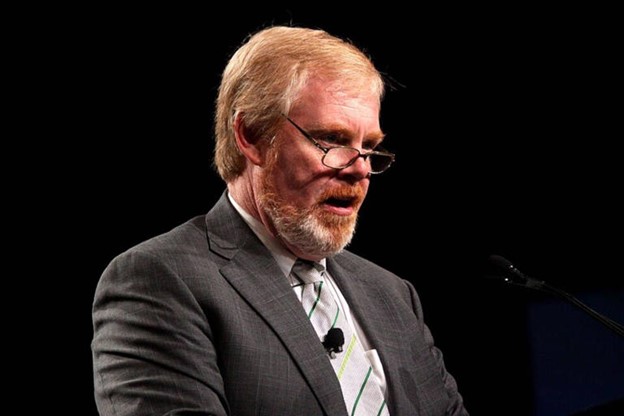
The arrival of Ambassador Leo Brent Bozell III gave AfriForum a direct interlocutor in the American government who shares its stated positions on BBBEE, Israeli foreign policy, and property rights.
The dossier was submitted not only to the National Prosecuting Authority but to American authorities, with a request that those authorities act.
The African National Congress described this as an affront and a direct attack on South Africa’s sovereignty. That assessment carries weight. A domestic civil society organisation using the arrival of a foreign ambassador, whose own government has applied sustained economic pressure on South Africa, to pursue a sitting leader of the governing party through foreign sanctions mechanisms is not a routine legal action. It is a political operation, and the timing of its launch makes its relationship to Ambassador Bozell’s presence in the country difficult to dismiss.
However, political analyst Xolani Dube cautions against drawing definitive conclusions about direct coordination. “We must not create conspiracies,” Dube says. “The issues involving Fikile Mbalula predate both the ambassador’s arrival and the current US administration. AfriForum has long indicated its intention to pursue legal action. To attribute that solely to recent diplomatic developments would be misleading.”
Dube argues that what may appear coordinated is often the result of overlapping interests rather than direct collaboration. “The world is about the contestation of power and influence. Countries and organisations engage where there is alignment. That does not automatically mean there is a single, centrally directed operation.”
Ambassador Bozell did not come to South Africa to make friends. He came to build a coalition. That coalition has a clear shape: AfriForum on the legal and lobbying front, Mmusi Maimane and Gayton McKenzie as its political faces inside Parliament and Cabinet, and the United States government as its ultimate power behind the effort.
But Dube again urges caution in how such alignments are interpreted. “All diplomats are here to advance the interests of their countries,” he says.
“They will meet political actors they believe they can work with. That is standard practice in international relations. The question is not whether there is engagement but how South Africa positions itself in response.”
Its targets are equally clear: the ANC, the EFF, BBBEE, the Expropriation Act, South Africa’s genocide case against Israel, and every policy that asserts this country’s right to govern itself without foreign instruction. AfriForum files the dossiers. Maimane and McKenzie meet the ambassador and issue the statements. Bozell carries the demands back to Washington.
Dube, however, rejects the notion of a tightly coordinated network. “We must be careful not to overstate coherence where there may simply be convergence,” he says. “Influence in global politics often operates through parallel interests rather than formal alliances.”
None of them act alone. They are a network, and the Mbalula Dossier is proof that the network is now operational. South Africans should understand what they are looking at.
For Dube, the deeper concern lies elsewhere. “The real issue is whether South Africa has a clear and consistent geopolitical strategy,” he says. “If that is weak or unclear, it creates space for external actors to exert influence, regardless of whether they are acting in coordination or not.”


