


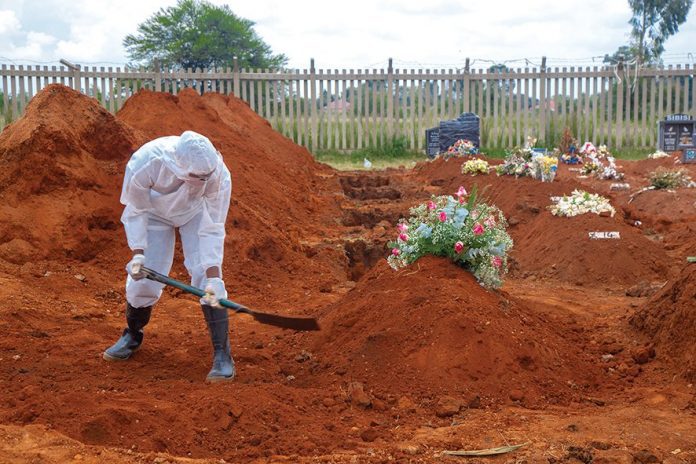
A funeral is supposed to be about saying goodbye, but in South Africa, the final farewell can quickly become a financial, social and cultural burden, with grieving families feeling under pressure to, or expected to produce a funeral that proves just how much the deceased was loved or valued.
There can be pressure, self-inflicted or otherwise, for a bigger tent, expensive coffin and a more elaborate programme. All while hospitably catering to mourners and accommodating relatives in the days preceding the funeral.
And somewhere in the middle of all that can be a grieving family trying to make ends meet.
That uncomfortable reality is at the heart of a growing conversation about whether South Africans need to rethink what constitutes a “dignified” funeral.
Expensive doesn’t equate to dignified
Elsie Moema, group chief financial officer and acting group chief executive of B3 Group, argues that the country’s funeral expectations have remained remarkably resilient even as the circumstances of South African families have changed.
“Are we insuring the funeral people can afford, or the funeral society expects them to have?” she asks.
It is a question that cuts deep. For generations, funerals have been about more than burying the dead.
They are deeply rooted in family, culture, faith and community. For many families, bringing relatives and neighbours together is an important part of honouring the deceased. But those traditions can come with enormous financial expectations.
Families can feel obligated to host extended relatives, provide food, arrange transport, accommodate mourners and stage a farewell that meets community expectations. The result is that some families may spend far beyond what they can comfortably afford, as anything less can be interpreted as failing the deceased.
Moema says families do not necessarily want the cheapest funeral. They want quality, respect and a meaningful farewell. But she challenges the assumption that an expensive funeral is automatically a more dignified one. That distinction matters, because grief should not come with a bill that takes years to recover from.
Burial space challenge
There is another uncomfortable reality: South Africa is running out of room.
Population growth, migration and urban expansion are putting increasing pressure on cemetery capacity, while available land is becoming more constrained. This means burial, long considered non-negotiable in many families, is increasingly facing a practical problem. Where do all these graves go?
Alternatives such as cremation and grave reuse are entering the conversation, but they are far from universally accepted. For some South Africans, burial is inseparable from cultural, religious and family identity.
The grave can be a physical place where families return to remember their loved ones. Simply telling people to choose cremation therefore misses the point.
READ: ‘Black people must consider cremations or pay R20k for a grave’
Meaningful choices
The bigger issue is whether South Africans will have meaningful choices in the future without being forced to abandon traditions that matter deeply to them.
Perhaps the biggest problem is that these conversations are happening when families are already in crisis. Death is something many people avoid discussing. Then someone dies and suddenly relatives have to make decisions about the funeral, the burial, the costs and the wishes of the deceased, while simultaneously dealing with grief.
Moema says one of the lessons B3 has learnt over 35 years is that families often discover during a funeral how much they never discussed beforehand.
- What did the deceased actually want?
- How much can the family afford?
- Would they have wanted a traditional burial?
- Would cremation have been acceptable?
- And perhaps most importantly: what does a meaningful goodbye actually look like?
There is no question that traditions matter. But traditions exist within societies and societies change. South African families today are increasingly spread across provinces and countries. Household finances are under pressure. Cities are expanding and cemetery space is becoming increasingly limited. Yet the expectation remains, that when death comes, everyone must come home and the funeral must be significant.
That creates a difficult contradiction.
We want to honour our dead in ways that reflect our culture and values, but the cost of maintaining those traditions can place living families under serious financial strain. And perhaps that is the conversation we have been avoiding. A funeral does not become more meaningful because there are more flowers. It does not become more dignified because the coffin cost more.
And a family should not have to prove its love by spending money it does not have. The real measure of a farewell may be whether it reflects the life and wishes of the person who died, rather than the expectations of everyone watching.
READ: Experts warn against over-reliance on funeral cover as substitute for financial security
South Africa does not necessarily need to abandon its funeral traditions. It needs to interrogate them.
Which customs are genuinely meaningful? Which expectations exist because they matter to families and which exist because people fear being judged by their communities? And how do we ensure that the final farewell does not leave those left behind with years of financial consequences?
The future of funerals may not be about doing less. It may be about doing what matters. Because dignity should never be measured by how much money a grieving family can spend.
And perhaps the most respectful thing we can do for our loved ones is to have the difficult conversation while they are still alive.
- South African funerals often impose financial, social, and cultural burdens on grieving families, who feel pressured to hold elaborate and costly ceremonies.
- Funeral expectations in South Africa have remained unchanged despite changing family circumstances, with expensive funerals viewed as more dignified, though this is challenged.
- South Africa is facing a shortage of burial space due to population growth, urban expansion, and land constraints, prompting discussions about alternatives like cremation and grave reuse.
- Many South African families avoid discussing funeral wishes until after a death, leading to unpreparedness about costs, burial preferences, and meaningful farewells.
- There is a growing call to rethink funeral traditions to ensure they remain meaningful without causing financial hardship, emphasizing respect for the deceased's wishes over costly displays.


