


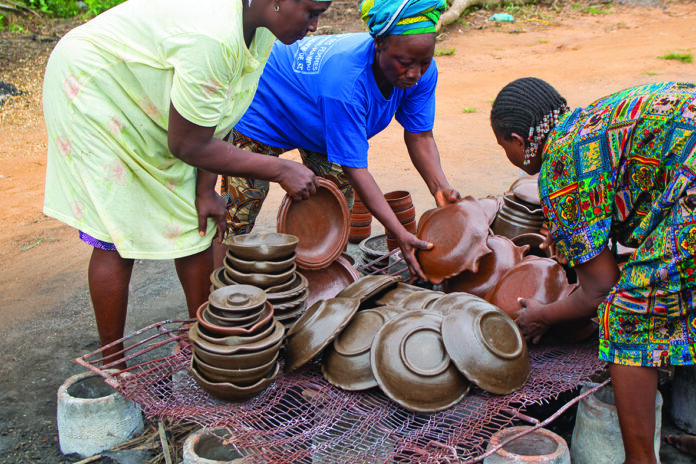
Most mornings, Bénita Jéradelle rotates between two crafts. At home, she works on sewing projects, cutting and designing clothes for clients. Later, she heads to the Akpenin Mahou women’s gathering place, where she works alongside other potters to prepare clay, shape pottery, and supervise the firing of finished pieces.
Although Jéradelle learned the craft of pottery from her mother, she had previously seen it only as a side-hustle. Today, almost five years after taking it up part-time, the work is both a substantial economic activity and a way of maintaining a family tradition.
“I was born into a family of potters, I took up this line of work to achieve greater financial stability, as sewing isn’t always profitable. So I do both these jobs at the same time,” Jéradelle explained.
She is not alone; many other women in her community have tapped skills passed from mother to daughter over generations and the result is a thriving pottery in the village of Sè, Benin.
Sè, located in the commune of Houéyogbé in Benin’s Mono department, was historically associated with pottery. Éric Thomson, a cultural events specialist, points out that pottery in Sè has long been passed down through daily practice within families.
“We’re part of the oral tradition, you know, the tradition of practice. For us, when pottery is practised in a courtyard, it’s already a school for a child who watches their mother doing something and then starts doing it too. As a result, knowledge is passed on very easily by copying the example set by mum.”- bird news agency
- Most mornings, Bénita Jéradelle rotates between two crafts.
- At home, she works on sewing projects, cutting and designing clothes for clients.
- Later, she heads to the Akpenin Mahou women’s gathering place, where she works alongside other potters to prepare clay, shape pottery, and supervise the firing of finished pieces.
- Although Jéradelle learned the craft of pottery from her mother, she had previously seen it only as a side-hustle.
- Today, almost five years after taking it up part-time, the work is both a substantial economic activity and a way of maintaining a family tradition.


