


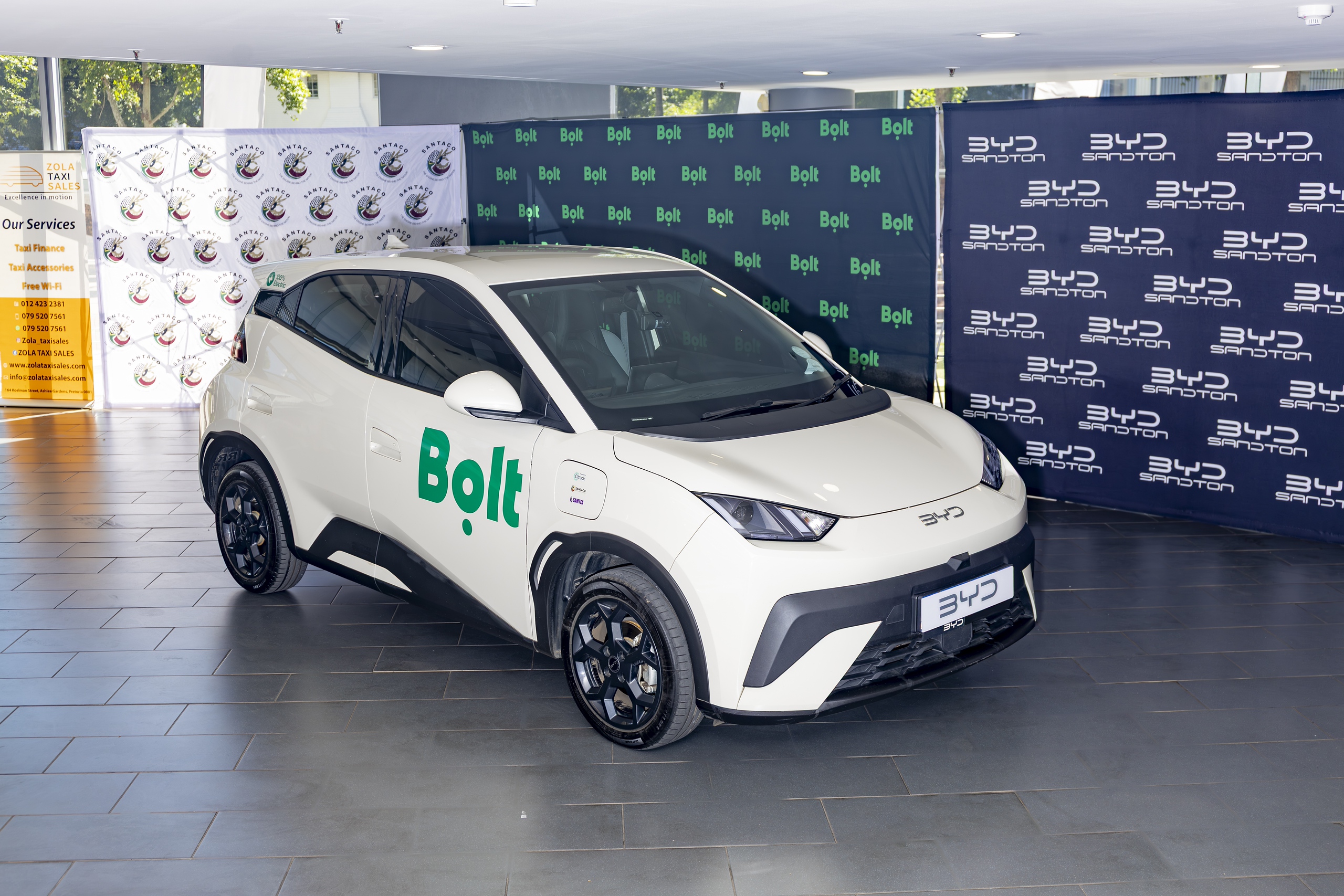
Bolt has expanded its electric vehicle (EV) ride-hailing category to Johannesburg as it targets a fleet of 500 electric vehicles across South Africa by December 2026.
The expansion, announced on Wednesday, follows the introduction of the service in Cape Town earlier this year and comes as the transport industry explores ways to reduce operating costs and emissions.
The e-hailing company has partnered with Chinese vehicle manufacturer BYD and the South African Meter Taxi and E-Hailing Association (SAMTEA), an affiliate of the South African National Taxi Council (SANTACO), alongside other industry stakeholders. The collaboration is particularly significant given the historically strained relationship between traditional metered taxi operators and e-hailing services, which have competed for passengers since the introduction of app-based transport platforms.
READ: Bolt puts spotlight on women-only rides as safety concerns persist
Bolt South Africa general manager Graham Walker said cooperation between the different transport sectors would be essential to making electric mobility commercially viable.
“Electric mobility presents an important opportunity for South Africa. It can help reduce operating and maintenance costs for driver-partners and fleet operators, while contributing to cleaner urban transport,” said Walker.
While electric vehicles generally offer lower energy and maintenance costs than conventional petrol-powered vehicles, the transition to EVs presents challenges such as relatively high vehicle purchase prices, financing arrangements, access to charging infrastructure and the time required to recharge vehicles. These factors are particularly important for e-hailing drivers, whose earnings depend heavily on vehicle availability and daily operating costs.
Bolt has not disclosed how many electric vehicles will initially operate in Johannesburg, the BYD models involved or whether fares will differ from its conventional ride-hailing categories.
SAMTEA chairperson Sibongiseni Shange acknowledged the historical tensions between metered taxis and e-hailing operators, saying greater cooperation could benefit drivers and passengers.
“There was a time when meter taxis and e-hailing were viewed as competitors, particularly as the market was disrupted,” said Shange.
READ: Bolt launches electric vehicle ride-hailing category in South Africa
He added that formalising the industry would help strengthen protections for operators and passengers.
The Johannesburg rollout forms part of Bolt’s wider electric mobility expansion, with the company operating electric ride categories in more than 70 cities worldwide. In Africa, the company has introduced electric mobility initiatives in Kenya and Nigeria.
Bolt, which recently marked 10 years of operating in South Africa, has also announced a R3 billion economic contribution to the country. Its latest expansion highlights growing interest in electric mobility within the commercial transport sector, although widespread adoption will depend on affordability, infrastructure development and sustainable operating models.
- Bolt has expanded its electric vehicle (EV) ride-hailing category to Johannesburg as it targets a fleet of 500 electric vehicles across South Africa by December 2026.
- The expansion, announced on Wednesday, follows the introduction of the service in Cape Town earlier this year and comes as the transport industry explores ways to reduce operating costs and emissions.
- The e-hailing company has partnered with Chinese vehicle manufacturer BYD and the South African Meter Taxi and E-Hailing Association (SAMTEA), an affiliate of the South African National Taxi Council (SANTACO), alongside other industry stakeholders.
- The collaboration is particularly significant given the historically strained relationship between traditional metered taxi operators and e-hailing services, which have competed for passengers since the introduction of app-based transport platforms.
- READ: Bolt puts spotlight on women-only rides as safety concerns persist Bolt South Africa general manager Graham Walker said cooperation between the different transport sectors would be essential to making electric mobility commercially viable.


