


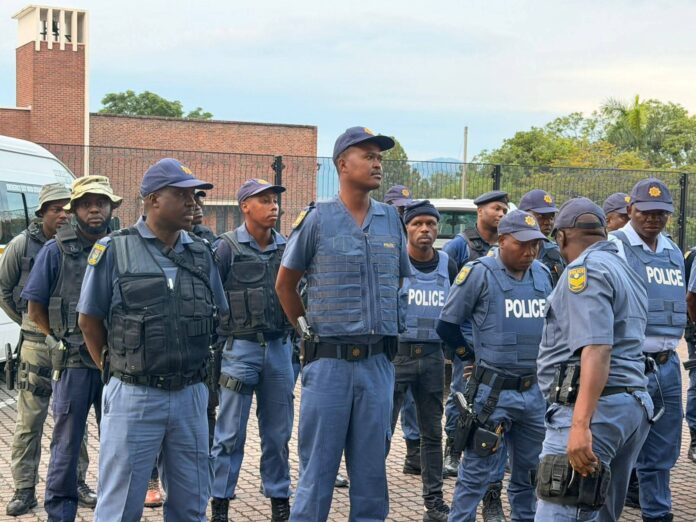
The Independent Police Investigative Directorate’s (Ipid’s) 2024/2025 annual report disclosed contingent liabilities totalling R108,152,000, a decrease from R119,431,000 in the previous year, stemming from claims against the police and the department.
These liabilities highlight the financial and legal burden of unresolved cases, many of which are still under judicial review.
Among the most alarming revelations were two high-profile cases of police misconduct that resulted in severe legal consequences for the officers involved. In the first case, a police officer in Thabong, Free State, was convicted of raping a woman while on duty.
The court sentenced the officer to 12 years in prison and declared him unfit to possess a firearm. This case was investigated under Section 28(d) of the Ipid Act, which addresses complaints of rape by police officers, whether on or off duty.
The second case involved a police officer in Hazyview, Mpumalanga, who was convicted of three counts of murder following the deaths of three individuals as a result of police action.
The court imposed three life sentences, citing the gravity of the crime and the need for accountability. This case was investigated under Section 28(b) of the Ipid Act, which pertains to deaths caused by police action. Both rulings sent a strong message about the seriousness of police misconduct and the importance of justice for victims.
The report also highlighted two ongoing cases with significant financial implications. The first, Manyamalala and nine others v minister of police, involves claims against the Minister of Police with a contingent liability of R8-million.
The second, Masopha Sefatsa and 15 others v Ipid, involves claims against Ipid with a contingent liability of R14-million. Both cases remain unresolved as of March 31 2025, adding to the department’s legal challenges.
In previous litigation, judges have issued scathing remarks about the handling of police misconduct cases. Judge Pitso Molitsoane criticised the lack of diligence in tracing witnesses, stating, “The fact that the witnesses are many does not necessarily imply that they are untraceable. No case is made as to what would make it difficult to trace the witnesses.”
He further condemned the lack of evidence in certain cases, noting, “The court a quo found that the appellants could have acquired knowledge of the identity of the first respondent as a co-debtor by exercising reasonable care and failed to act diligently to take steps which a reasonable person in their position would have taken. This finding is not supported by evidence.”
Despite these challenges, Ipid reported securing 76 criminal convictions during the financial year, demonstrating its commitment to holding law enforcement accountable.
However, the agency continues to face systemic obstacles, including resource constraints and a backlog of over 14,000 cases. To address these issues, Ipid has implemented a backlog strategy and employed additional contract investigators to expedite case resolutions.
- The Independent Police Investigative Directorate’s (Ipid’s) 2024/2025 annual report disclosed contingent liabilities totalling R108,152,000, a decrease from R119,431,000 in the previous year, stemming from claims against the police and the department.
- These liabilities highlight the financial and legal burden of unresolved cases, many of which are still under judicial review.
- Among the most alarming revelations were two high-profile cases of police misconduct that resulted in severe legal consequences for the officers involved.
- In the first case, a police officer in Thabong, Free State, was convicted of raping a woman while on duty.
- The court sentenced the officer to 12 years in prison and declared him unfit to possess a firearm.


