


Alcohol was associated with 271 murders in South Africa in just three months, while firearms were used in 2 552 killings, highlighting the deadly role of drinking and gun violence in the country’s high murder rate.
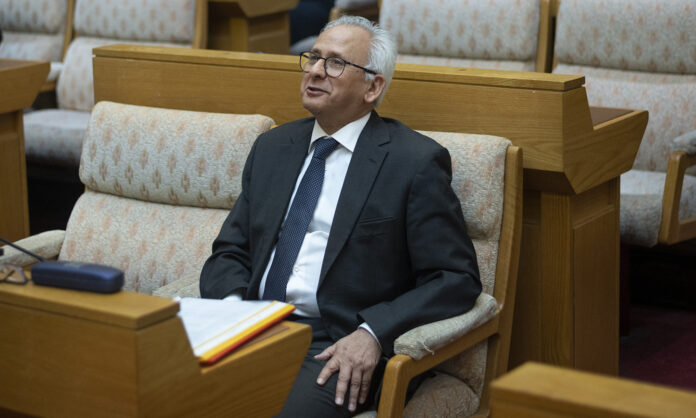
The figures were revealed by acting Police Minister Firoz Cachalia during the release of the second-quarter crime statistics for the 2026/27 financial year in Pretoria on Friday.
Between July and September, police recorded 8 201 alcohol-related contact crimes, including 271 murders, 589 attempted murders, 1 483 rapes and 5 858 assaults with intent to cause grievous bodily harm.
READ: Six dead in separate KwaZulu-Natal mass shootings as police probe tavern murders, hunt Eshowe gunman
A further 235 murders occurred in or around liquor outlets, including shebeens, taverns, pubs, nightclubs and bottle stores.
Cachalia said harmful drinking and poorly regulated liquor outlets contributed to environments in which violence could escalate.
“But the evidence shows that harmful drinking and poorly regulated environments can create conditions in which arguments escalate, weapons are produced and lives are more likely to be lost,” he said.
He said police would strengthen compliance operations against unlicensed liquor outlets and establishments that violated their licence conditions.
Provincial liquor authorities and municipalities would also be expected to improve licensing procedures, enforce responsible trading hours and intervene in high-risk areas.
Firearms used in more than 2 500 murders
Firearms were the most commonly recorded murder weapon during the quarter, accounting for 2 552 killings.
The Western Cape recorded the highest number of firearm-related murders at 732, followed by Gauteng with 675 and KwaZulu-Natal with 560.
“A firearm turns a dispute into a death. It allows gangs and criminal groups to intimidate communities. It magnifies the harm caused in robberies, domestic conflict and targeted attacks,” Cachalia said.
READ MORE: Acting Police Minister Firoz Cachalia rallies SAPS before June 30 demonstrations
He said police would intensify efforts to recover illegal firearms, investigate their supply chains and link recovered weapons to crime scenes through forensic investigations.
“We will continue linking recovered firearms to crime scenes through forensic investigation, so that a weapon recovered today can help solve the murders committed yesterday,” he said.
Cachalia also warned lawful firearm owners to store their weapons securely and comply with the law, saying stolen or diverted firearms could become instruments of further violence.
Call for stronger prevention
The minister said policing alone would not resolve South Africa’s high levels of violent crime, calling for coordinated action between law enforcement, municipalities, liquor regulators and communities.
The interventions would include reducing harmful alcohol consumption, cracking down on illegal firearms and improving the management of public spaces where people were vulnerable to crime.
The country recorded 5 590 murders during the quarter, an average of 60 a day.
Although this was more than 1 600 fewer murders than during the same period last year, Cachalia said the level of violence remained a serious concern.
Subscribe To Our Newsletter or get the news delivered to your phone via our WhatsApp Channel.
- Alcohol was linked to 271 murders and 8,201 alcohol-related contact crimes between July and September in South Africa.
- Firearms were used in 2,552 murders during the same period, with Western Cape, Gauteng, and KwaZulu-Natal recording the highest numbers.
- Police Minister Firoz Cachalia said harmful drinking and poorly regulated liquor outlets contribute to violent environments and pledged stronger enforcement against unlicensed liquor establishments.
- Police will intensify efforts to recover illegal firearms, investigate supply chains, and use forensic methods to link weapons to crime scenes.
- South Africa recorded 5,590 murders in the quarter, averaging 60 murders per day, with a call for coordinated action beyond policing to reduce violence.


