


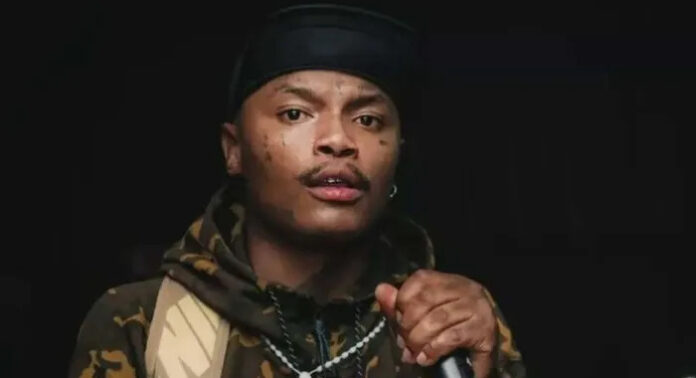
A forensic ballistics expert has questioned the evidence linking musician Lehlogonolo Katlego Chauke, popularly known as Shebeshxt, to an alleged shooting, as the musician makes a second bid for bail after his first application was denied.
Independent forensic ballistics specialist Dr Christo De Klerk told the Polokwane Magistrate’s Court on Tuesday that the available evidence did not sufficiently support the proposed bullet trajectory in the alleged shooting involving a 34-year-old motorist in Ladanna, Polokwane.
De Klerk was called to the stand by Chauke’s defence team to present his findings in support of the musician’s second bail application, which is based on new facts.
The case stems from an alleged road-rage incident on October 19 2025 along Witklip Street in Ladanna, Limpopo. It is alleged that a motorist and a companion were travelling in a Nissan when they recognised Chauke and greeted him as fans.
According to allegations presented in court, Chauke allegedly responded, “Kgane aletlale ka nna?” (Can’t you get enough of me?), before firing a shot in their direction.
The bullet allegedly shattered the vehicle’s window and struck the driver in the jaw. The victim reportedly spent four days in a coma and required extended hospital treatment.
Chauke was arrested on November 12 2025 at his residence in Bendor, outside Polokwane. He faces 20 charges, including attempted murder, possession of an unlicensed firearm and ammunition, and malicious damage to property.
READ: Shebeshxt accused of shooting motorist in road rage drama
Expert questions bullet trajectory
Testifying about the relationship between the victim’s head wounds and defects found on the vehicle’s headrest, De Klerk told the court it was unlikely.
“I found this trajectory highly unlikely. Even though I was not present on the scene,” he said.
The specialist said the proposed trajectory was difficult to reconcile with the victim’s position in the front passenger seat.
He explained that, for the alleged bullet path through the headrest to align with the reported entrance and exit wounds, the victim would have had to turn his head to an extent he considered highly improbable.
De Klerk also questioned whether a single projectile could have caused the wounds in the sequence suggested by the available evidence.
He said the absence of medical scans made it difficult to determine whether fragments of the projectile or other foreign material remained inside the victim’s skull.
The expert explained that medical imaging could have helped establish whether fragments had been left behind, particularly if the larger wound on the cheek was the entrance wound and the smaller wound on the head was the exit.
“It is shocking that the doctor who was treating the victim did not add that information on the medical scans,” he added.
READ MORE: Shebeshxt’s R100,000 bail bid fails as court finds no new facts
Concerns over vehicle evidence
De Klerk raised concerns about the quality and completeness of the photographs documenting the vehicle and its alleged bullet damage.
He said the defects visible on the headrest appeared unusually large compared with what would ordinarily be expected from a bullet impact.
“I cannot exclude the possibility that defects were altered prior to photographs being taken,” he told the court.
He also explained that arrows appearing in the photographs indicated the locations of the defects rather than the direction in which the projectile had travelled.
According to De Klerk, the available photographs from the state were inconclusive and appeared to raise alternative possibilities regarding the direction of fire, including a shot discharged from inside the vehicle or through an open front passenger-side window.
He further highlighted uncertainty about the positions of the vehicle’s seats and windows at the time of the alleged shooting, saying these variables affected the reconstruction of the bullet trajectory.
Questions over missing forensic evidence
The specialist said additional documentation and physical evidence would be needed for a more comprehensive assessment.
This included original photographs of the vehicle and shooting scene, technical documentation relating to any forensic ballistics examination, and relevant evidence such as the firearm, recovered projectiles, bullet fragments and cartridge cases.
De Klerk also questioned whether the available medical documentation was sufficient to establish the cause of the injuries and conclusively identify the entrance and exit wounds.
His report stated that the available documentation did not provide sufficient scientific support for attributing the injuries to gunfire without further corroborating evidence.
He indicated that additional medical records, radiographic images and other relevant forensic material would be necessary to strengthen the assessment.
ALSO READ: Shebeshx’s new bail bid hinges on ballistics report, resumes on October 26
Defence presents new facts
De Klerk’s testimony forms part of the defence’s effort to secure Chauke’s release on bail following the rejection of his first application.
His assessment focused on the limitations of the available evidence and the difficulty of conclusively reconstructing the alleged shooting without further forensic examination.
- Forensic ballistics expert Dr Christo De Klerk testified that the evidence did not sufficiently support the proposed bullet trajectory in the alleged October 19, 2025, shooting involving musician Shebeshxt and a motorist in Ladanna.
- Dr De Klerk stated the bullet path was unlikely based on the victim’s position in the front passenger seat and questioned whether a single projectile could cause the reported wounds.
- The expert raised concerns over the quality and completeness of vehicle photographs, suggesting defects on the headrest appeared unusually large and could have been altered before documentation.
- De Klerk highlighted missing forensic evidence such as original scene photographs, technical ballistics data, the firearm, recovered projectiles, and comprehensive medical records as necessary for a conclusive assessment.
- Chauke was arrested on November 12, 2025, facing 20 charges including attempted murder, possession of an unlicensed firearm, and malicious damage to property, and is now making a second bail application based on new ballistics evidence.


