


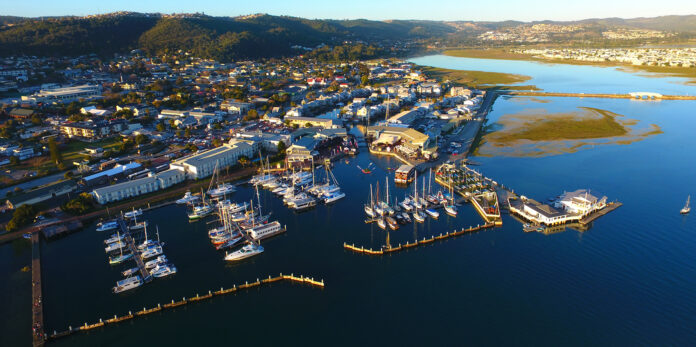
Political parties in the Knysna municipality have bemoaned the low capital spending at the troubled municipality as the fiscal year-end draws near. They noted that underspending grossly affected vulnerable communities that must bear the brunt of service delivery failures.
Last year, the Western Cape government moved to dissolve the council and place the municipality under administration. However, the National Council of Provinces vetoed that move. Since then, the Western Cape Department of Local Government has provided support for Knysna’s fast-track emergency projects for water, sanitation, waste and roads under the Section 154 plan.
In recent years, Knysna, which falls on the tourism-attractive Garden Route, has battled water problems, sewage spills, and other service delivery woes.
The People’s Movement for Change (PMC) warned of the direct consequences for service delivery and the municipality’s ability to retain grant funding.
“Capital budget is not for salaries or stationery. It is the money meant to fix roads, upgrade water pipes, repair sewerage plants, and build disaster-prevention infrastructure. To have spent only 30% after 11 months is a failure of planning and a failure of our residents.
“PMC will not support the 2026/27 budget until council presents a credible recovery plan.”
The DA in Knysna also raised concerns about the municipality’s underlying financial position. The party’s Knysna mayoral candidate, Levael Davis, said the municipality reports a year-to-date surplus of R281.7-million, but this surplus exists mainly on paper.
“Knysna has approximately R196-million in cash, but it faces R402-million in current liabilities. Meanwhile, unpaid consumer debt has ballooned to R606.9-million, with 53.1% outstanding for more than a year,” he said.
Davies told Sunday World that grants and subsidies were keeping the municipality afloat.
The provincial department has, meanwhile, reaffirmed its support. “Sound progress is being made through this collaboration approach,” said Local Government MEC Anton Bredell’s spokesperson, Wouter Kriel.
As of the end of March, municipal spending was 31.2% (R42.7-million) against an adjusted budget (R137.05-million), but it should be noted that there are also commitments to the amount of R27-million. Together, the total spend is thus at 51.5% (R70.6-million).”
The municipality is led by an ANC-led coalition alongside the Patriotic Alliance, PBI, and EFF.
Visit SW YouTube Channel for our video content
- Political parties in Knysna criticize the municipality's low capital spending, highlighting its negative impact on vulnerable communities and service delivery.
- The Western Cape government previously attempted to dissolve Knysna council and place it under administration, but the National Council of Provinces vetoed the move; support continues under a Section 154 emergency plan.
- Knysna faces ongoing issues with water shortages, sewage spills, and general service delivery failures, worsened by poor financial management and underspending.
- The People’s Movement for Change and DA raised concerns about the municipality’s poor planning, inability to spend capital budgets effectively, and a high level of unpaid consumer debt totaling over R600 million.
- Despite financial struggles, the provincial government maintains support, noting progress through collaboration and that spending plus commitments amount to just over half the capital budget as of March.


