


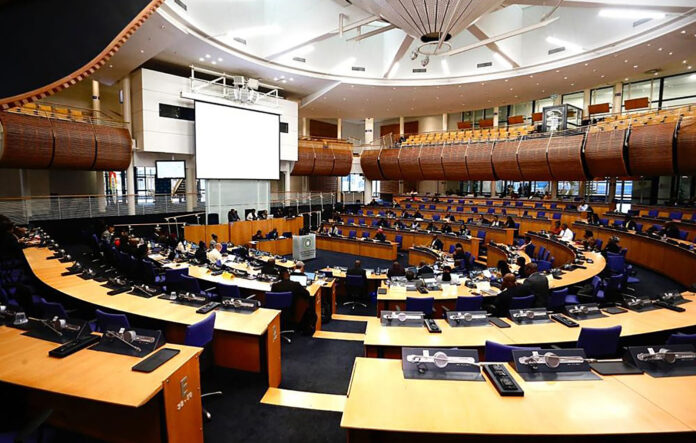
The City of Cape Town has come under sharp criticism for not holding a full in-person council sittings in nearly a year, with opposition parties accusing the City of using virtual meetings as a “political shield” to dodge public scrutiny.
The parties argue that while ordinary residents are expected to physically queue for municipal services, councillors are allowed to “govern from home” while taking decisions that directly affect those same communities.
“Capetonians sit in traffic, queue at municipal offices, and face the daily reality of service delivery failures. It is not fair for council, the highest decision-making body, to normalise remote sittings while residents are expected to show up physically for everything else,” said GOOD Party caucus leader, Suzette Little.
However, the City has pushed back, insisting virtual sittings do not stifle debate, but have been introduced mainly for cost-containment and safety considerations.
“The concern is not whether councillors can log in from home,” Little added. “The concern is whether the DA-led city is using virtual meetings as a political control mechanism to protect its ‘city of hope’ narrative from being challenged in full public view.”
The ANC, the official opposition in council, echoed similar concerns, and called for the immediate reinstatement of full in-person sittings. ANC caucus leader, Ndithini Tyhido, said virtual sittings have turned council into what he described as a “managed, sanitised process where robust debate is muted” and “opposition voices are sidelined”.
“Council cannot operate like a webinar while making binding decisions. If the DA has nothing to hide, they must stop hiding behind screens.”
In response, Council Speaker Felicity Purchase said the only thing that changes during a virtual council meeting, versus an in-person meeting, is the format and the cost.
Purchase said the Council-approved Rules of Order, together with additional rules for virtual meetings on MS Teams and Section 29 of the Municipal Structures Act, give her the authority to decide when and where council meetings take place.
“As with an in-person council meeting, councillors attending a virtual council meeting are expected to abide by the Rules of Order, behave respectfully during council proceedings so that its business can proceed, and we can all ensure that the interests of the very many residents we represent.”
“Given the above, and that council rules and statutory legislation provides for the holding of virtual meetings, I do not hold the view that transparency or democratic participation is impeded by holding virtual meetings,” she said.
Purchase added that many Sub-council and Portfolio Committee meetings are held virtually “with great success”. “I have also been made aware of several municipalities nationally which hold all of their council meetings virtually.”
Meanwhile, the City has also faced criticism over its public participation process for the 2026/27 Draft Budget, with opposition saying the process presented “confusing and non-transparent” information that masks the real impact of tariff increases on residents.
GOOD Party councillor Sandra Dickson said the engagements across sub-council do not amount to genuine public participation.
“It is a carefully managed process where the Democratic Alliance government presents a simplified version of the budget, avoids meaningful financial scrutiny, and allows discussions to drift into everyday service delivery complaints,” she said.
But Member of the Mayoral Council for Finance Siseko Mbandezi rejected the claims, saying about 45 in-person and hybrid meetings were held across sub-councils where possible.
He added that residents were provided with interpretation services where needed, while the budget was widely advertised in multiple languages and multiple channels were made available for public input.
“The fact is the city wants our residents to comment and take part. It is the entire point of taking the budget meetings to our communities and ensuring that residents have options to enable them to take part.”
This week the Western Cape High Court declared fixed tariff charges contained in the City’s 2025/26 budget invalid and unlawful. The court found that charges imposed on ratepayers for citywide cleaning, water and sewage were unlawful and set them aside.
- Opposition parties criticize Cape Town for not holding full in-person council sittings for nearly a year, accusing the City of using virtual meetings to avoid public scrutiny while residents wait in queues for services.
- The City defends virtual meetings as cost-effective and safe, with Council Speaker Felicity Purchase stating virtual sittings comply with rules and do not impede transparency or democratic participation.
- ANC and GOOD Party leaders allege virtual meetings mute robust debate and sideline opposition voices, demanding a return to full in-person council sessions.
- The City faces additional criticism over its 2026/27 Draft Budget public participation process, accused of being confusing and masking tariff increases' impact, while officials affirm extensive community engagement efforts.
- The Western Cape High Court declared fixed tariff charges in the City’s 2025/26 budget unlawful, invalidating fees for citywide cleaning, water, and sewage services.


